
Epic Games Unveils AI-Generated Launcher and Linux Anti-Cheat Overhaul
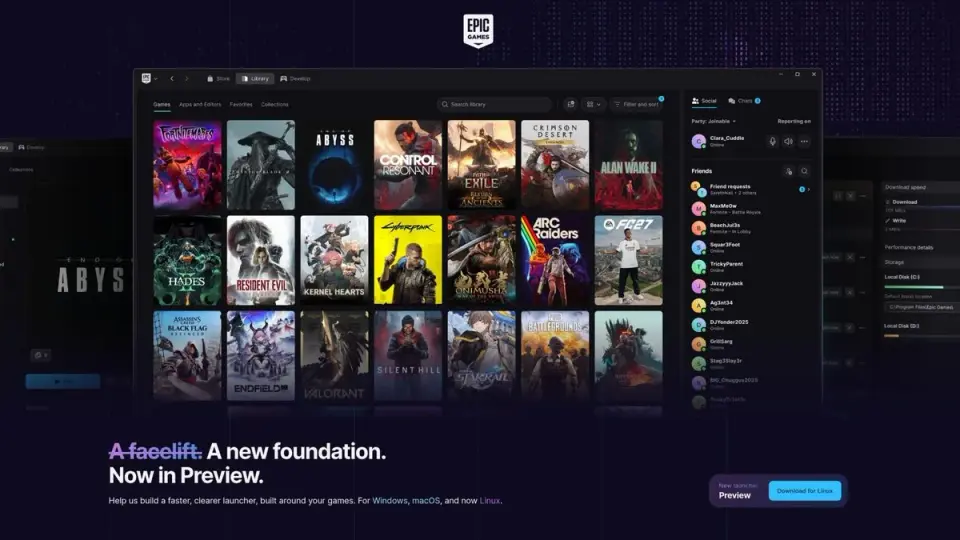
Epic Games has released a preview of a new PC game launcher, explicitly described as 'vibe coded' using AI, alongside a major update to its Linux anti-cheat infrastructure. The new client, available on Windows, macOS, and Linux, promises faster performance and cross-platform library integration. Simultaneously, Epic announced 'EAC Linux v2,' a rebuilt anti-cheat system designed to support Fortnite on Linux without requiring kernel drivers, addressing a long-standing barrier for non-Windows gamers.
Key points
- Epic Games launched a preview of its new game launcher, which the company states was 'vibe coded' using AI tools, marking a shift toward AI-assisted development.
- The new launcher features faster cold starts, integrated voice chat, and the ability to view games from other platforms like Steam and GOG within a single interface.
- Epic introduced 'EAC Linux v2,' a rebuilt anti-cheat system that utilizes signed kernel modules and secure boot attestation to provide protection comparable to Windows versions.
- The update aims to bring Fortnite to Linux, though Epic notes that the Steam Deck currently lacks the necessary security features for full compatibility.
- The announcement follows CEO Tim Sweeney’s recent strategic pivot toward 'AI acceleration' and follows a period of significant layoffs at the company.
Background
This development follows a broader industry trend of AI integration in software development, highlighted by Epic’s recent layoffs and strategic shifts. It also addresses ongoing challenges in Linux gaming, such as the removal of Linux support for titles like For Honor due to anti-cheat limitations. Previous coverage noted that Epic had already begun experimenting with AI tools for its launcher, with this release representing a formalized public rollout of that approach.
How outlets are covering it
Epic Games and The Verge emphasize the technical advancements and efficiency gains from AI-assisted development, with Epic’s VP Martin Keely noting that AI helped replicate core functionality and accelerate testing. In contrast, Aftermath and Engadget criticize the 'vibe coding' approach as tone-deaf, particularly given recent layoffs, and question the stability of the new launcher. Engadget notes that while the launcher is less 'clunky' than its predecessor, it lacks unique features that distinguish it from competitors like Steam. Aftermath highlights the importance of the Linux anti-cheat update, arguing that Epic should focus on such substantive improvements rather than boasting about AI usage.
Why it matters
This move signals a significant shift in how major tech companies approach software development, potentially setting a precedent for AI-generated code in consumer products. The Linux anti-cheat update could expand the viability of Linux as a gaming platform, addressing a critical barrier for online multiplayer games. However, the public reception may influence how other companies approach AI integration, balancing efficiency gains with concerns about job security and software reliability.
What to watch
Epic plans to continue updating the launcher with new features and optimizations, aiming for a full release once stability is confirmed. The company is also in discussions with Valve regarding anti-cheat support for the Steam Deck. Further developments in AI-assisted development and Linux gaming infrastructure are expected as Epic and other companies navigate the transition to AI-driven workflows.
- Epic Announces Redone Linux Anti-Cheat Support (Yeah!) And A Vibe Coded Game Launcher (Boo!) Aftermath
- The new Epic Games Launcher is finally here in Preview Epic Games
- Epic’s new games launcher is ‘vibe coded’ The Verge
- Epic Thinks You'll Love Its New Vibe Coded Game Launcher Engadget
- Epic Games To Improve Easy Anti-Cheat On Linux With Anti-Cheat Systemd Service & eBPF Phoronix
Want the full story? Read the original reporting
Read on Aftermath