
Huawei Found Guilty on 10 of 12 US Counts, Cleared of Racketeering
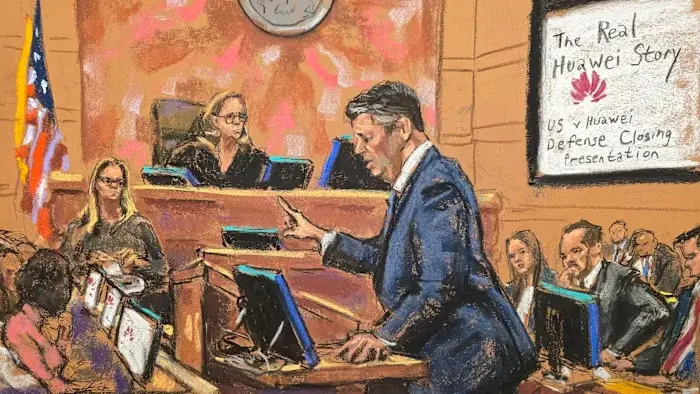
A federal jury in Brooklyn convicted Huawei on 10 of 12 criminal counts, including conspiracy to steal trade secrets and bank fraud, but acquitted it of racketeering. The verdict concludes an eight-year legal battle and an 11-week trial, with sentencing scheduled for September 2027. Huawei plans to appeal, arguing the convictions lack merit, while prosecutors emphasized a corporate culture that allegedly encouraged theft and deception to gain competitive advantages.
Key points
- Jury Verdict: A New York jury found Huawei guilty of 10 out of 12 charges, including conspiracy to steal trade secrets, bank fraud, wire fraud, and money laundering. The company was acquitted of racketeering conspiracy and conspiracy to obstruct justice.
- Prosecution Claims: US prosecutors alleged Huawei systematically stole technology from competitors like Cisco, T-Mobile, and Fujitsu, and misled banks about its business dealings with Iran to evade sanctions. They cited a 'competition management group' that allegedly rewarded employees for stealing information.
- Defense Argument: Huawei’s defense, led by attorney Brian Heberlig, argued the company’s success was driven by innovation and $110 billion in R&D investment, not espionage. Heberlig described the prosecution’s case as a 'caricature' and noted that no court had previously found Huawei liable for trade secret theft in civil cases.
- Legal Next Steps: Huawei stated it will 'thoroughly review' the verdict and take 'all necessary legal actions,' including an appeal. Sentencing is scheduled for September 14, 2027. The company maintains that the trade secret charges are 'without legal or factual merit.'
- Geopolitical Context: The verdict arrives amid heightened US-China tensions, following recent diplomatic meetings between leaders of the US, China, and Russia. Huawei faces existing US sanctions that restrict its access to foreign technology and largely bar it from the American market.
Background
The case originated in December 2018 with the detention of Huawei CFO Meng Wanzhou in Canada on a US warrant. Meng was later released after entering a deferred prosecution agreement. The criminal trial began in 2019, with additional charges added in 2020. Previous archive coverage confirmed the 10-of-12 conviction count and the September 2027 sentencing date, highlighting the long-standing nature of the dispute.
How outlets are covering it
Financial Times and The Guardian emphasized the prosecution’s narrative of a corporate culture that 'encouraged lying, cheating, and stealing,' citing internal bonuses for stealing trade secrets. NBC News and BBC focused on the acquittal on the racketeering charge, which Huawei’s defense framed as a 'profound rejection' of the government’s claim that the company operated as a criminal enterprise. While all outlets reported the 10-count conviction, The Guardian and BBC highlighted Huawei’s argument that the trade secret issues were civil matters resolved in the past, whereas the FT and NBC detailed specific alleged thefts from companies like Cisco and Quintel.
Why it matters
The conviction validates US allegations of corporate espionage and sanctions evasion by a major Chinese tech firm, potentially influencing future trade policies and sanctions. However, the acquittal on racketeering limits the severity of penalties and may bolster Huawei’s defense that its growth was driven by innovation rather than criminal conduct. The outcome could further strain US-China relations and impact global supply chains for telecommunications and AI technology.
What to watch
Huawei will appeal the verdict, challenging the legal basis of the trade secret and bank fraud convictions. Sentencing is scheduled for September 14, 2027, where the company could face significant fines. The case may also influence ongoing diplomatic negotiations between the US and China regarding technology access and trade restrictions.
- Huawei convicted in US trial that exposed corporate espionage and sanctions evasion Financial Times
- Chinese tech giant Huawei convicted of federal charges, including conspiracy to steal trade secrets NBC News
- China’s Huawei convicted of deceiving banks about business in Iran and stealing US trade secrets The Guardian
- China’s Huawei Convicted of Fraud in U.S. Criminal Trial WSJ
- Huawei found guilty of stealing trade secrets but acquitted of racketeering BBC
Want the full story? Read the original reporting
Read on Financial Times