
MSI Launches 27-Inch 4K OLED Monitor Using Inkjet Printing for Sharper Text
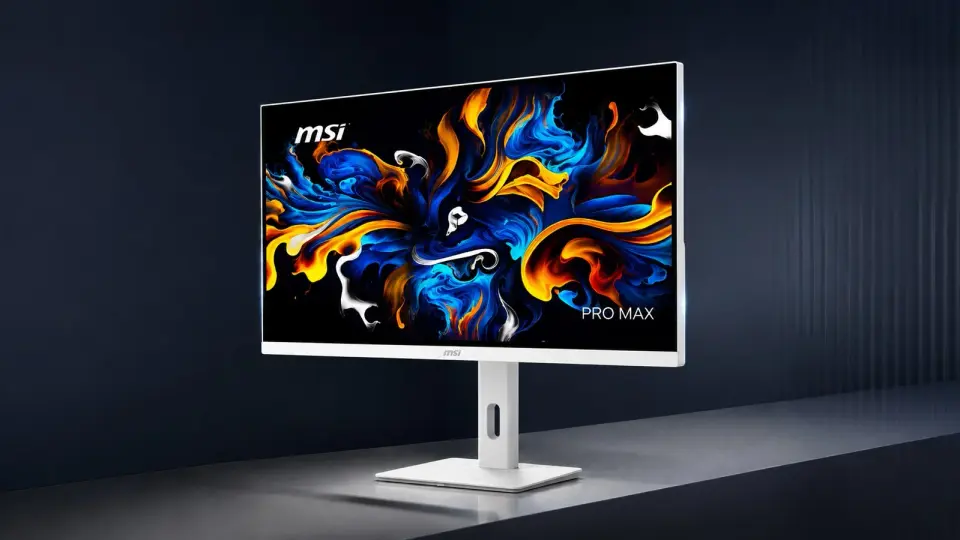
MSI has introduced the PRO MAX OLED 271UPJW12, billed as the world's first 27-inch 4K OLED monitor utilizing inkjet printing (IJP) technology. Supplied by TCL CSOT, this manufacturing method replaces traditional fine metal masks, promising higher yields and lower costs. The display features a standard RGB subpixel layout to eliminate color fringing, offering 120 Hz refresh rates, 1000 nits peak brightness, and Delta E < 2 color accuracy. It includes a 3-device KVM, USB-C connectivity, and MSI's OLED Auto Care feature for uninterrupted usage. Pricing and release dates remain undisclosed.
Key points
- The PRO MAX OLED 271UPJW12 is a 27-inch 4K display with a 120 Hz refresh rate and 164 PPI density.
- It uses inkjet printing (IJP) technology from TCL CSOT, which MSI claims improves manufacturing yields and reduces costs compared to fine metal mask evaporation.
- The panel features a standard RGB stripe subpixel layout, designed to eliminate color fringing and improve text sharpness compared to non-standard OLED layouts.
- Key specifications include 99% DCI-P3 color gamut coverage, Delta E ≤ 2 accuracy, and VESA DisplayHDR True Black 500 certification with 1000 nits peak brightness.
- The monitor includes a 3-device KVM, USB-C ports with 98W and 15W power delivery, and MSI's OLED Auto Care technology for real-time burn-in protection without user interruption.
- MSI has not announced a price or release date for the device.
Background
This launch follows earlier industry moves toward inkjet-printed OLEDs, such as Lenovo's Legion R9000P gaming laptop unveiled in July 2026, which also utilized TCL CSOT's IJP technology to potentially lower costs. MSI previously announced the PRO MAX series at Computex 2026, positioning it for professional and Mac users. The shift away from fine metal masks addresses long-standing issues with yield and cost in larger OLED panels.
How outlets are covering it
Wccftech emphasizes the technical advantage of IJP in reducing color fringing and improving text clarity, noting that while the specs are not flagship-level, they suit the mid-range segment. TechPowerUp highlights the product's positioning for Mac users and its comprehensive connectivity, including a 3-device KVM and 98W USB-C power delivery, while noting the lack of pricing information. HotHardware focuses on the collaboration with TCL CSOT and the potential cost advantages of IJP over QD-OLED and WOLED, stressing the benefit of a standard RGB subpixel layout for desktop UI rendering. All sources agree on the core specifications but differ in emphasis: Wccftech on manufacturing efficiency, TechPowerUp on productivity features, and HotHardware on the technological shift in panel production.
Why it matters
The adoption of inkjet printing for OLED monitors could significantly reduce manufacturing costs and improve yields, potentially making high-quality OLED displays more accessible. The standard RGB subpixel layout addresses a common complaint about OLED text clarity, making it a strong contender for professional and productivity-focused users who require precise color and sharp text. This move by MSI, backed by TCL CSOT, signals a growing industry trend toward IJP technology as a viable alternative to traditional manufacturing methods.
What to watch
MSI has not disclosed pricing or availability for the PRO MAX OLED 271UPJW12. Industry observers are awaiting official pricing to assess the competitive positioning of IJP OLED monitors against existing QD-OLED and WOLED alternatives. Further reviews and hands-on tests will be needed to validate claims regarding text sharpness, color accuracy, and the effectiveness of MSI's OLED Auto Care technology in real-world usage.
- MSI’s 27-inch OLED Monitor Ditches Metal-Mask Manufacturing For Inkjet Printing, Promising Sharper Text And Higher Yields Wccftech
- MSI Unveils the PRO MAX OLED 271UPJW12: The World's First 27-Inch 4K 120Hz IJP OLED Monitor TechPowerUp
- MSI Unveils World's First 27-Inch 4K 120Hz Inkjet-Printed OLED HotHardware
- Dialogue with Zhao Jun of TCL CSOT: Printed OLED Enters Mainstream Consumer Markets, Marking the Start of Scale Commercialization Moomoo
- TCL CSOT and MSI Join Forces to Launch World's First 27" 4K 120Hz IJP OLED High-End Professional Monitor at ChinaJoy 2026 Morningstar
Want the full story? Read the original reporting
Read on Wccftech