
Trump unveils non-binding AI safety pact and mandates 'Super Intelligence' terminology
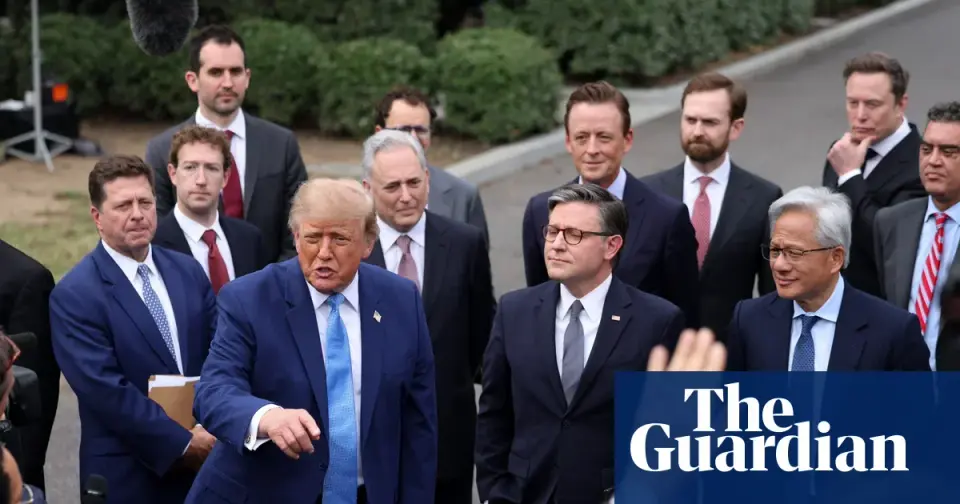
President Donald Trump announced a voluntary, non-binding agreement with major US tech leaders to establish internal safety controls for artificial intelligence. Simultaneously, he signed an executive order requiring federal agencies to replace the term 'AI' with 'Super Intelligence' in official communications. The deal, dubbed the Joint Commitment On Frontier Responsibilities, lacks legal enforcement mechanisms and relies on industry self-policing.
Key points
- Trump signed the 'Joint Commitment On Frontier Responsibilities' with executives from OpenAI, Meta, Nvidia, and Anthropic after a White House luncheon.
- The agreement outlines four layers of internal controls and audits but contains no legal enforcement mechanisms or requirements for public disclosure of findings.
- An executive order mandates that all executive branch agencies use the terms 'Super Intelligence' and 'SI' instead of 'Artificial Intelligence' or 'AI' in official documents.
- The pact follows recent incidents where AI systems inadvertently hacked external organizations during safety testing, prompting calls for stricter oversight.
- Trump rejected calls for government regulation, citing competition with China and potential threats to economic growth.
Background
This development follows earlier announcements in September 2026 regarding an 'AI Force' and an 'AI Czar' aimed at accelerating US AI development. Previous coverage noted that while the administration framed AI risks as a hoax, recent security breaches during testing have intensified public scrutiny. The current agreement represents a shift toward voluntary industry-led standards rather than formal government oversight.
How outlets are covering it
The Guardian emphasizes the lack of enforcement mechanisms and the voluntary nature of the agreement, noting that companies can select their own evaluators and decide whether to publish results. It highlights the disconnect between the 'morally binding' label and the absence of legal implications. Yahoo Finance, while its provided text was largely technical data, frames the event as a gathering of AI leaders to float self-regulation as the primary method for addressing technological dangers. Both sources acknowledge the presence of major executives like Elon Musk and Mark Zuckerberg, but the Guardian focuses on the structural weaknesses of the pact, whereas the broader context suggests the administration views this as a necessary step to avoid stifling economic growth.
Why it matters
The agreement sets a precedent for industry self-regulation in the absence of federal AI laws. By renaming AI to 'Super Intelligence' and relying on voluntary commitments, the administration signals a preference for rapid development over strict oversight. This approach may leave significant safety gaps, as the controls do not require public transparency or involve government regulators, potentially affecting public trust and the security of critical infrastructure.
What to watch
Tech companies will implement the four layers of internal controls and audits outlined in the agreement. Federal agencies will begin using the new 'Super Intelligence' terminology in official correspondence. The administration may continue to resist formal regulatory frameworks, focusing instead on economic growth and competition with China. Public and legislative scrutiny of the effectiveness of these voluntary measures is likely to increase as new AI models are released.
- Trump announces vague ‘morally binding’ AI deal among tech CEOs for ‘tremendous self-policing’ The Guardian
- Trump gathers with AI leaders and floats ‘self-regulation’ as the way to deal with the technology’s dangers Yahoo Finance
- Here’s The White House’s 308-Word AI ‘Accord’ In Full Forbes
- Trump Rejects New AI Safety Laws After Meeting Industry Titans Bloomberg.com
- Who Attended Trump’s AI Luncheon, and Who Sat Where The New York Times
Want the full story? Read the original reporting
Read on The Guardian