
Mullin Dismisses Blame for FAA Ground Stop, Cites Legacy System Failure
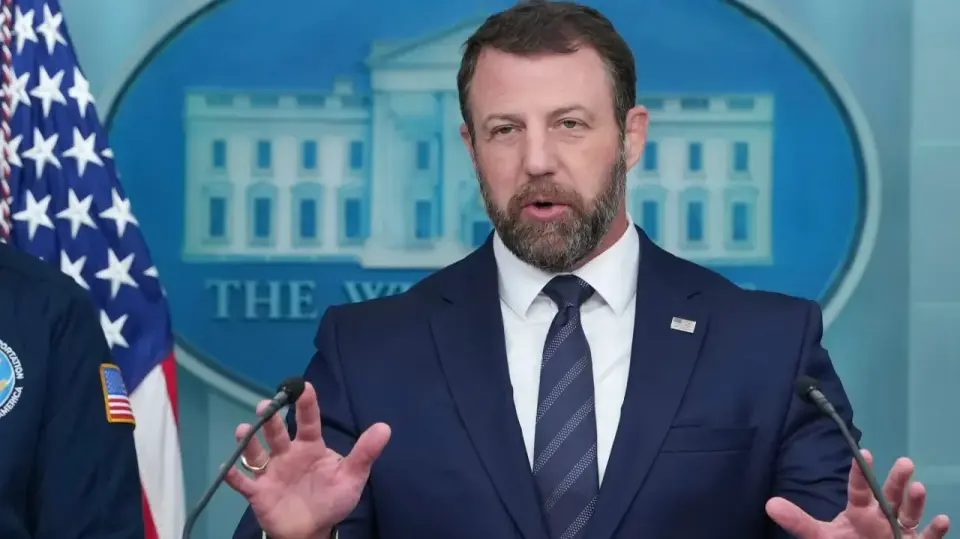
DHS Secretary Markwayne Mullin stated that no officials will be fired for the recent nationwide flight ground stop, attributing the disruption to a failure in integrating new technology with a 50-year-old legacy system. While the administration maintains the incident was not a cyberattack, critics and some lawmakers argue the response was chaotic and used to justify a $50 billion funding request.
Key points
- Mullin told Fox News he does not expect anyone to be fired, describing the outage as an equipment issue rather than human error.
- The FAA grounded all US flights on Friday, November 13, causing thousands of delays and cancellations that persisted into the following week.
- Officials claim the failure resulted from attempting to connect modern technology to outdated air traffic control infrastructure.
- Transportation Secretary Sean Duffy is pushing Congress for an additional $50 billion to update air traffic control systems.
- Mullin expressed 98% certainty the incident was not a foreign cyberattack, though he acknowledged the possibility of 'super intelligence' software causing ripple effects.
Background
The FAA issued a nationwide ground stop on November 13, 2026, stranding tens of thousands of passengers. Previous coverage noted that while officials blamed aging technology, critics called the response chaotic. Some lawmakers, including former Representative Marjorie Taylor Greene, accused the administration of exploiting the crisis to demand emergency funding. The incident has intensified debates over the modernization of US air traffic control infrastructure.
How outlets are covering it
The Hill and The Independent report that Mullin dismissed the idea of firings, attributing the failure to the integration of new tech with a 50-year-old system. Fox News highlights Mullin's assurance that the 'homeland is secure' and his dismissal of cyberattack theories, while also noting his promotion of the term 'Super Intelligence' (SI) to describe potential AI-related causes. Tech Policy Press criticizes the administration for prioritizing the rebranding of AI as 'Super Intelligence' during a national emergency, viewing it as an absurd distraction. The Hill notes that Transportation Secretary Sean Duffy blamed lawmakers for inadequate funding, whereas The Independent emphasizes the technical cause as internal equipment instability. Some outlets, like The Hill, note that while the FAA has restored systems, thousands of delays remain, with FlightAware reporting nearly 9,000 delays as of Monday morning.
Why it matters
The incident exposes vulnerabilities in the US air traffic control system and highlights the political struggle over infrastructure funding. The administration's insistence that the outage was not a cyberattack, combined with the push for $50 billion in new funding, sets the stage for a contentious debate in Congress regarding the modernization of critical national infrastructure. The public perception of the response, particularly the focus on terminology like 'Super Intelligence' during a crisis, may influence future trust in government management of technological emergencies.
What to watch
Congress is expected to debate the $50 billion funding request for air traffic control modernization. The administration will likely continue to push for the adoption of the term 'Super Intelligence' in official documents, as per the executive order signed in September 2026. Airlines and the FAA will monitor the lingering delays and cancellations to ensure full operational stability. Further investigations into the specific technical failure may be released to provide transparency to the public and lawmakers.
- Mullin: No one getting fired over nationwide ground stop The Hill
- DHS chief tells Americans to 'breathe' amid tech outages, insists homeland is 'secure' Fox News
- DHS Says AI Could Be Responsible For Outages Newsweek
- Homeland security chief ‘confirms’ cause of nationwide flight ground stop The Independent
- Does the Trump Administration’s Campaign to Rebrand AI as ‘Super Intelligence’ Matter? Tech Policy Press
Want the full story? Read the original reporting
Read on The Hill