
US 'Economic D-Day' Targets Iran's Trade Network, But Enforcement Gaps and Global Resistance Limit Impact
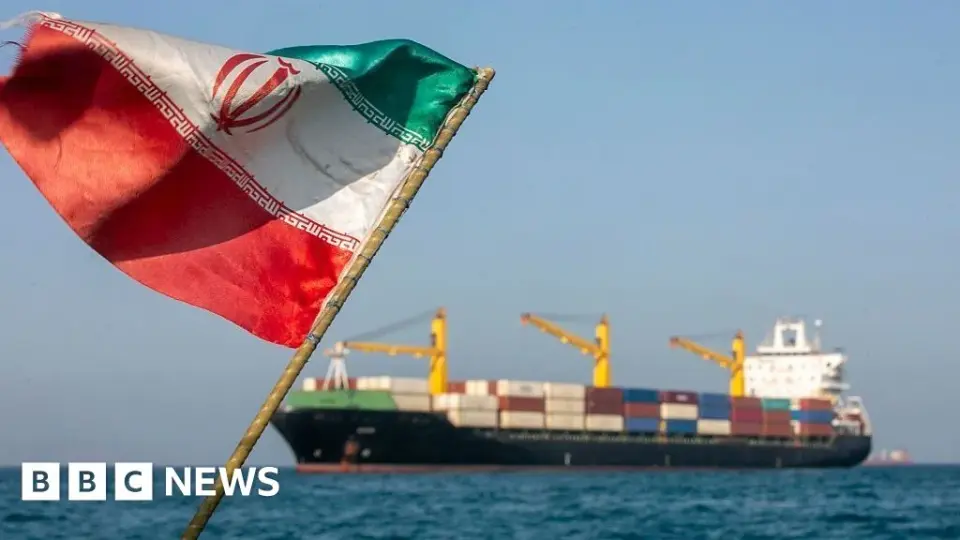
Treasury Secretary Scott Bessent launched 'Operation Economic Outcast,' a sweeping sanctions campaign dubbed 'economic D-Day' to sever Iran's financial lifelines. While the US aims to isolate Tehran by penalizing trading partners, experts argue enforcement is difficult due to Iran's deep ties with China, Turkey, and Pakistan, and the regime's history of evading restrictions.
Key points
- The US Treasury announced 'Operation Economic Outcast,' targeting nearly 60 entities and vessels in Iran's 'shadow fleet' to block revenue sources.
- China, which accounts for 26.9% of Iran's 2025 exports, condemned the sanctions as 'illegal unilateral' measures and vowed to protect its interests.
- Turkey and Pakistan face a dilemma: both border Iran and trade heavily with it, but also maintain ties with the US, creating economic and diplomatic friction.
- Iran's rial currency hit an all-time low of 2.02 million per US dollar, though officials claim the country is 'fully prepared' for the new pressure.
- Global markets reacted minimally, with oil prices falling and stock indexes remaining stable, suggesting limited immediate economic shock.
Background
This escalation follows recent moves by the UAE to suspend all trade with Iran, cutting off roughly $21 billion in bilateral commerce. The US has been pursuing a strategy to isolate Iran's economy since the 1979 revolution, but previous attempts to pressure major trading partners like China have faced significant resistance.
How outlets are covering it
The BBC and The Washington Post highlight the skepticism among economists regarding the effectiveness of the new sanctions, noting that Iran has long evaded restrictions through black markets and alternative trade routes. Fox News emphasizes the potential for regime collapse, citing the currency crash and the 'single greatest financial offensive' rhetoric from Bessent. WJLA points to the complexity of an 'anti-Western bloc' involving China, Russia, and North Korea, which complicates US efforts to isolate Tehran. While the US frames this as a decisive blow, many analysts argue that without strict enforcement against trading partners, the impact may be limited to 'a damp squib.'
Why it matters
The success of these sanctions could determine whether the US can force a diplomatic resolution or regime change in Iran without further military escalation. If the economic pressure fails to isolate Tehran, it may prolong the conflict and destabilize global energy markets, particularly given the recent attacks on oil tankers in the Strait of Hormuz.
What to watch
The US will likely intensify diplomatic pressure on China and other trading partners to enforce the new sanctions. Iran may accelerate its use of shadow fleets and black markets to bypass restrictions. The situation in the Strait of Hormuz remains volatile, with the US Navy claiming to have cleared all mines, though Iran has threatened retaliation against any new mine placements.
- Who does Iran trade with and what could Trump's 'economic D-Day' mean? BBC
- Oil tanker attacked in Strait of Hormuz as Iran claims plan to shoulder Trump sanctions Fox News
- National security analyst examines Iran’s efforts to evade sanctions WJLA
- Opinion | I was a U.S. diplomat for 20 years. Now I see how the Iran war could be won. The Washington Post
- China Pushes Back After Trump Tightens the Screws on Iran The New York Times
Want the full story? Read the original reporting
Read on BBC