
Kumamoto Quake Kills 13, Traps Survivors in Collapsed Mall
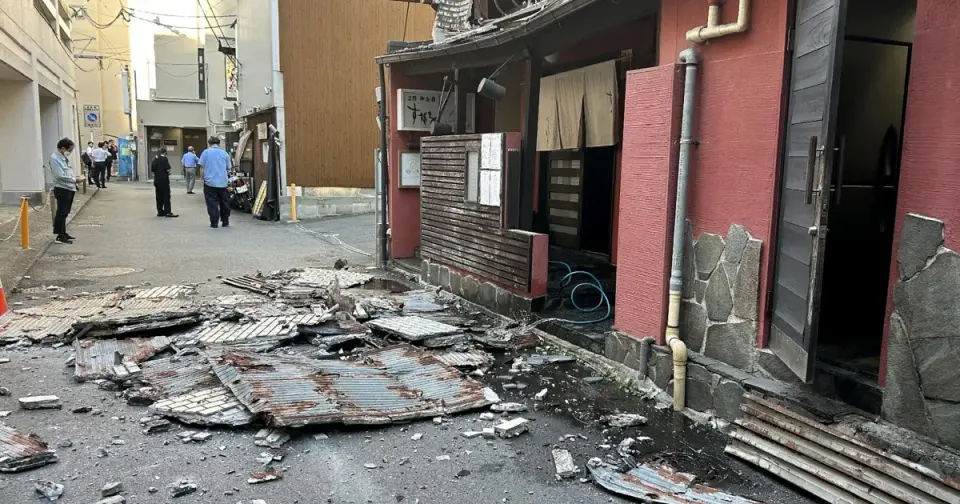
A 7.1-magnitude earthquake struck southern Japan on July 28, 2026, killing at least 13 people and injuring dozens. The shallow quake caused the Aeon Mall in Kashima to collapse, trapping survivors, while damaging roads, bridges, and the historic Kumamoto Castle. Prime Minister Sanae Takaichi deployed 3,600 soldiers for rescue operations as aftershocks continued.
Key points
- The earthquake, measured at 7.1 by Japan’s Meteorological Agency and 6.8 by the USGS, struck at 4:27 p.m. local time with a depth of 10 kilometers.
- At least 13 people died, with three fatalities confirmed at the Aeon Mall in Kashima, where the second floor collapsed and eight people were rescued.
- Prime Minister Sanae Takaichi declared a 'race against time,' deploying 3,600 soldiers and establishing a task force to coordinate rescue and damage assessment.
- Infrastructure damage included a derailed train at Yatsushiro station, a collapsed bridge in Yatsushiro City, and damage to Kumamoto Castle, which was also affected in 2016.
- A tsunami advisory was issued for the Ariake and Yatsushiro Seas but lifted within two hours; no abnormalities were found at nearby nuclear plants.
Background
Japan experiences approximately 1,500 earthquakes annually due to its location on the Ring of Fire. Kumamoto Prefecture was devastated by a series of earthquakes in 2016 that killed 278 people. In June 2026, a 7.2-magnitude offshore quake struck northeast Japan, highlighting the country’s ongoing seismic vulnerability and robust emergency protocols.
How outlets are covering it
NBC News emphasized the immediate chaos, noting an explosion at the mall and initial reports of 20 to 30 trapped individuals. BBC reported the death toll rising to 13 and highlighted the discrepancy between JMA’s 7.1 magnitude and USGS’s 6.8 reading. WJLA focused on the government’s response, detailing the suspension of Shinkansen services and the closure of Aso Kumamoto Airport. All sources agreed on the severity of the quake and the critical damage to infrastructure, but differed in their emphasis on rescue efforts versus initial impact assessments.
Why it matters
The event underscores Japan’s persistent seismic risks and the effectiveness of its emergency response systems. The collapse of a major commercial hub and damage to historical landmarks highlight the vulnerability of both modern infrastructure and cultural heritage. The deployment of military resources and the coordination of rescue operations demonstrate the government’s preparedness for large-scale disasters.
What to watch
Rescue operations will continue as authorities search for survivors in the rubble of the Aeon Mall. Residents are advised to remain vigilant for aftershocks, with the Japan Meteorological Agency reporting over 60 tremors ranging from magnitude 1 to 4. Infrastructure assessments will determine when rail and airport services can resume, while nuclear safety monitoring will continue at nearby plants.
- Major earthquake rocks Japan NBC News
- People trapped inside Japan shopping centre after earthquake BBC
- 7.1 quake hits Japan, injuring residents and damaging roads as tsunami advisory lifts WJLA
- Live updates: Dozens injured, buildings collapsed as major earthquake strikes Japan NBC News
- Map: 6.8-Magnitude Earthquake Shakes Japan The New York Times
Want the full story? Read the original reporting
Read on NBC News