
Spain declares national mourning after signaling error causes deadly train collision
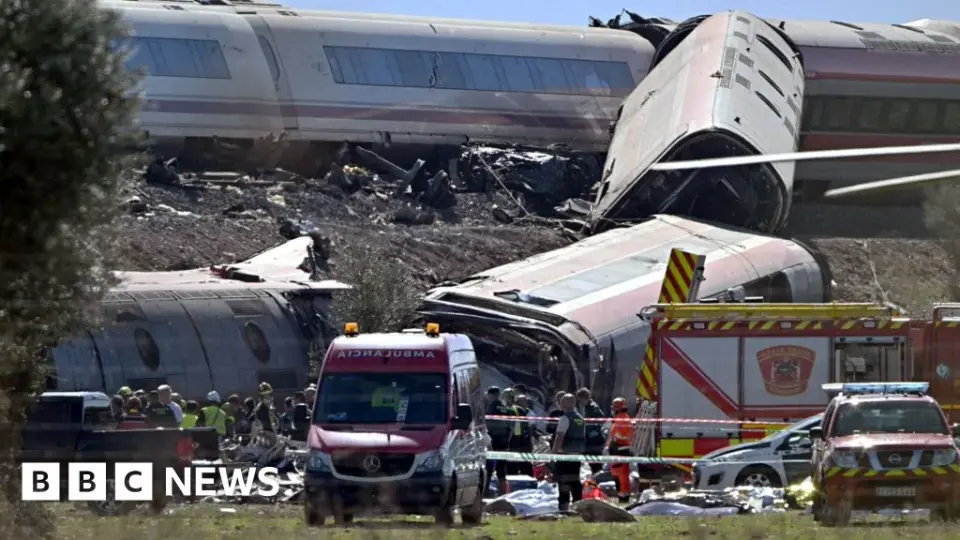
At least 68 people died and over 100 were injured when a high-speed train rear-ended a stationary service near Toledo, Spain, on Wednesday. Authorities attributed the crash to a signaling system failure followed by an erroneous manual override at a central control center. Prime Minister Pedro Sánchez declared three days of national mourning, marking the second fatal high-speed rail incident in Spain this year.
Key points
- A Renfe high-speed train collided with a stationary Iryo train near Urda, Toledo, shortly after 09:00 local time.
- Transport Minister Óscar Puente stated that a computer failure in the LZB safety system led to a manual override by a Madrid control center.
- The control center instructed the moving train to proceed without speed restrictions despite a red signal, causing the impact.
- The crash is Spain’s deadliest rail disaster since 2013 and the second fatal high-speed incident this year, following a January crash near Córdoba.
- Prime Minister Pedro Sánchez declared three days of mourning and vowed to investigate any negligence or system failures.
Background
This incident follows a January 2026 crash near Córdoba that killed 46 people on the same Madrid-Seville line. While the January crash involved a track break, this incident was attributed to a signaling error. Spain’s rail network had previously maintained a strong safety record in the EU, but these consecutive accidents have raised concerns about infrastructure maintenance and safety protocols.
How outlets are covering it
BBC and The Guardian emphasized the human error aspect, with Transport Minister Puente describing the control center’s decision to resume traffic as 'inexplicable.' CNN highlighted the technical failure of the LZB system and the subsequent manual override. Yahoo focused on the political fallout, noting protests in Madrid demanding Puente’s resignation and opposition calls for an independent review of the rail network. All sources agreed on the death toll of at least 68 and the involvement of Renfe and Iryo operators.
Why it matters
The crash has intensified scrutiny of Spain’s high-speed rail safety infrastructure and government accountability. With parliamentary elections approaching, the incident has become a significant political issue, prompting calls for stricter safety reviews and potential resignations. The consecutive nature of the accidents this year has eroded public confidence in the rail network's reliability.
What to watch
A full investigation into the crash is underway, with the Civil Guard using DNA samples to identify victims. The government has promised to address any safety system failures with 'utmost firmness.' Political tensions are expected to rise as the opposition demands an independent review of the rail network and the transport minister faces calls to resign.
- High-speed train crash kills at least 68 people in Spain BBC
- What caused the deadly train crash in Spain? What we know so far CNN
- Spain: Madrid mourns train crash victims as rescuers work through the night Yahoo
- Spain’s Sánchez declares three days of mourning after at least 68 killed in Toledo train crash The Guardian
- Spain high-speed railway crash kills at least 68 after train stopped on tracks Fox News
Want the full story? Read the original reporting
Read on BBC