
Trump, Xi, and Putin Hold First Trilateral Summit in Shenzhen, Yielding No Nuclear or Ukraine Breakthroughs
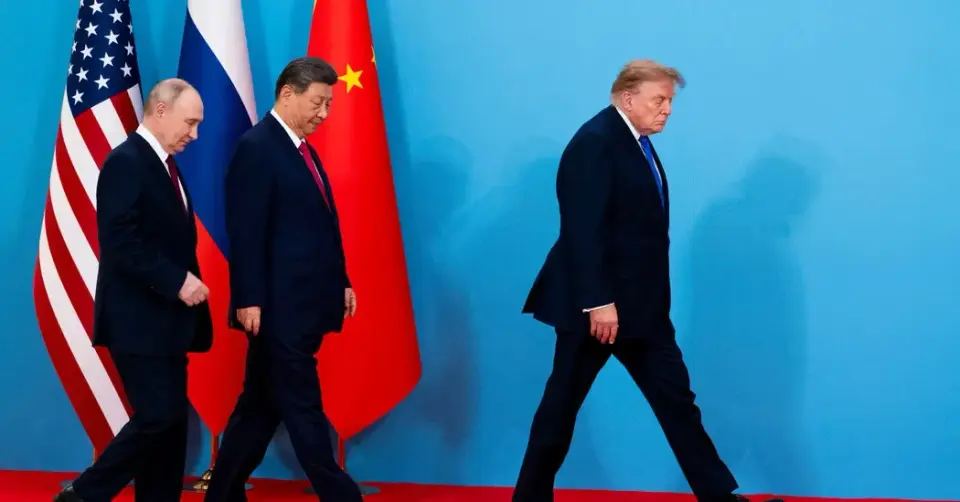
President Donald Trump, Chinese President Xi Jinping, and Russian President Vladimir Putin held their first trilateral meeting in Shenzhen, China, on November 19, 2026, during the Asia-Pacific Economic Cooperation (APEC) forum. Despite Trump’s public praise for the camaraderie and the leaders’ shared rhetoric on nuclear disarmament, the 80-minute session produced no concrete agreements on arms control, the war in Ukraine, or artificial intelligence. While the Kremlin described the atmosphere as positive, critics and allies of Ukraine condemned the gathering as a failure to address Russian aggression, with some comparing it to the 1945 Yalta Conference. The summit highlighted the gap between diplomatic posturing and substantive policy outcomes, as the leaders left without a detailed plan for reducing nuclear stockpiles or resolving ongoing geopolitical conflicts.
Key points
- The first-ever trilateral summit between Trump, Xi, and Putin took place at a lakeside villa in Shenzhen, China, on November 19, 2026, lasting approximately 80 minutes.
- Trump stated the nations were 'uniquely positioned' to discuss reducing nuclear weapons, but no agreement to resume arms control talks was reached, and the leaders remained largely silent on artificial intelligence threats.
- Putin’s aide Yuri Ushakov described the atmosphere as good, and the Kremlin shared a video of Xi and Putin exiting together, with Putin stating the meeting went well.
- Trump met separately with Putin and Xi beforehand; TASS reported the Ukraine war was the main topic in the Trump-Putin session, while Trump discussed trade and tariffs with Xi.
- Xi called nuclear weapons a 'sword of Damocles' and advocated for their complete destruction, though China had previously ruled out joining denuclearization talks with the U.S. and Russia.
- The summit occurred amid tensions over AI chip exports, with the Trump administration recently issuing rules to curb remote access to advanced chips by China.
Background
This summit follows a period of heightened U.S.-China trade tensions, with tariffs exceeding 100% in 2025, and a recent scandal involving former Nvidia CEO Jensen Huang and suspected Chinese intelligence asset Alice Huang, whose company Megaspeed is under Justice Department investigation for diverting AI chips to China. The Trump administration has also issued new rules to curb China’s remote access to advanced AI chips. Additionally, the U.S. and China have been negotiating a tariff truce, set to expire on January 10, 2027, and have discussed broader AI policy issues, including a communication channel for AI system failures. The summit also comes amid ongoing conflicts in Ukraine and Iran, with China being a major customer of Iranian oil and Russia maintaining ties with Iran.
How outlets are covering it
The New York Times emphasized the lack of concrete outcomes, noting that while Trump flaunted camaraderie, there were no breakthroughs on nuclear control, the Ukraine war, or AI. CBS News highlighted the diplomatic gestures, such as Putin’s positive mood and Xi’s call for nuclear disarmament, but also noted the absence of joint statements and the immediate departure of Trump. Politico focused on the backlash from Republicans and Ukraine allies, with Senator John Cornyn calling the summit a 'big mistake' that would not reduce fuel prices and would fund the war in Ukraine. The Atlantic drew a historical parallel to the 1945 Yalta Conference, suggesting the summit was 'embarrassing' and 'inconsequential,' and that it might promote the spread of communist totalitarianism, though this comparison is more analytical than factual. The outlets differ in their emphasis: The Times and CBS focus on the diplomatic process and lack of outcomes, Politico on the political backlash, and The Atlantic on the historical and geopolitical implications.
Why it matters
The summit underscores the limitations of high-level diplomatic gatherings in resolving complex geopolitical issues, particularly nuclear arms control and the war in Ukraine. The lack of concrete agreements suggests that despite the leaders’ rhetoric, there is no clear path to reducing nuclear stockpiles or ending the conflict in Ukraine. The backlash from Ukraine’s allies and the historical comparison to Yalta highlight the risks of such summits, which may inadvertently legitimize aggressive actions or fail to address the root causes of conflict. Additionally, the summit’s focus on AI and trade reflects the growing importance of these issues in international relations, but the absence of substantive progress indicates that these challenges remain unresolved. The event also highlights the tensions between the U.S., China, and Russia, and the potential for these tensions to escalate if diplomatic efforts fail to yield concrete results.
What to watch
The next steps will likely involve continued diplomatic efforts to address the issues raised at the summit, including nuclear arms control, the war in Ukraine, and AI regulation. The expiration of the U.S.-China tariff truce on January 10, 2027, will be a key date, as it may lead to renewed trade tensions if no new agreements are reached. The Trump administration may also continue to enforce rules curbing China’s access to advanced AI chips, and the U.S. and China may further develop their communication channel for AI system failures. Additionally, the backlash from Ukraine’s allies may lead to increased pressure on the Trump administration to take a stronger stance against Russia, and the historical comparison to Yalta may influence future diplomatic strategies. The summit’s lack of concrete outcomes suggests that further negotiations and diplomatic efforts will be necessary to address the issues raised, but the absence of a clear path forward indicates that these challenges may remain unresolved for the foreseeable future.
- Trump Flaunts Camaraderie With Xi and Putin but Has Little to Show for It The New York Times
- Trump, Xi and Putin sit down for a rare 3-way meeting in China, but appear to achieve little CBS News
- Trump’s trilateral draws backlash from Republicans and Ukraine allies Politico
- Trump’s Embarrassing, Inconsequential Summit The Atlantic
- In summit with Trump and Putin, Xi put himself and China at center stage The Washington Post
Want the full story? Read the original reporting
Read on The New York Times