
Ethiopian rebels form 'Alliance for Survival' to oust Abiy Ahmed
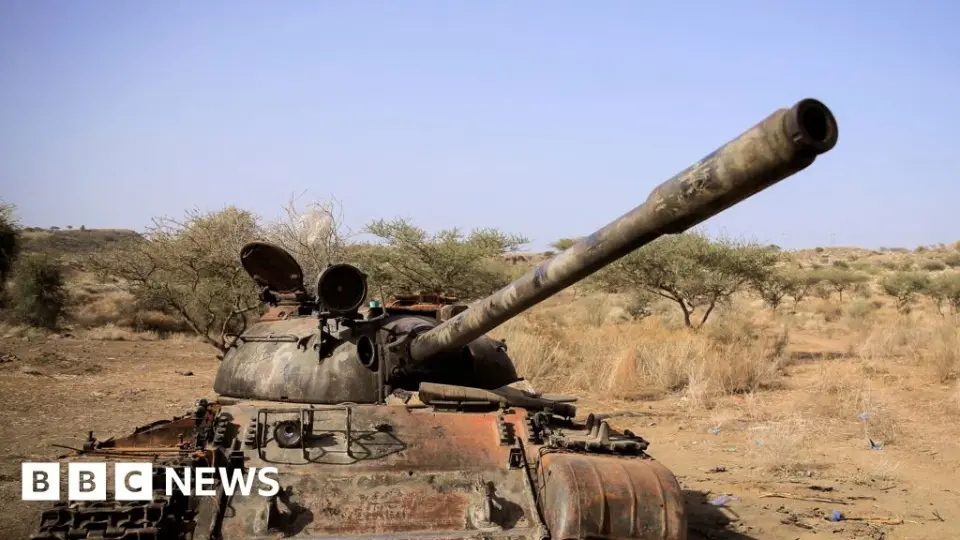
Seven armed groups in Ethiopia have formed a new coalition called the 'Alliance for Survival' to overthrow Prime Minister Abiy Ahmed. The alliance includes former enemies from the 2020-2022 Tigray war, such as the Tigray People's Liberation Front (TPLF) and Amhara's Fano militia, alongside the Oromo Liberation Army (OLA) and four smaller groups. The coalition accuses the government of causing war and poverty, aiming to install a transitional administration. Analysts doubt the alliance's military viability due to past conflicts and geographic distances, while the government dismisses the threat and cites Eritrean backing for the rebels.
Key points
- The 'Alliance for Survival' unites seven armed groups from six of Ethiopia's 12 regions, including Tigray, Amhara, Oromia, Somali, Afar, and Benishangul-Gumuz.
- The coalition includes former battlefield enemies, specifically the TPLF and Fano, who fought on opposite sides during the 2020-2022 Tigray civil war.
- The groups accuse Prime Minister Abiy Ahmed of centralizing power and causing 'war, genocide, and mass destruction,' with the goal of establishing a transitional government.
- The alliance was announced amid renewed tensions in Tigray, where the TPLF reasserted control of the regional administration in May 2026, violating the 2022 Pretoria peace deal.
- The Ethiopian government, via spokesperson Billene Seyoum, claims the groups have collaborated for some time with financial support from Eritrea, a claim Asmara denies.
- Analysts from Verisk Maplecroft and the International Crisis Group question the alliance's effectiveness due to unresolved territorial disputes, weak military coordination, and geographic separation.
Background
This development follows a period of escalating instability in Ethiopia. In June 2026, the country held general elections, which Abiy Ahmed's Prosperity Party won overwhelmingly, though the poll was marred by conflict and the exclusion of Tigray. Prior to the alliance announcement, there were reports of a potential TPLF-Eritrea partnership, prompting Abiy to assert confidence in Ethiopia's defensive capabilities. The 2022 Pretoria Agreement, which ended the Tigray war, remains fragile due to disputes over disarmament and territorial control in Western Tigray. Additionally, the Oromo Liberation Army has been fighting federal forces since 2018, and Fano militias have been in conflict with the government since 2023.
How outlets are covering it
BBC and Euronews highlight the historic nature of the alliance, emphasizing that groups which fought each other in the Tigray war are now united against Abiy. Business Insider Africa provides a detailed breakdown of the seven groups, noting the inclusion of the Ogaden National Liberation Front and others, while stressing the lack of a unified military command. AP News focuses on the political challenge to Abiy, noting the government's claim of Eritrean financing. All sources agree on the coalition's goal to overthrow the government but differ on the likelihood of success; analysts cited by Business Insider and Euronews are skeptical due to internal divisions, while the government remains dismissive of the threat.
Why it matters
The formation of this alliance threatens to destabilize Ethiopia, Africa's second-most populous country. A return to widespread conflict could disrupt economic reforms supported by the IMF and World Bank, exacerbating poverty and food insecurity for millions. It also places significant strain on the 2022 peace agreement, potentially leading to a broader regional war involving multiple fronts. The alliance's success or failure will determine whether Ethiopia can maintain its current political structure or face a fragmented future.
What to watch
The government is expected to respond to the alliance's formation, potentially through military action or diplomatic channels. The alliance may attempt to coordinate military operations, though analysts doubt their ability to do so effectively. There is a risk of renewed conflict in Tigray, Oromia, and Amhara, which could displace more people and disrupt humanitarian aid. The international community, including the African Union, may monitor the situation closely to prevent a return to full-scale war.
- Ethiopia conflict: Seven armed groups form alliance against Abiy Ahmed BBC
- Seven Ethiopian armed groups announce anti-government alliance Reuters
- Former battlefield enemies unite seven armed groups in bid to overthrow Ethiopia’s Abiy Ahmed Business Insider Africa
- Ethiopian opposition groups unite to mount challenge to prime minister Abiy AP News
- Former enemies form alliance to overthrow Ethiopia's Abiy Ahmed Euronews.com
Want the full story? Read the original reporting
Read on BBC