
Oleshky’s Humanitarian Collapse: Starvation and Blockade in Russian-Occupied Kherson
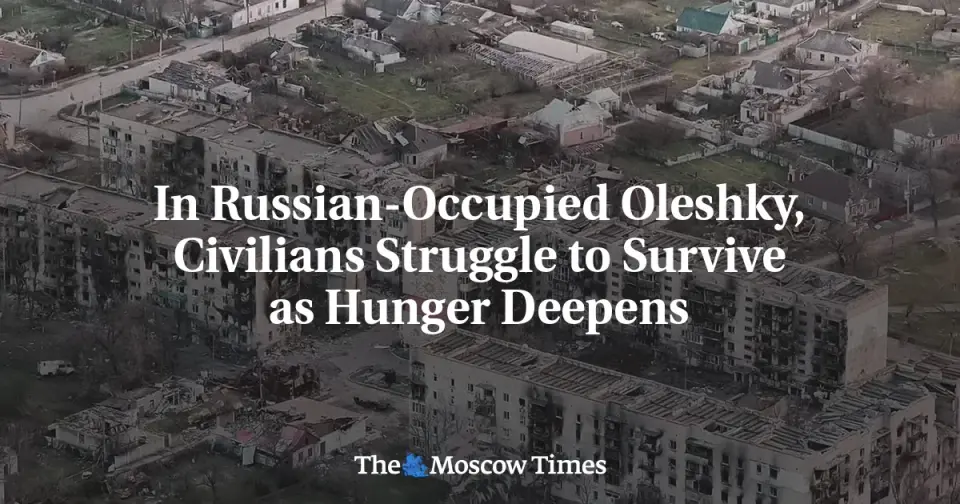
Russian-occupied Oleshky faces a severe humanitarian catastrophe as roughly 2,000 residents, including 50 children, are cut off from food, water, and medicine. Since late 2025, relentless bombardment and mined roads have isolated the town, forcing civilians to walk 23 kilometers to Radensk for supplies or survive on grass. Ukrainian forces have conducted drone airdrops, delivering nearly four metric tons of aid in October, but distribution remains uneven. While Ukraine blames Moscow for a 'siege' and using civilians as human shields, the Kremlin accuses Kyiv of blocking evacuation routes. No official evacuation has occurred in four years, leaving residents trapped in a 'critical' situation acknowledged by both sides.
Key points
- Approximately 2,000 residents, including an estimated 50 children, remain in Oleshky, down from a pre-war population of 24,000.
- Roads are heavily mined and damaged, halting road food deliveries since June after a driver died hitting a mine.
- Ukrainian forces delivered nearly 4 metric tons of food via drone on October 4, following a similar operation in late September.
- Residents report eating grass and walking 23 kilometers to Radensk for food, with some suffering from shrapnel wounds.
- The UN Human Rights Monitoring Mission recorded at least 29 civilian deaths in Oleshky and nearby Hola Prystan in 2026.
- Ukraine’s human rights commissioner stated that talks for a localized ceasefire and safe evacuation route are ongoing but stalled.
Background
Oleshky, a satellite town to Kherson across the Dnipro River, became a frontline location after Russian forces retreated in late 2022. The town suffered severe infrastructure damage from the 2023 Kakhovka dam explosion, which flooded 90% of the city. Since then, it has remained under Russian occupation, serving as a launch point for strikes on Ukrainian cities. Previous archive coverage from September 2026 highlighted the deepening starvation crisis, with residents surviving on weeds and unburied dead piling up in basements due to occupation restrictions.
How outlets are covering it
Outlets disagree on the primary cause of the blockade. The Moscow Times and Meduza emphasize that Russian forces have mined roads and use civilians as human shields, creating a 'siege' that prevents aid and evacuation. Conversely, the Kremlin and occupation authorities, cited by Meduza, accuse Kyiv of preventing civilians from leaving and blocking humanitarian convoys with drone attacks. Mezha reports on the logistical efforts, noting that National Guard troops delivered 960 kg of food to nearby Beryslav, highlighting the broader strain on frontline supply chains. While The Moscow Times focuses on the personal toll and failed aid distribution, Meduza provides historical context on the 2023 flooding and the long-term isolation, noting that no official evacuation has occurred in four years despite promises.
Why it matters
The situation in Oleshky exemplifies the deepening humanitarian crisis in occupied Ukrainian territories, where civilians face starvation and lack of medical care. The failure of evacuation efforts and the reliance on sporadic drone airdrops highlight the limitations of current humanitarian mechanisms in active conflict zones. The crisis has drawn attention from international bodies, including the Council of Europe and the UN, which have called for localized ceasefires and unhindered aid access. The ongoing stalemate in evacuation talks and the divergent blame between Moscow and Kyiv underscore the complex diplomatic and military challenges in resolving humanitarian emergencies in occupied regions.
What to watch
Ukraine’s human rights commissioner’s office stated that talks with Russia regarding a localized ceasefire and safe evacuation route are ongoing but have not produced a breakthrough. Ukrainian forces may continue drone airdrops, though distribution remains uneven and some residents report receiving no aid. The Kremlin has acknowledged the situation as 'critical' but continues to blame Kyiv for obstructing humanitarian efforts. International organizations, including the Red Cross, are involved in coordinating potential evacuations, but progress is stalled. The situation is expected to remain tense, with residents facing continued shortages and bombardment.
- In Russian-Occupied Oleshky, Civilians Struggle to Survive as Hunger Deepens The Moscow Times
- Starving Ukrainians Are Risking Death to Escape Their Front-Line Town WSJ
- People in Russian-occupied Ukrainian town risk 'road of death' to get food Reuters
- ‘The smell of death is everywhere’: Inside the humanitarian catastrophe unfolding in Russian-occupied Oleshky, where hundreds are trapped without food, electricity, or medicine Meduza
- Drones deliver 960 kg of food to frontline Beryslav | Mezha mezha.net
Want the full story? Read the original reporting
Read on The Moscow Times