
Ethiopian Advance to Eritrean Border Sparks Diplomatic Crisis and War Fears
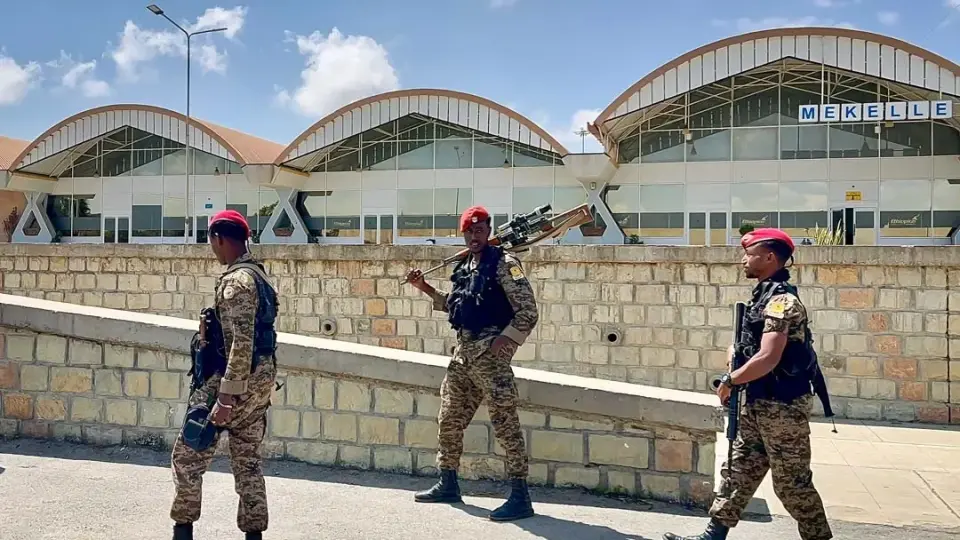
Ethiopian federal forces have captured the Tigrayan capital, Mekelle, and advanced toward the Eritrean border, triggering a severe diplomatic crisis. Addis Ababa accuses Asmara of deploying troops into Ethiopian territory to support the Tigray People’s Liberation Front (TPLF), while Eritrea denies the incursion and frames Ethiopia’s actions as an aggressive war. The UN Security Council has scheduled an emergency session for October 13 to address the risk of a full-scale interstate conflict that could destabilize the entire Horn of Africa.
Key points
- Ethiopian forces captured Mekelle on October 3, pushing the TPLF toward the Eritrean border.
- Ethiopia expelled Eritrean diplomats on October 1, severing all diplomatic ties.
- Ethiopia sent a letter to the UN Security Council on October 9, invoking self-defense against Eritrean aggression.
- Eritrea responded on October 10, accusing Ethiopia of a 'war of aggression' and claiming self-defense.
- The UN Security Council is scheduled to hold a closed-door session on October 13 to discuss the crisis.
Background
This escalation follows the collapse of the 2022 Pretoria peace agreement, which ended the previous Tigray war but failed to fully demobilize the TPLF or restore federal authority. Tensions between Ethiopia and Eritrea had been rising since 2022, driven by disputes over Red Sea access, the status of disputed territories, and Ethiopia’s support for opposition groups in Eritrea. The current conflict is part of a broader regional realignment, with Ethiopia facing a coalition of Eritrea, Sudan, Egypt, and Somalia, while the UAE and Saudi Arabia have competing interests in the region.
How outlets are covering it
International Crisis Group emphasizes the urgency of diplomatic intervention to prevent a full-scale war, noting that Eritrean troops may have withdrawn after drone strikes but that the risk of interstate conflict remains high. The New Humanitarian highlights the humanitarian catastrophe in Tigray, where nearly four million people are in urgent need of aid, and warns that the conflict could lead to a grinding stalemate or a wider regional war. Horn Review focuses on the legal and diplomatic dimensions, arguing that Eritrea’s incursion constitutes a breach of international law, while Ethiopia’s actions are justified under Article 51 of the UN Charter. All sources agree that the conflict has moved beyond an internal Ethiopian issue and now poses a direct threat to regional stability.
Why it matters
A full-scale war between Ethiopia and Eritrea could disrupt the Red Sea, a critical global shipping route, and draw in regional powers such as Egypt, Sudan, and the UAE. The conflict also threatens to exacerbate the humanitarian crisis in Tigray, where millions are already facing famine due to drought and blocked aid routes. Diplomatic efforts by the African Union and international powers are critical to preventing a wider conflagration in the Horn of Africa.
What to watch
The UN Security Council’s closed-door session on October 13 will be a key indicator of international response. Ethiopia and Eritrea may continue to exchange diplomatic accusations, while regional powers like Saudi Arabia and the UAE may attempt to mediate. The TPLF is expected to continue fighting from the northern mountains, and Ethiopia may pursue further military advances if Eritrean forces do not fully withdraw. Humanitarian organizations will likely intensify calls for access to Tigray to prevent famine.
- Pulling Ethiopia and Eritrea Back from War International Crisis Group
- Ethiopia and Eritrea are on the brink of another conflict The Economist
- Eritrea asks UN to intervene in standoff with Ethiopia Reuters
- Eritrean incursions raise fears of a wider regional war in Ethiopia The New Humanitarian
- Ethiopia or Eritrea, Who Is the Aggressor? horn review
Want the full story? Read the original reporting
Read on International Crisis Group