
Ukraine concludes Operation Vivaldi with Kolodiazi recapture, drone strikes hit 200 Russian vehicles
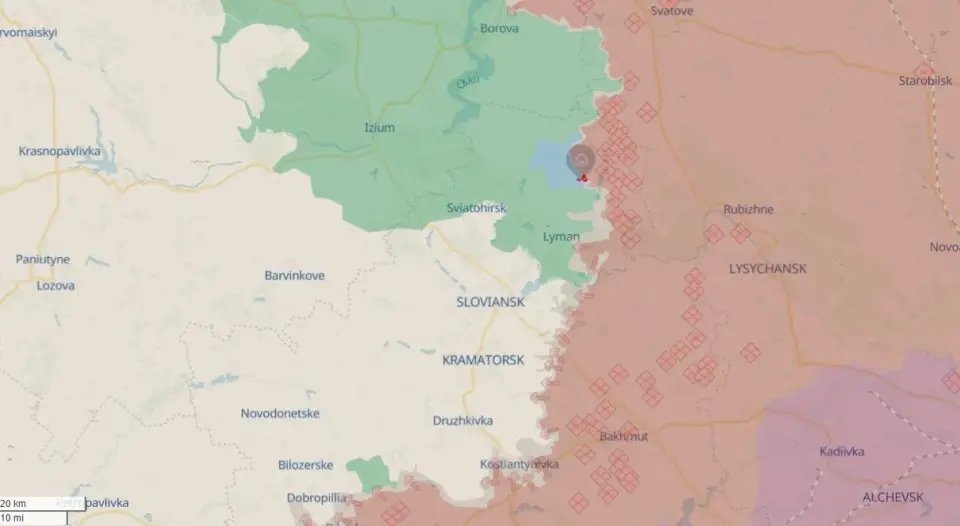
Ukraine’s Third Army Corps has concluded the fourth and final phase of Operation Vivaldi, reclaiming the village of Kolodiazi north of Lyman in Donetsk Oblast. According to the 60th Mechanized Brigade, Ukrainian forces encircled the settlement without engaging in street fighting, while their drone battalion neutralized over 200 Russian vehicles and approximately 500 troops. The operation, which began in August, has now reclaimed a total of 277 square kilometers and 16 settlements, effectively halting Russian advances toward the Siverskyi Donets River. Despite these battlefield gains, Ukraine faces significant strategic challenges as US President Donald Trump lifted oil sanctions on Russia and restricted Ukrainian access to Starlink satellite navigation services, which hampered Ukraine’s ability to intercept high-speed Russian drones.
Key points
- The 60th Mechanized Brigade’s drone unit, led by chief of staff 'Krash', reported striking over 200 Russian vehicles, including Grad and Uragan rocket launchers, tanks, and motorbikes, during the final phase of Operation Vivaldi.
- Ukrainian infantry successfully encircled and retaken Kolodiazi, Zelena Dolyna, and Lypove without entering street-to-street combat, a tactic that minimized Ukrainian casualties compared to Russian losses.
- The operation has reclaimed 277 square kilometers of territory and 16 settlements since August, bringing Russian territorial gains in 2026 close to zero, according to Al Jazeera.
- US President Trump’s decision to allow Russia to sell 1.8 million tonnes of diesel and restrict Starlink navigation services created a critical vulnerability for Ukraine’s air defense, particularly against fast-moving Geran-4 drones.
- Ukrainian President Volodymyr Zelenskyy criticized the US for choosing 'one side' and noted that Russian attacks on energy infrastructure continued despite a declared US-brokered energy ceasefire.
Background
Operation Vivaldi is a multi-stage counteroffensive launched by Ukraine’s Third Army Corps in May 2026 to counter Russian attempts to seize Lyman and encircle the 'fortress cities' of Sloviansk and Kramatorsk. Previous phases, including the conclusion of the third phase in late September, saw Ukraine reclaim over 176 square kilometers and capture hundreds of Russian soldiers. The operation relies heavily on technological innovations, including ground robots for demining and electronic warfare to neutralize Russian drones, marking a shift from traditional infantry assaults to a more technologically driven approach.
How outlets are covering it
Euromaidan Press emphasizes the tactical success of the 60th Mechanized Brigade, highlighting the specific role of drone units in 'closing the sky' and the low casualty ratio for Ukrainian forces compared to Russian losses. In contrast, Al Jazeera frames the military gains within a broader context of diplomatic and technological strain, noting that while Ukraine advances on the ground, it faces severe setbacks from US policy shifts, including the lifting of oil sanctions and restrictions on Starlink services. Al Jazeera also highlights the impact of these restrictions on Ukraine’s ability to intercept high-speed drones, a concern not detailed in the Euromaidan report. Both sources agree on the territorial gains but differ in their emphasis on the external factors affecting Ukraine’s defensive capabilities.
Why it matters
The conclusion of Operation Vivaldi marks a significant tactical victory for Ukraine, neutralizing a key Russian pincer movement and reclaiming substantial territory in Donetsk Oblast. However, the simultaneous escalation of Russian energy strikes and US restrictions on satellite services highlight the precarious nature of Ukraine’s defensive posture. The ability to sustain these gains depends not only on battlefield tactics but also on the continued support of international partners and the resilience of Ukraine’s technological infrastructure against external pressures.
What to watch
Ukraine is expected to maintain its defensive positions in the reclaimed areas, with the Third Army Corps preventing Russian infiltration. The focus will likely shift to sustaining the momentum of Operation Vivaldi while managing the impact of US policy changes on its air defense capabilities. Russia may continue to target Ukrainian energy infrastructure and logistics, while Ukraine will likely increase its strikes on Russian refineries and data centers to offset the loss of satellite navigation services.
- Ukraine retook Kolodiazi north of Lyman as its drones hit 200-plus Russian vehicles in Operation Vivaldi’s last phase, Ukrainian drone officer says Euromaidan Press
- Ukraine advances in occupied Donetsk as Trump hands Putin diesel deal Al Jazeera
- Ukraine reports more battlefield gains as Putin’s invasion loses momentum Atlantic Council
- Ukraine says it frees more territory in Donetsk region counteroffensive Reuters
- Belarusian Volunteers Took Part in Operation Vivaldi REFORM.news
Want the full story? Read the original reporting
Read on Euromaidan Press