
TPLF Seizes Airports and Launches Cross-Border Offensive as Ethiopia Faces Renewed War
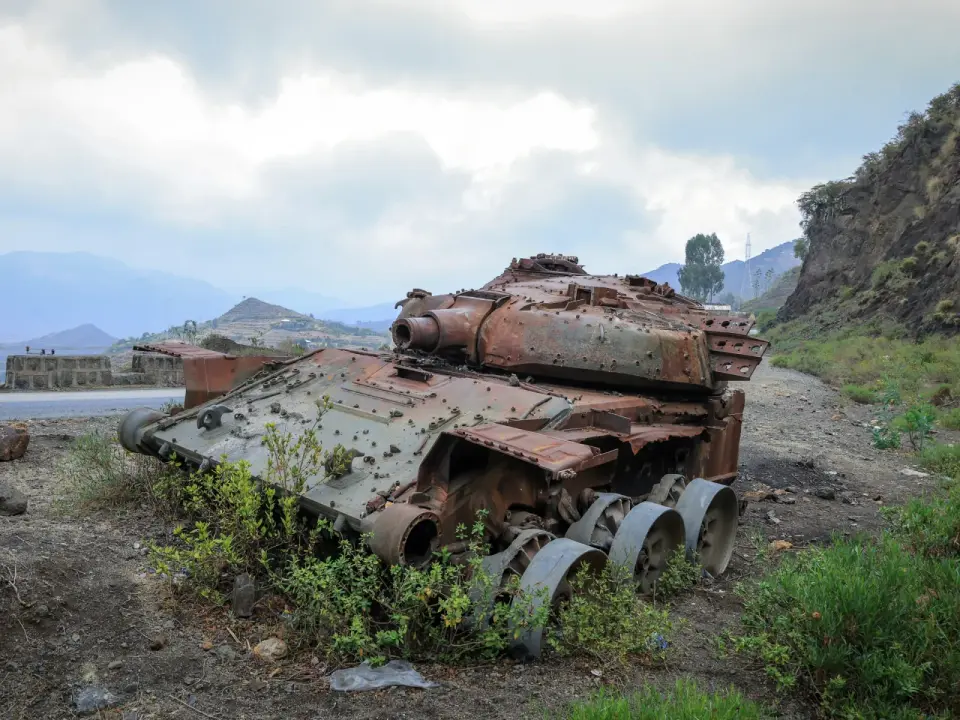
Tigrayan forces have seized control of airports in Mekelle, Aksum, and Shire and launched attacks in the Afar and Amhara regions. This escalation follows the TPLF's announcement of a new rebel alliance aimed at overthrowing Prime Minister Abiy Ahmed. While the federal government accuses the TPLF of an unprovoked offensive, Tigrayan authorities claim they are defending against a federal 'invasion' involving drone and artillery strikes. The conflict has already resulted in civilian casualties and the suspension of flights, raising fears of a return to full-scale war.
Key points
- On September 23, Tigray Defense Forces seized federally controlled airports in Mekelle, Aksum, and Shire, leading to the cancellation of all Ethiopian Airlines flights to the region.
- Clashes erupted in the Afar region (Abala, Erebti) and Amhara (Lalibela), with Tigrayan forces fighting alongside the Fano militia against federal troops.
- The escalation follows the TPLF's Sunday announcement of the 'Ethiopian Peoples’ Forces Alliance for Survival,' a coalition of seven armed groups including the Oromo Liberation Army and Ogaden National Liberation Front, formed to oust the government.
- A drone strike on the town of Alamata on Tuesday killed at least 14 civilians and injured 22, with local officials alleging that secondary schools were targeted despite being unoccupied.
- The US State Department condemned a separate drone strike on a Catholic aid convoy, urging dialogue, while analysts warn the conflict could destabilize the broader Horn of Africa region.
Background
This escalation marks a sharp reversal from the 2022 Pretoria Peace Agreement, which ended a civil war that killed an estimated 600,000 people. Tensions had been rising since August, with low-intensity clashes beginning at the Sudan border and federal drone strikes targeting Tigrayan officials. The TPLF, which ruled Ethiopia until 2018, was sidelined after Abiy Ahmed took office, leading to the 2020-2022 war. Recent months saw the TPLF restore its pre-war administration and engage in forced recruitment, while the federal government accused them of preparing for renewed conflict.
How outlets are covering it
Outlets disagree on the initiator of the current phase of violence. Al Jazeera and The Washington Post emphasize the TPLF's offensive actions, citing federal adviser Getachew Reda, who described the TPLF's moves as an 'all-out offensive' and 'irresponsibility.' Conversely, Tigrayan authorities, cited by BBC and Al Jazeera, frame the events as a defensive response to a federal 'invasion' and 'genocidal' bombardment. ACLED provides a more nuanced military analysis, noting that while the TPLF is leading the charge, the alliance's other members may lack the capacity for coordinated uprisings, though the risk of a multi-front conflict remains high. BBC highlights the humanitarian impact, noting civilian deaths in Alamata and the psychological trauma reported by residents, while ACLED focuses on the strategic implications for the stretched Ethiopian National Defense Force.
Why it matters
The renewed hostilities threaten to unravel the fragile peace in the Horn of Africa, potentially triggering a regional conflict involving Eritrea and Sudan. With approximately one million people still displaced from the previous war, a new escalation could lead to a humanitarian catastrophe. Furthermore, the conflict distracts the Ethiopian military from other security challenges, including the Red Sea crisis and the civil war in Sudan, potentially destabilizing the entire region.
What to watch
Analysts warn that the situation could escalate into a broader regional conflict if Eritrea is confirmed to be backing the TPLF. The federal government may declare a state of emergency, though ACLED notes this is not yet certain. The international community, including the US and African Union, is likely to push for de-escalation, but the effectiveness of these efforts remains uncertain given the deep-seated grievances and the formation of a powerful rebel alliance.
- Tigray forces launch offensive against Ethiopian government Al Jazeera
- Ethiopia and Tigray accuse each of launching offensives, fuelling fears of new war BBC
- Tigrayan leaders say new war with Ethiopian government has begun Reuters
- Ethiopia Conflict Alert: The TPLF Move On Critical Sites After Heading a New Alliance. A new phase of the next war? ACLED
- Attacks by new rebel alliance stoke fear Ethiopia is returning to war The Washington Post
Want the full story? Read the original reporting
Read on Al Jazeera