
Paris Excavation Yields Gallo-Roman Wall, Potentially Settling Lutetia’s Location Debate
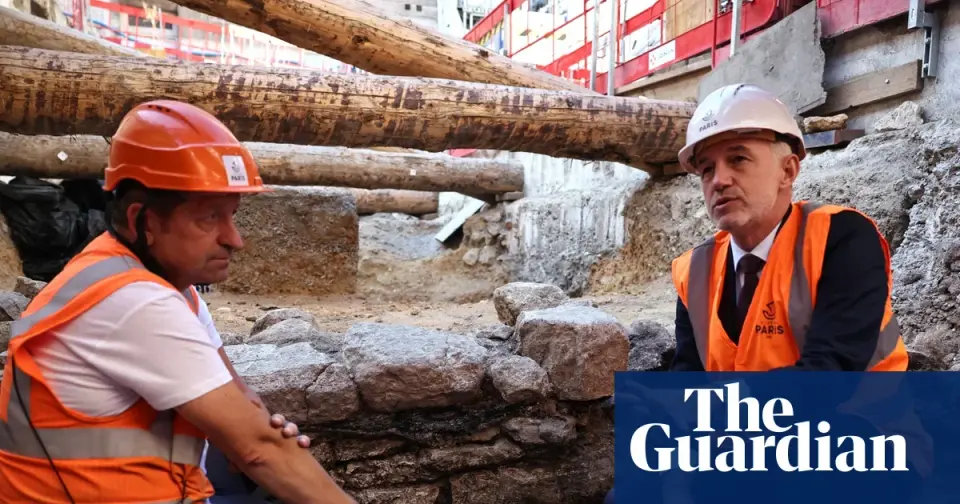
A 20-meter stretch of ancient wall discovered beneath the Hôtel-Dieu hospital on the Île de la Cité in Paris has been hailed by France’s culture ministry as a major breakthrough. Dating from the Gallo-Roman period, the stone-and-wood structure may confirm the island as the original site of Lutetia, the ancient name for Paris. The find, which bears traces of fire, aligns with historical accounts of the Battle of Lutetia in 52 BC and could resolve a long-standing debate regarding whether the city’s first settlement was located on the island or in the western suburb of Nanterre.
Key points
- A roughly 20-meter (65-foot) section of wall from the Gallo-Roman period was uncovered beneath the Hôtel-Dieu hospital on the Île de la Cité during summer excavations.
- The structure is believed to be a fragment of the ramparts of Lutetia, the ancient settlement established by the Gallic Parisii tribe along the River Seine.
- The wall exhibits traces of fire, potentially corresponding to Julius Caesar’s account that the Gauls burned their town before the Battle of Lutetia in 52 BC.
- Carbon dating of the charred remains places the find between 200 BC and 10 BC, a timeframe that encompasses the historical battle.
- The discovery challenges a rival theory that the original settlement was located in Nanterre, a suburb to the west of the current city center.
- France’s culture minister, Catherine Pégard, described the find as a major breakthrough but emphasized the need for scientific verification of its function and chronology.
Background
The Île de la Cité has traditionally been regarded as the center of Lutetia, but archaeological debates have persisted regarding whether the original settlement was located there or in Nanterre. Julius Caesar’s vague description of Lutetia as being on an island in the River Seine has fueled various theories over the centuries. This discovery adds significant weight to the Île de la Cité hypothesis, potentially resolving a historical question that has remained open for years.
Why it matters
This discovery could fundamentally reshape the understanding of Paris’s origins by confirming the Île de la Cité as the site of the first settlement. It provides tangible evidence linking the modern city to its Gallo-Roman roots and may end a long-standing academic debate about the location of Lutetia. The find also offers new insights into the events surrounding the Battle of Lutetia, potentially validating historical accounts of the conflict.
What to watch
Further scientific analysis is required to verify the function and exact chronology of the wall. Researchers will continue to examine the charred remains and the structure itself to determine if it definitively confirms the Île de la Cité as the site of Lutetia. Additional excavations may be conducted to uncover more fragments of the ramparts or other artifacts from the Gallo-Roman period.
- Ancient wall found beneath Paris could confirm site of first settlement The Guardian
- Ancient Wall Found in Paris Provides Clues to City’s Origins The New York Times
- Ancient Wall Discovered in Paris Could Help Researchers Understand the City During Julius Caesar’s Time People.com
- Archaeological 'breakthrough' could confirm origins of Paris Phys.org
- From the shadows of Notre-Dame, hidden birthplace of Paris emerges The Times
Want the full story? Read the original reporting
Read on The Guardian