
Ukraine’s F-16 Gun Kills Highlight the Gap Between Emergency Aid and a Modern Air Force
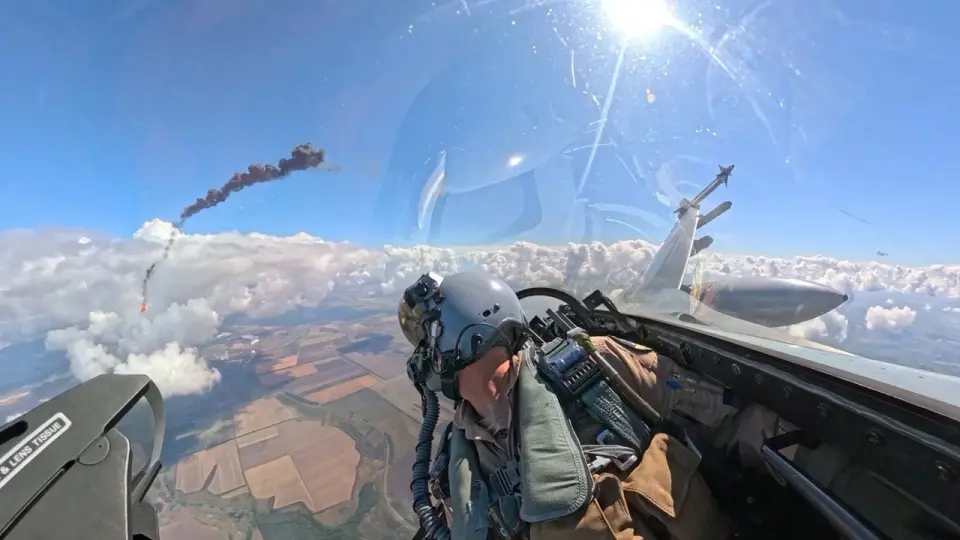
A recent cockpit photo shows a Ukrainian F-16 pilot shooting down a Russian Geran drone with a 20mm cannon during a massive air raid. While this demonstrates pilot skill and the utility of legacy aircraft, experts warn that these older F-16s lack the advanced sensors and networking needed for a modern air force. The focus must shift from simply donating planes to building a comprehensive, sustainable aviation ecosystem.
Key points
- On Sept. 10, 2026, Russia launched 149 Shahed-type cruise missiles and drones at Ukraine; Ukrainian forces destroyed or suppressed 128 of them.
- A released cockpit image shows a Ukrainian F-16 pilot achieving his third gun kill of a sortie using the aircraft's 20mm cannon against a jet-powered Geran drone.
- The F-16s currently in Ukraine are primarily F-16AM/BM Mid-Life Update models, which are upgraded but lack the advanced AESA radar and electronic warfare capabilities of newer Block 70/72 variants.
- Using guns to shoot down drones helps preserve scarce air-to-air missile inventories, which are under significant strain from the high pace of Russian attacks.
- Ukraine’s long-term defense requires a full aviation ecosystem, including training, logistics, and command-and-control, rather than just a larger inventory of aircraft.
Background
This development follows earlier reports of the U.S. Air Force seeking ground-based gun systems to defend overseas bases from drones, a strategy informed by lessons from Ukraine and Iran. It also contrasts with recent incidents like the fatal crash of a Greek F-4 Phantom at an air show, highlighting the operational risks and maintenance challenges faced by aging air forces. The broader context involves the transition from Soviet-era aviation to a Western, networked model, a shift emphasized by Ukrainian officials as essential for long-term defense.
Why it matters
The incident underscores that while legacy aircraft can be effective in the short term, they are insufficient for the complex, multi-threat environment of modern warfare. The future of Ukraine’s air defense depends not just on receiving more F-16s, but on developing the technological and logistical infrastructure to operate them effectively against a diverse array of threats, including drones, missiles, and electronic warfare.
What to watch
The Air Force Capability Coalition is expected to continue expanding its support beyond aircraft transfers to include pilot training, weapons integration, and logistics. Ukraine will likely continue to rely on a mix of F-16s, Mirage 2000s, and Gripens, while also investing in cost-effective drone interceptors and ground-based air defenses to manage the high volume of Russian attacks.
Want the full story? Read the original reporting
Read on Air & Space Forces Magazine