
Japan's New Aegis Cruisers: Massive Radar, Tomahawk Integration, and Strategic Shifts
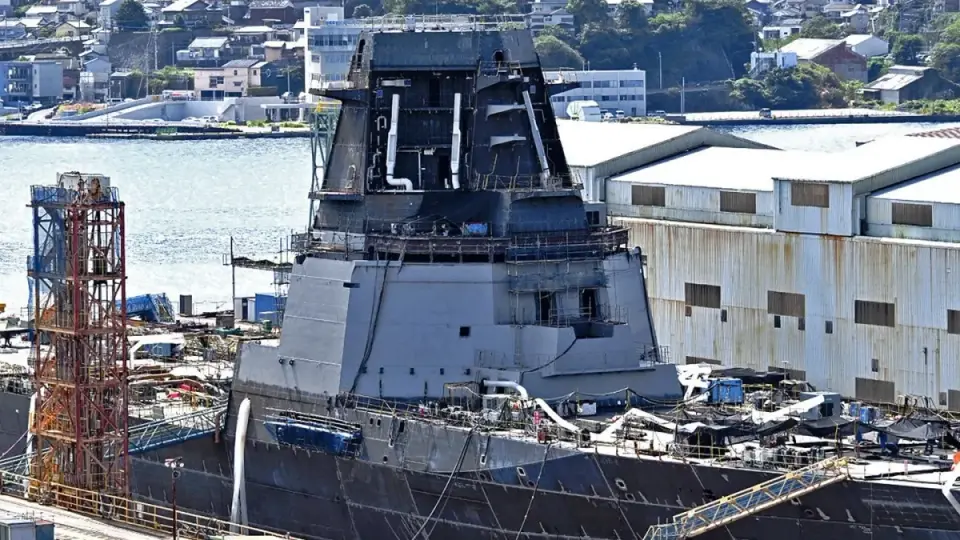
Japan’s first Aegis System Equipped Vessel (ASEV) is nearing completion, featuring a massive AN/SPY-7 radar and 128 vertical launch cells. While initially focused on missile defense, the ship will soon gain Tomahawk strike capability, marking a significant doctrinal shift toward 'stand-off defense' against regional threats.
Key points
- The first ASEV, laid down in July 2025, is under construction in Nagasaki and is expected to enter service before the end of the 2027 fiscal year.
- The vessel measures 620 feet long with a displacement of 12,000 tons, significantly larger than Japan’s current Maya-class destroyers.
- It features the AN/SPY-7(V)1 radar, which offers five times the tracking capability of the older SPY-1 system.
- The ship will initially carry SM-3 and SM-6 missiles but is slated to receive Tomahawk cruise missiles by 2032.
- Japan’s existing destroyer JS Chokai has already been modified to fire Tomahawks, serving as a precursor to the ASEV’s capabilities.
Background
This development follows Japan’s recent acquisition of Tomahawk missiles and the successful test launch from the JS Chokai in July 2026. It also aligns with broader regional tensions, including North Korea’s recent ballistic missile launches and deepening military cooperation between Russia and North Korea, which has heightened security concerns in the Asia-Pacific region.
How outlets are covering it
The primary source, The War Zone, emphasizes the physical scale and technological leap of the ASEV, highlighting its large radar mast and future integration of high-energy lasers. In contrast, Stars and Stripes focuses on the immediate operational milestone of the JS Chokai’s Tomahawk capability, framing it as a critical step in Japan’s 'stand-off defense' strategy. While both outlets agree on the strategic significance, The War Zone notes the potential for future expansion of the ASEV’s role, whereas Stars and Stripes highlights the logistical challenges and delays in Tomahawk production due to global demand.
Why it matters
The introduction of the ASEV and the integration of Tomahawk missiles represent a fundamental shift in Japan’s post-war military doctrine, moving from a purely defensive posture to one that includes long-range strike capabilities. This enhances Japan’s ability to deter threats from China, Russia, and North Korea, while also strengthening its alliance with the United States in the Indo-Pacific region.
What to watch
The first ASEV is expected to be commissioned by March 2028, with the second following in 2029. Japan plans to add Tomahawk missiles to the ASEV’s arsenal by 2032. Additionally, the U.S. Navy is increasing Tomahawk production to meet surging demand, which may impact the timeline for further deliveries to Japan.
- Japan’s First Dedicated Missile Defense Warship Is A Monster TWZ
- Japan’s First Tomahawk Cruise Missile Destroyer Back from U.S. USNI News
- Japan destroyer returns to home port, equipped with Tomahawk missile capability Japan Today
- Japanese Destroyer Chokai Returns to Home Port After Gaining Tomahawk Missile Launch Capabilities in U.S. The Japan News
- Japan’s first Tomahawk-capable destroyer returns home after US upgrades stripes.com
Want the full story? Read the original reporting
Read on TWZ