
EU Energy Chief Urges Demand Cuts as Winter Gas Prices Soar Amid Geopolitical Tensions
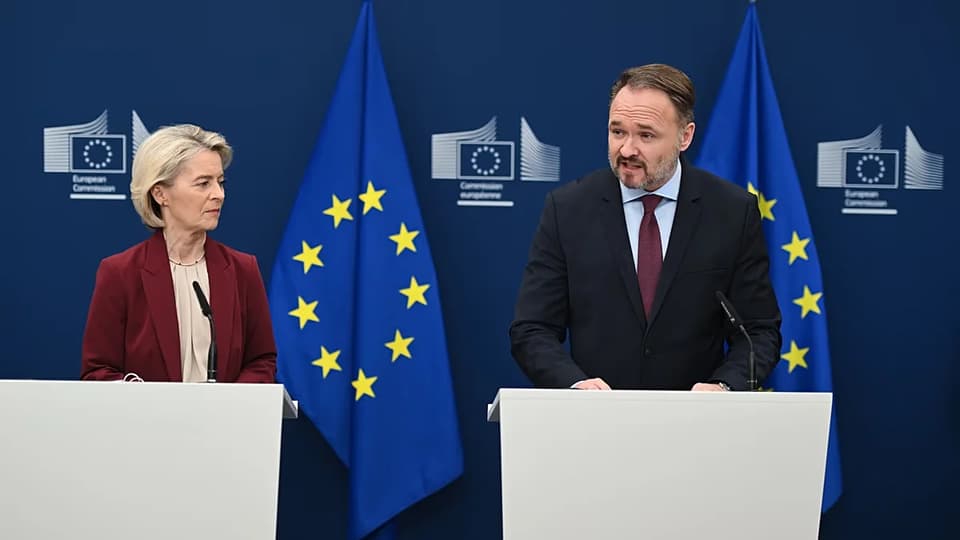
European Energy Commissioner Dan Jørgensen has urged EU member states to implement voluntary measures to reduce gas and electricity demand, warning that soaring prices driven by Middle East conflicts and Asian competition for LNG could lead to shortages. While storage levels are 12 percentage points below last year, the Commission advises against panic buying, suggesting an 80% fill target is sufficient. Jørgensen links the price crisis to a potential supply crisis, noting that 50 million Europeans may face choices between heating and food, a situation he warns could fuel far-right political gains.
Key points
- Jørgensen’s letter to capitals urges continued demand reduction, citing 'exceptionally low' storage levels that are 12 percentage points below the same period last year.
- The Dutch TTF benchmark for natural gas has risen to approximately €72 per MWh, up €40 since the US and Israel bombed Iran in February 2026.
- Analysts warn prices could spike above €100/MWh during peak winter if Gulf LNG exports fail to grow or Norwegian maintenance prolongs constraints.
- The Commission recommends an 80% storage fill target rather than 90% to avoid driving up global prices through aggressive purchasing, while still ensuring winter security.
- Jørgensen warns that 50 million Europeans may be forced to choose between heating and food, a situation he links to the rise of far-right parties in countries like Germany and France.
Background
This warning follows a period of sustained high energy prices in 2026, driven by the Persian Gulf conflict and the closure of the Strait of Hormuz. Earlier reports in August and September noted that gas prices remained elevated due to geopolitical tensions rather than demand, with the EU facing its lowest gas reserves in over a decade. The current situation marks a shift from price protection to active demand management, as the Commission fears a price crisis could evolve into a physical supply shortage.
How outlets are covering it
Euronews focuses on the technical and logistical aspects, highlighting the specific price increases and the Commission’s advice to avoid panic buying by targeting an 80% storage level. The Financial Times emphasizes the political and social consequences, with Jørgensen explicitly linking the affordability crisis to the rise of far-right parties like the Alternative for Germany and France’s Rassemblement National. While Euronews notes the absence of immediate physical shortages, the FT frames the situation as a threat to democratic stability, stressing the human cost of the energy squeeze. Both outlets agree on the severity of the price surge but differ in their emphasis on the political ramifications versus the supply chain logistics.
Why it matters
The EU’s shift from price protection to demand management signals a potential transition from a price crisis to a supply crisis. If member states fail to act, the resulting economic hardship could destabilize democratic institutions by empowering populist movements. The decision to prioritize an 80% storage target over 90% reflects a strategic attempt to balance security with market stability, avoiding a scenario where European panic buying exacerbates global price spikes.
What to watch
EU energy ministers are expected to meet next week to discuss Jørgensen’s recommendations. Member states may activate national emergency plans, including interruptible gas contracts and switching power plants to other fuels, if conditions deteriorate. The Commission will monitor whether voluntary demand reduction measures, such as limiting public building temperatures and shifting consumption via smart meters, are sufficient to prevent a winter shortage.
- EU tells capitals to cut gas demand amid rising supply concerns Euronews.com
- EU Floats Energy Demand Curbs in Price Crisis Letter to Members Bloomberg
- EU Commission calls on countries to cut energy demands as costs surge politico.eu
- EU warns of energy price crisis, asks countries to consider curbing demand, letter shows Reuters
- Brussels warns capitals to tackle energy crisis or see far right take power Financial Times
Want the full story? Read the original reporting
Read on Euronews.com