
Healthy-diet driven transformation could reshape global farming
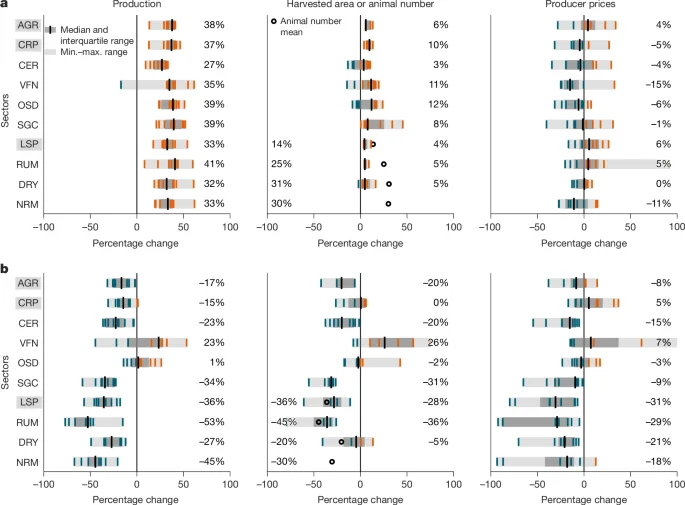
A Nature study using a ten-model multimodel ensemble finds that transforming global food systems toward healthy diets (as per the EAT–Lancet reference), boosting productivity, and halving food loss and waste by 2050 would fundamentally reshape global agriculture. By 2050, agricultural land would be about 6% lower than 2020, production around 17% lower than business-as-usual projections, and the value of production roughly 26% lower, with livestock output falling sharply while vegetables, fruits, nuts and legumes rise in value. The livestock sector, especially ruminant meat and dairy, would shrink dramatically, whereas plant-based foods would gain share. The transformation could avert health risks (estimates of about 15 million fewer adult deaths annually) and reduce environmental pressures, but would entail substantial regional differences, employment shifts, and political economy challenges. Realizing the scenario would require bold policy, changes in consumption, and careful consideration of costs and distribution across actors and regions.
- Food systems transformation would reshape global agriculture Nature
- The diet that could remake modern agriculture Cornell Chronicle
- Shift to healthy, sustainable diets would reshape global agriculture The London School of Hygiene & Tropical Medicine
- Op-Ed | The Food System Is Driving Two Crises at Once—and Could Help Solve Both Food Tank
- Food System Transformation Could Reshape Global Agriculture, Experts Say Bioengineer.org
Reading Insights
0
30
52 min
vs 53 min read
99%
10,500 → 146 words
Want the full story? Read the original article
Read on Nature