
Krasnodar Declares Emergency as Ukrainian Strikes Halt 90% of Regional Grain Exports
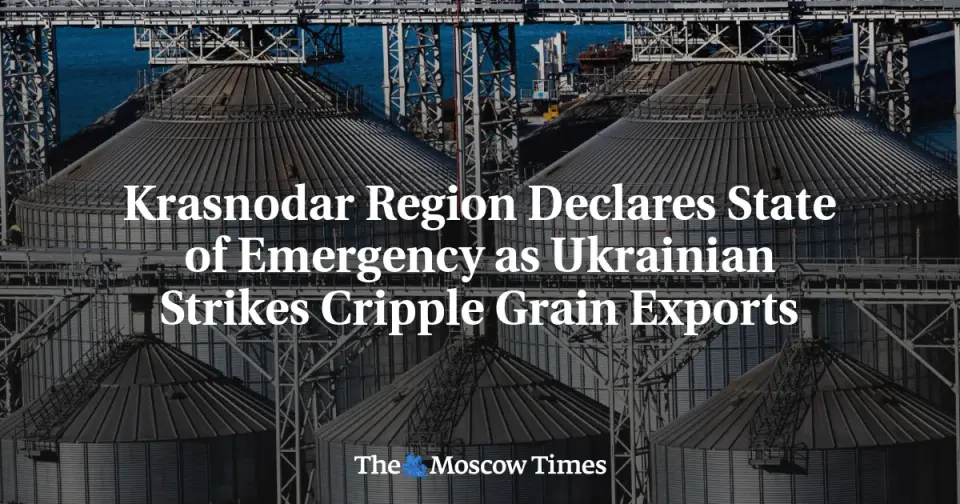
Krasnodar region governor Veniamin Kondratyev signed a state of emergency decree on Wednesday, retroactive to August 12, citing mass attacks on logistics and suspended port operations. Ukrainian strikes in August disabled 90% of the region's grain export capacity, causing a domestic surplus and price drops. Russia is rerouting shipments via Baltic and Arctic ports, while diplomats discuss a limited ceasefire on grain and energy targets.
Key points
- Governor Kondratyev declared a state of emergency in Krasnodar, effective from August 12, due to disrupted shipping in the Azov-Black Sea basin.
- Ukrainian drone and missile strikes in August took 90% of the region's grain export capacity offline, leaving farmers with unsold inventories.
- The export disruption has created a domestic grain surplus, lowering local prices and threatening material losses for agricultural producers.
- Russia is repurposing fertilizer and coal terminals in Baltic and Arctic ports to handle grain shipped by rail from the south.
- US Secretary of State Marco Rubio stated that both Ukraine and Russia expressed interest in a limited ceasefire regarding grain and energy targets after talks with Foreign Minister Sergei Lavrov.
Background
This development follows a major Ukrainian strike on the Novorossiysk grain hub in August, which damaged two major export terminals and killed three people. That attack prompted Russia to warn of retaliation and begin redirecting cargo to alternative seas. The current emergency declaration reflects the sustained impact of these strikes on Russia's primary agricultural hub, where this year's harvest is projected to exceed last year's output.
Why it matters
The disruption of Russia's primary grain export route threatens global food security and commodity prices. The shift to Baltic and Arctic ports may alter international trade logistics, while the potential for a limited ceasefire on energy and grain targets could signal a shift in the conflict's economic dimensions.
What to watch
Monitor the effectiveness of rerouted grain shipments through Baltic and Arctic ports. Watch for developments in diplomatic talks regarding a limited ceasefire on grain and energy targets. Track the Central Bank's warnings on future agricultural output and the impact of domestic price drops on Russian farmers.
Want the full story? Read the original reporting
Read on The Moscow Times