
Assisi Peace Summit Confronts Nuclear Threats and Climate Justice
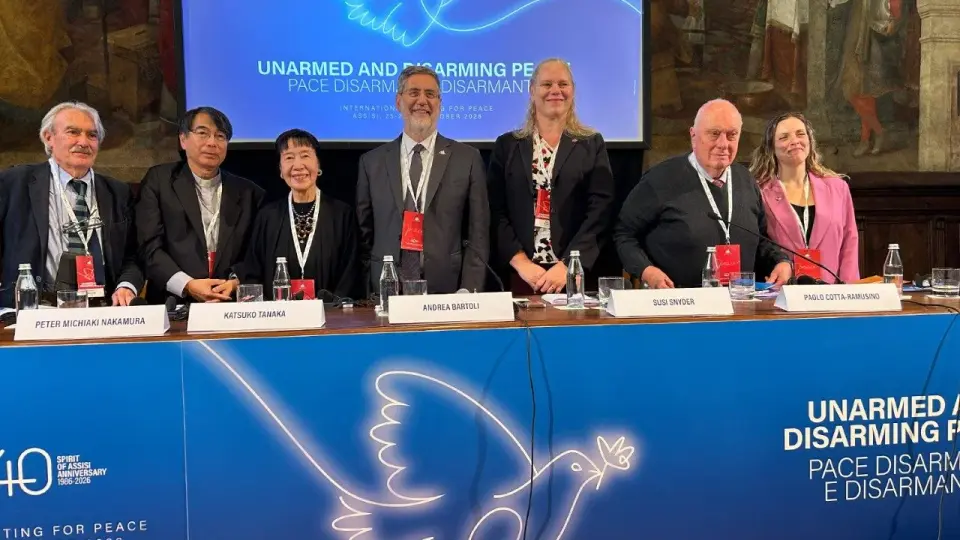
The 2026 Sant’ Egidio International Meeting for Peace in Assisi, marking the 40th anniversary of the 1986 interfaith gathering, convened over 5,000 participants to address nuclear proliferation and climate justice. While Pope Leo XIV could not attend due to post-surgery recovery, he urged global prayer for peace. Panels featured Hiroshima survivor Katsuko Tanaka and ICAN activist Susi Snyder, who warned that AI-driven nuclear systems pose an unprecedented risk. The event highlighted the tension between diplomatic calls for disarmament and ongoing regional conflicts, particularly in the Middle East.
Key points
- The meeting, themed 'Unarmed and Disarming Peace,' drew over 5,000 attendees to Assisi, Italy, from October 25-27, 2026.
- Pope Leo XIV, recovering from lung cancer surgery, sent a message urging dialogue, noting that wars 'impoverish and harm the world.'
- Hiroshima survivor Katsuko Tanaka emphasized the need for continuous disarmament dialogue, stating that as long as one nuclear weapon exists, it must be used.
- Susi Snyder of ICAN cited a King’s College London study indicating that AI systems applied to nuclear command chose war in every simulation.
- WCC moderator Heinrich Bedford-Strohm linked climate inaction to 'generationalism,' warning that current lifestyles threaten future generations.
- USCCB President Paul Coakley previously warned that Middle East conflicts risk spiraling into a 'tragedy of immense proportions,' echoing the Pope's calls for de-escalation.
Background
This gathering marks the 40th anniversary of the 1986 Assisi meeting initiated by Pope John Paul II. Recent events, including Pope Leo XIV’s September 2026 trip to France and his March 2026 Angelus remarks on the Middle East, have framed peace as a central issue. The current geopolitical landscape is marked by tensions following US-Israeli strikes on Iran in late February 2026, which killed Ayatollah Ali Khamenei and triggered regional retaliation.
How outlets are covering it
Vatican News and Angelus News emphasize the spiritual and diplomatic dimensions, focusing on Pope Leo XIV’s calls for prayer and the moral imperative of disarmament. The World Council of Churches highlights the ecological dimension, with Bedford-Strohm framing climate inaction as a moral failure akin to sin. In contrast, the USCCB perspective, via Archbishop Coakley, focuses on the immediate geopolitical danger in the Middle East, warning of a 'wider regional war.' While Vatican News presents the nuclear threat as a distant but persistent risk, Snyder’s testimony in the same source frames it as an immediate, AI-driven danger, creating a tension between traditional deterrence views and modern technological risks.
Why it matters
The convergence of religious leaders, survivors, and activists in Assisi signals a unified front against nuclear proliferation and climate inaction. The warning that AI systems may choose nuclear war in every scenario underscores the urgency of human-centered diplomacy. The event serves as a counter-narrative to ongoing military escalations, particularly in the Middle East, advocating for dialogue over destruction.
What to watch
Participants are expected to continue discussions on non-proliferation and climate justice through the end of the meeting on October 27. The outcome may influence future diplomatic engagements, particularly regarding the Nuclear Non-Proliferation Treaty and Middle East de-escalation efforts. Pope Leo XIV’s continued recovery will likely limit his public appearances in the near term, but his messages will remain central to the Vatican’s peace advocacy.
- Assisi Peace Meeting: 'We can choose life' in a world threatened by nuclear arms Vatican News
- Pope: “Wars impoverish and harm the world” Релігійно-інформаційна служба України
- USCCB president: Prayer, diplomacy needed in Middle East to avert 'tragedy of immense proportions' Angelus News
- WCC central committee moderator’s reflections open Sant’ Egidio International Meeting for Peace World Council of Churches
- Pope Leo XIV at the Angelus: “Let us continue to pray together for peace. On 27 October, let us join in spirit with the Heads of Churches and religious leaders who will gather in Assisi to mark the 40th anniversary of the meeting convened by Saint John Paul II.” Comunità di Sant'Egidio
Want the full story? Read the original reporting
Read on Vatican News