
Greek couple defies age limits to welcome daughter from 22-year-old embryo
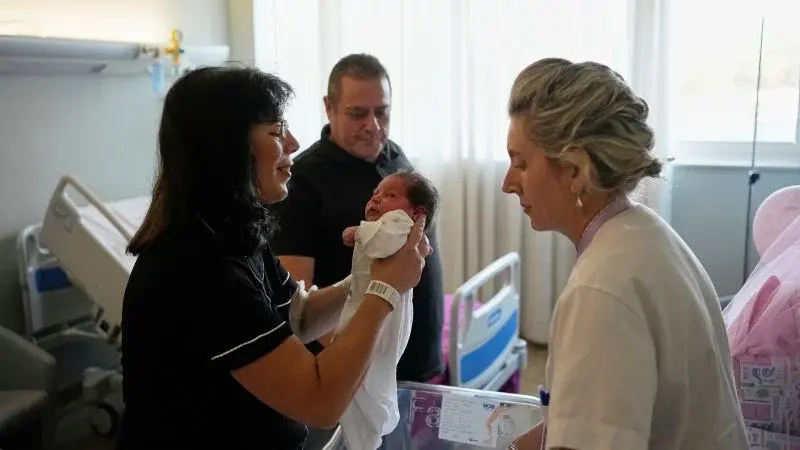
A Greek couple has welcomed a daughter born from an embryo frozen for 22 years, a procedure completed just before the mother reached the national age limit for in vitro fertilization. Cristina Rapti-Tzelepi, 54, and her husband Constantinos Raptis, 60, gave birth to a girl named Georgia in Athens after losing their 21-year-old son in a road crash. The birth occurred within a narrow two-and-a-half-month window before Greek law barred Rapti-Tzelepi from undergoing further IVF procedures. The case has prompted calls to review strict age restrictions in the country, which faces a declining birth rate.
Key points
- Cristina Rapti-Tzelepi gave birth to a daughter, Georgia, in Athens using an embryo frozen for 22 years.
- The couple had previously lost their 21-year-old son, Giorgos, in a road crash in October.
- Rapti-Tzelepi faced a strict two-and-a-half-month deadline to complete the procedure before turning 54, the legal age limit for IVF in Greece.
- The newborn weighed 3.49 kilograms (7 pounds, 11 ounces) and was born at a private maternity clinic.
- Dr. Kostas Pantos, the couple's gynecologist, argued that Greece's age restrictions should be reviewed due to the country's declining birth rate.
Background
This story follows earlier reports from our archive detailing the same birth and the subsequent debate over Greek IVF regulations. Previous coverage highlighted the emotional significance of naming the daughter after their late son and the logistical challenges of meeting the legal deadline. The current briefing synthesizes these earlier reports with new details from primary and secondary sources to provide a comprehensive overview of the event and its implications for reproductive law in Greece.
How outlets are covering it
CNN and CBS News both reported the birth of Georgia and the couple's grief over their son's death, but they emphasized different aspects of the story. CNN focused on the medical and legal constraints, highlighting the 22-year freeze time and the 54-year age limit. CBS News added context about the broader trend of embryo donation in the United States, noting that frozen embryo transfers have quadrupled since 2004, and mentioned that over one million frozen embryos exist in the U.S. Both outlets quoted Dr. Kostas Pantos on the need to change Greek law, but CNN placed more emphasis on the couple's personal journey and the emotional impact of the birth, while CBS News provided additional statistical context on embryo donation trends.
Why it matters
This case highlights the tension between strict reproductive laws and the desire for family continuity after tragedy. It also underscores the potential for long-term embryo storage to enable pregnancies decades after initial conception, raising questions about the ethical and legal boundaries of assisted reproduction. The incident has sparked a broader debate in Greece about whether age limits for IVF should be relaxed, especially in the context of a declining birth rate. Additionally, it may influence future policies on embryo storage and donation, both in Greece and internationally, as more couples consider using frozen embryos to start or expand their families.
What to watch
The couple has not ruled out attempting to have another child, potentially by traveling abroad to avoid Greek age restrictions. Dr. Kostas Pantos and other reproductive medicine experts may continue to advocate for changes in Greek law to allow older parents to access IVF. The case may also influence public opinion and policy discussions on embryo storage and donation, particularly in countries with similar age restrictions. Future developments could include legal challenges or legislative reviews in Greece, as well as increased attention to the ethical implications of long-term embryo storage.
- After tragedy, a Greek couple welcomes a daughter born from an embryo frozen for 22 years cnn.com
- Months after son killed in crash, couple welcomes daughter born from embryo frozen for 22 years CBS News
- Greek woman, 54, gives birth after using embryo frozen for 22 years Sky News
- Woman, 54, Gives Birth to Baby Girl from 22-Year-Old Frozen Embryo After Her Son, 21, Dies Suddenly People.com
- Greece Frozen Embryo Bluefield Daily Telegraph
Want the full story? Read the original reporting
Read on cnn.com