
Bukele Launches Military Rescue for Four Salvadoran Technicians Held by Haitian Gangs
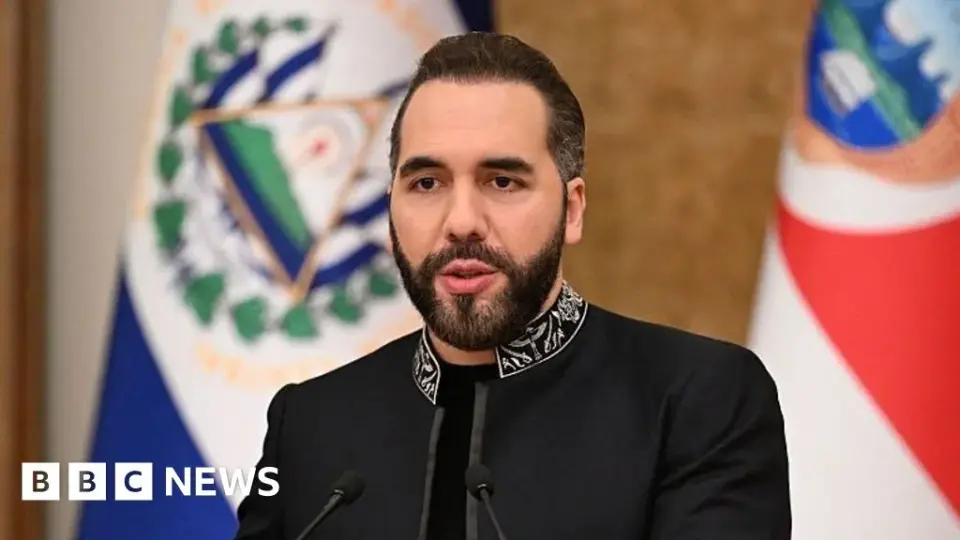
El Salvador has initiated a military operation to rescue four aviation technicians from the UN-backed Gang Suppression Force (GSF) who were kidnapped by armed groups in Haiti. President Nayib Bukele warned that a more forceful response is imminent if the hostages are not returned alive and unharmed. The incident occurred in the gang-controlled area of Croix-des-Bouquets, marking the first major battlefield loss for the international force since its deployment.
Key points
- Four Salvadoran air force personnel, described as pilots and technical staff focused on medical evacuations, were ambushed on Sunday in Croix-des-Bouquets, Port-au-Prince.
- The armored vehicle carrying the men was hit by explosives, causing it to catch fire; the crew fled the vehicle and has been missing since.
- President Bukele announced a military rescue operation on Wednesday, stating the primary objective is to bring the four men home alive.
- Bukele warned that the current attack is 'nothing' compared to future actions if the hostages are not released, urging gang leaders not to treat the threat as empty.
- Haiti’s government declared the release of the abducted soldiers an 'absolute priority' and held a meeting at the prime minister’s office to coordinate with the GSF.
- No gang has claimed responsibility for the attack, though the area is controlled by groups including Chèn Méchan, Kraze Barye, and 400 Mawozo.
Background
This incident occurs amid a severe security crisis in Haiti, where gang violence has displaced nearly 1.5 million people and resulted in over 5,700 casualties from January through mid-September 2026. The UN approved the GSF in 2025 to combat escalating violence, with El Salvador extending its participation through a law passed in early October 2026. Haiti has not held elections since 2016 and recently postponed scheduled December elections indefinitely. Previous coverage noted that US deportations of Haitians have increased, exacerbating instability in gang-controlled zones.
How outlets are covering it
BBC emphasizes the humanitarian nature of the mission, noting the personnel were there to 'save lives, not to wage war,' and highlights the UN warning that gangs are extending their reach into rural areas. NPR provides specific details on the local gang leaders involved, including Vitel’Homme Innocent and Lanmo Sanjou, and notes that El Salvador recently expanded its mission scope beyond medical evacuations. Al Jazeera focuses on Bukele’s rhetorical threat, quoting his statement that El Salvador has 'finished with the gangs' domestically and can do the same in Haiti. All sources agree that no gang has claimed responsibility and that the GSF is currently fighting in the area where the attack occurred, warning residents to remain indoors.
Why it matters
The kidnapping of GSF personnel represents a significant escalation in the conflict between international security forces and Haitian gangs, potentially prompting a broader military response. It highlights the fragility of the UN-backed peacekeeping mission and the deepening political vacuum in Haiti, where gang control over the capital has reached an estimated 70-85%. The incident also tests the limits of the GSF’s mandate and the willingness of contributing nations to engage in direct combat operations.
What to watch
The immediate focus is on the outcome of the Salvadoran military operation and whether the four hostages are released alive. If the hostages are not returned, Bukele has threatened a more forceful response, which could involve Salvadoran, Haitian, or international security forces. The GSF is currently engaged in the area of the attack, and the Haitian government is mobilizing resources to strengthen operations. The situation may influence the timeline for Haiti’s postponed elections and the broader stability of the region.
- El Salvador's president threatens Haitian gangs over military hostages BBC
- Bukele says military operation launched to rescue Salvadorans held by gangs in Haiti NPR
- El Salvador’s President Issues Harsh Warning to Haitian Gangs After 4 Soldiers Are Abducted The New York Times
- El Salvador says Haiti gangs holding 4 force members hostage, announces new rescue mission Reuters
- El Salvador’s Bukele threatens Haitian gangs over abducted soldiers Al Jazeera
Want the full story? Read the original reporting
Read on BBC