
Israel and Morocco to open embassies as US-backed summit advances Abraham Accords
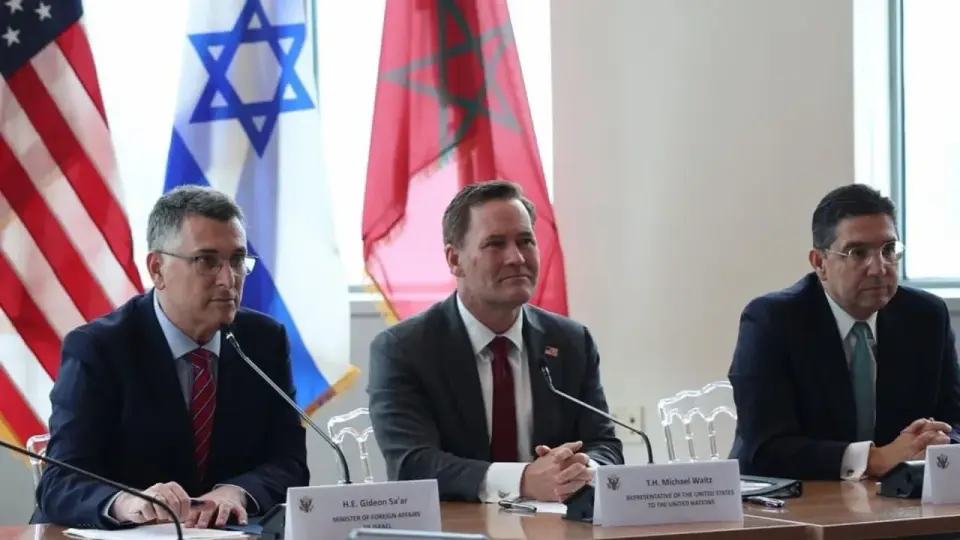
Israel and Morocco have agreed to upgrade their diplomatic ties to full embassy status and appoint ambassadors, a decision announced at a trilateral summit in New York co-hosted by the United States. The agreement, which includes plans for reciprocal high-level visits and the finalization of investment protection and tax treaties by the end of 2026, marks a significant step in deepening the Abraham Accords framework. This diplomatic move occurs amidst broader regional security discussions, including recent US-Israel-Arab military coordination regarding the Iran conflict.
Key points
- Israeli Foreign Minister Gideon Sa'ar and Moroccan Foreign Minister Nasser Bourita met with US Ambassador to the UN Mike Waltz in New York on September 16, 2026, to finalize the upgrade of diplomatic relations.
- The three nations agreed to elevate their respective diplomatic missions to the status of embassies and appoint ambassadors, moving beyond the initial normalization agreements.
- Israel and Morocco committed to completing agreements on investment protection and the prevention of double taxation by the end of 2026 to strengthen economic ties.
- The summit included plans for reciprocal high-level visits between the two countries in the coming months, signaling a deepening of political engagement.
- The agreement was framed as a step to advance the broader Abraham Accords, with the US playing a central mediating role in the trilateral discussions.
Background
This diplomatic upgrade follows a period of intensified regional security cooperation. In mid-September 2026, US, Israeli, and Arab military chiefs met in Germany to coordinate strategies regarding the Iran war and Houthi attacks, highlighting the operational dimension of Abraham Accords partnerships. Earlier in the month, the White House was reportedly drafting a post-war Middle East strategy that included broadening the Abraham Accords, potentially involving Israel-Saudi normalization, though that remains complicated by regional politics. The current Israel-Morocco move represents a concrete diplomatic achievement within this broader strategic landscape, distinct from the more cautious and limited cooperation observed between Israel and Saudi Arabia.
How outlets are covering it
The Jerusalem Post and France 24 both report on the core agreement to open embassies and appoint ambassadors, confirming the trilateral nature of the summit involving the US. The Jerusalem Post provides additional detail on the economic aspects, specifically the commitment to finalize investment protection and double taxation agreements by the end of 2026, as well as the planned reciprocal high-level visits. France 24 focuses primarily on the diplomatic elevation of missions, citing the Israeli foreign ministry statement. Both outlets present the event as a positive development in Israel-Morocco relations, with the Jerusalem Post emphasizing the broader context of advancing the Abraham Accords, while France 24 situates the news within a broader live feed of Middle East conflicts, including the Iran war and Houthi attacks, suggesting the diplomatic move is part of a complex regional security environment.
Why it matters
The upgrade to full embassy status and the appointment of ambassadors represent a tangible deepening of the Abraham Accords, moving from initial normalization to a more robust diplomatic and economic partnership. The commitment to investment protection and tax treaties indicates a shift toward substantive economic integration, which could have long-term implications for regional trade and business ties. This development also signals US success in mediating and advancing its Middle East strategy, potentially strengthening the coalition against Iran and influencing the post-war regional order. The move by Morocco, a key Arab partner, may also influence the pace and nature of other normalization efforts in the region, such as the potential Israel-Saudi rapprochement.
What to watch
The next steps include the formal appointment of ambassadors by Israel and Morocco, the finalization of the investment protection and double taxation agreements by the end of 2026, and the scheduling of reciprocal high-level visits. The US will likely continue to monitor and support these developments as part of its broader Middle East strategy. The outcome of these diplomatic and economic steps could influence the trajectory of other Abraham Accords-related negotiations, including potential Israel-Saudi normalization, and may have implications for regional security cooperation, particularly in the context of the ongoing Iran conflict and Houthi attacks.
- Israel, Morocco, US agree to advance Abraham Accords at New York summit The Jerusalem Post
- Israel, Morocco agree to upgrade diplomatic ties, Israeli government says Reuters
- Live updates • Israel and Morocco to upgrade diplomatic ties and open embassies Haaretz
- Israeli travelers returning to Morocco as direct flights resume after three years The Times of Israel
- Middle East live: Israel, Morocco agree to mutually open embassies France 24
Want the full story? Read the original reporting
Read on The Jerusalem Post