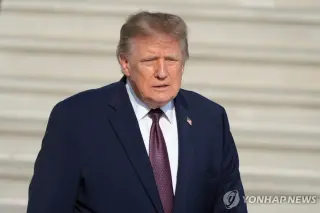
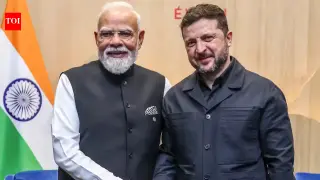
World leaders from across the globe, including King Charles III, Pope Leo XIV, Zelenskyy, Netanyahu and Modi, congratulated the United States on its 250th Independence Day as New York Harbor hosted a naval parade and tall-ship celebration, underscoring long-standing alliances and shared commitments to liberty, democracy, and the American example.
The Washington Post reports a preliminary U.S.-Iran peace framework could grant Iran a major economic lifeline—sanctions relief, asset unfreezing and oil sales—in return for compliance with terms like inspections, potentially stabilizing Iran's postwar economy and funding reconstruction, though critics warn it could bolster Tehran's military reach and regional influence.
U.S. forces carried out airstrikes on Iranian missile and drone storage locations in what CENTCOM called a powerful response to Iran’s alleged attack on a commercial ship exiting the Strait of Hormuz, as Tehran denies responsibility and regional tensions escalate.
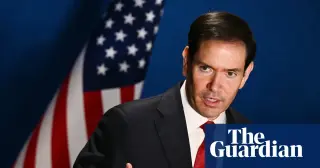
Secretary of State Marco Rubio travelled to the Gulf on a two‑day mission to reassure U.S. allies in Bahrain, the UAE and Kuwait that Washington isn’t sidelining them from Iran negotiations, a bid to steady a region still reeling from war and shifting alliances as Gulf states weigh their stance toward Tehran and its leverage while Rubio emphasizes U.S. security commitments and economic ties.
A Pew Research Center poll across 36 countries finds broad unease with Trump’s leadership, with 76% lacking confidence and 23% expressing trust. About 57% view the U.S. unfavorably, 50% see the U.S. as an unreliable partner, and only 32% believe the U.S. considers other countries’ interests, marking a sharp decline in global trust compared with 2022 amid skepticism toward U.S. engagement in international institutions like the UN and NATO.
Iran’s Foreign Ministry said there are no plans to allow IAEA inspectors to access its damaged nuclear facilities, a day after Vice President JD Vance said conversations with inspectors could happen imminently. The stance underscores ongoing disputes over safeguards from the Obama-era deal and highlights broader U.S.-Iran tensions.
A Pew Research Center survey of 42,151 people across 36 countries (Feb. 8–May 13, 2026) finds widespread negative views of Donald Trump and dimmer perceptions of the U.S. as a reliable partner. A median 23% express confidence in Trump, 37% have a favorable view of the U.S., and 57% view the U.S. unfavorably, with large declines in trust since 2022. The share that sees the U.S. as contributing to peace and stability, and as considering other countries’ interests, has fallen in many nations. Israel remains a relative bright spot for Trump’s reception, but across most regions, especially Europe and the Asia-Pacific, views are negative and opinions of Trump’s foreign-policy handling are largely disapproved. Overall, global sentiment toward U.S. democracy and leadership has weakened compared with previous years.
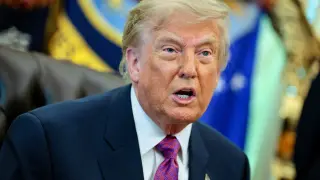
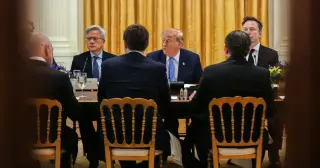
Trump tells Axios he sees no limits to his power and embraces a 'great-man' view of leadership, praising Xi and Modi while arguing for hardline Iran policy; a forthcoming book and a NYT/SwanHaberman excerpt describe a document he showed claiming he's more powerful than Attila the Hun and Napoleon, which he posted on Truth Social (authorship disputed). He says allies matter only if they acknowledge his power, notes the economy as a constraint on widening conflict, and hints at regime change in Iran.
G7 leaders discussed a plan to allow select ‘trusted partners’ access to advanced AI models from US firms (e.g., Anthropic) to help bolster cybersecurity and strategic tech capabilities, potentially circumventing some non‑American-use restrictions. The talks, held with US officials during the Evian summit, come as Anthropic has restricted access to its top models after a Trump order, and as the EU seeks access to Mythos; AI executives from major firms were expected to attend to discuss regulation and infrastructure.
The Senate rejected a Democratic measure to limit President Trump from ordering further strikes on Iran, a setback for war-powers advocates. The 48-47 vote included four Republicans breaking with their party. Democrats plan to push a similar resolution led by Sen. Tim Kaine, while Trump has threatened a veto, meaning a two-thirds override would be needed in both chambers.
Canadian PM Mark Carney urged middle powers to unite with Europe to defend a rules-based order he says is breaking down, warning that multilateral institutions are weakening and economic integration is being weaponised; he highlighted Canada-EU ties and floated expanding links with the Trans-Pacific Partnership ahead of the G7, while noting U.S. pressures under Trump.
Hours after Iran announced strikes on U.S. assets across the Middle East in retaliation for U.S. strikes, President Trump said Tehran will “pay the price,” warning of further action and signaling a risk to a fragile ceasefire. Iran said it hit 21 sites, including bases in Bahrain, Kuwait and Jordan, though no deaths were reported.
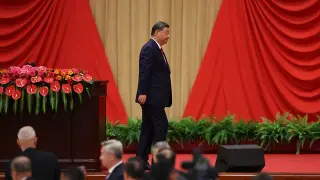
China’s President Xi Jinping will travel to North Korea next week for his first visit there since 2019, signaling a renewed push to deepen Beijing–Pyongyang ties amid shifting regional dynamics.
Geoeconomics, the fusion of finance and national security, has moved from a fringe idea to the core of global policy as the United States and other powers fuse trade, capital flows, and security tools amid great-power rivalry. The piece traces historical precedents like COCOM and SWIFT, notes how the current era features industrial policy and sanctions that reorient entire sectors, and highlights the 2022 Russia asset freeze as a turning point. It argues that rather than building a new system, the world should adapt the existing rules-based framework to be more resilient while training policymakers to think in macro-financial and strategic terms. The overarching message: geoeconomics is simply how the world does business.
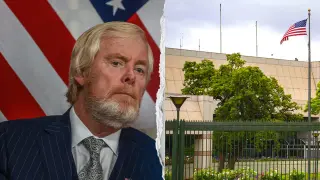
NBC News, citing the American Foreign Service Association, reports that the Trump administration has laid off or forced retirement for about 2,000 career diplomats since the president’s second inauguration, draining decades of expertise in international negotiation and crisis response; roughly 100 embassies lack a Senate-confirmed envoy, with sharp losses in the Middle East and Africa. White House and State Department officials say the moves are intended to streamline diplomacy, while critics warn of long-term damage to the U.S. diplomatic corps.