
US-Iran Negotiations Stall as Trump Threatens Annihilation at UN
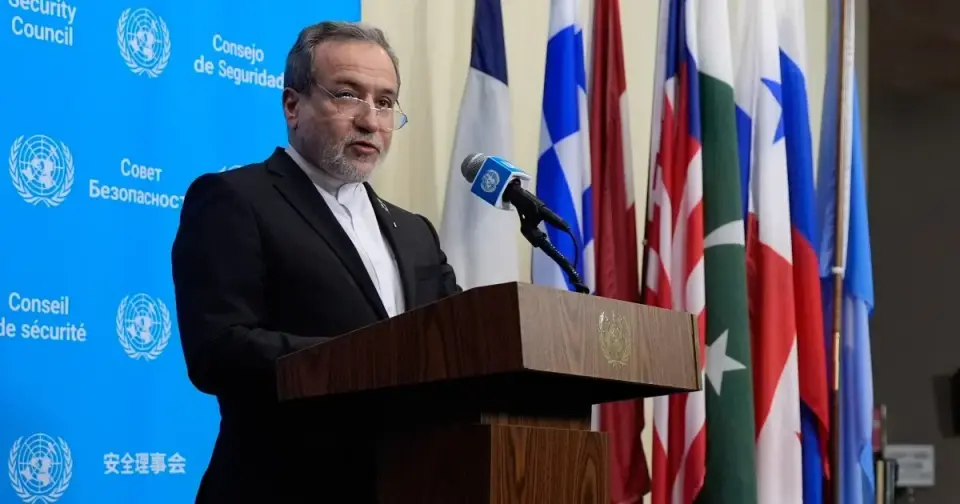
Indirect US-Iran talks mediated by Qatar in New York have stalled due to fundamental disagreements over the sequence of peace terms. Iran demands the reopening of the Strait of Hormuz, sanctions relief, and the release of $12 billion in frozen assets before discussing its nuclear program. The US insists on resolving all issues simultaneously, particularly the nuclear file, and has rejected Iran's phased approach. President Trump threatened to 'annihilate' Iran at the UN General Assembly if no deal is reached, while Iranian officials maintain they are prepared for renewed conflict but still seek diplomatic resolution. Analysts suggest the standoff may persist until after the US midterm elections in November.
Key points
- Iranian Foreign Minister Abbas Araghchi left New York after Qatari-mediated talks, stating Tehran expects an official US response to its proposal to reopen the Strait of Hormuz within seven days.
- Iran's proposal requires the US to lift its naval blockade, waive sanctions, release $12 billion in frozen assets, and enforce a regional ceasefire including Lebanon before nuclear talks begin.
- The US administration rejects this phased approach, demanding that all issues, especially Iran's nuclear program, be resolved in a single comprehensive deal.
- President Trump publicly rejected Iran's offer and threatened to 'annihilate' the Islamic Republic at the UN General Assembly if no deal is reached, though he denied reports of offering sanctions relief for nuclear concessions.
- Iranian officials emphasize that the June Islamabad Memorandum of Understanding is the baseline for negotiations, expressing deep distrust that the US will honor any future agreement.
- The Strait of Hormuz, through which one-fifth of global oil and gas is shipped, remains blockaded by both sides and is the primary point of contention in the seven-month-long war.
Background
The current diplomatic deadlock follows a seven-month war that began with US-Israeli strikes on Iran in late February 2026. Prior to the conflict, the Strait of Hormuz was open to free commercial shipping, but Iran closed it in response to the strikes, creating a new leverage point. A June 17 memorandum of understanding signed by the US and Iran quickly collapsed, leading to renewed tensions. Recent months have seen escalating economic sanctions by the US, described by Treasury Secretary Scott Bessent as 'economic asphyxiation,' and increased military threats. The war has also reshaped Middle East security, with Gulf states seeking new defense arrangements and Iran asserting greater regional influence.
How outlets are covering it
Al Jazeera highlights the fundamental disagreement over the sequence of negotiations, with Iran insisting on a phased approach starting with the Strait of Hormuz and the US demanding a comprehensive deal. The New York Times emphasizes Trump's aggressive rhetoric at the UN, framing his threat to 'annihilate' Iran as a rejection of the UN's founding principles. The Washington Post focuses on the stark contrast between Trump's threats and the lack of progress in talks, noting that Trump denied reports of offering sanctions relief. Salon.com criticizes Trump's foreign policy as imperialist and notes the growing international isolation of the US, with Canada's Mark Carney emerging as an alternative leader. All sources agree that the standoff is unlikely to resolve before the US midterm elections in November, with both sides maintaining hardline positions.
Why it matters
The US-Iran standoff has significant global implications, particularly for energy markets, as the Strait of Hormuz is a critical chokepoint for oil and gas shipments. The prolonged conflict has reshaped Middle East security dynamics, with Gulf states seeking new defense arrangements and Iran asserting greater regional influence. The diplomatic deadlock also reflects broader tensions in US foreign policy, with Trump's aggressive rhetoric and threats of military action raising concerns about the stability of the international order. The potential for renewed conflict or a comprehensive deal could have far-reaching consequences for global energy prices, regional stability, and US-Iran relations.
What to watch
The next steps in the US-Iran negotiations are uncertain, with both sides maintaining hardline positions. Iran expects an official US response to its proposal to reopen the Strait of Hormuz, while the US insists on a comprehensive deal that addresses all issues, including Iran's nuclear program. Analysts suggest that the standoff may persist until after the US midterm elections in November, with the Trump administration potentially using economic pressure to force Iran to capitulate. Iran has indicated it is prepared for renewed conflict but still seeks diplomatic resolution, while the US has threatened further military action if no deal is reached. The outcome of the negotiations will likely depend on the willingness of both sides to compromise and the broader geopolitical context, including the role of mediators like Qatar and the potential for new security arrangements in the Middle East.
- US-Iran talks in New York: What’s the latest? Al Jazeera
- Opinion | One word makes Trump’s new threat against Iran staggering The Washington Post
- Donald Trump abdicates as leader of the free world Salon.com
- At the U.N., Trump Lays Out a Winner-Takes-All Vision of U.S. Power The New York Times
- Fact-checking Trump's speech to the 2026 United Nations General Assembly PBS
Want the full story? Read the original reporting
Read on Al Jazeera