
81st UN General Assembly Opens Amidst Historic Drama and Geopolitical Tension
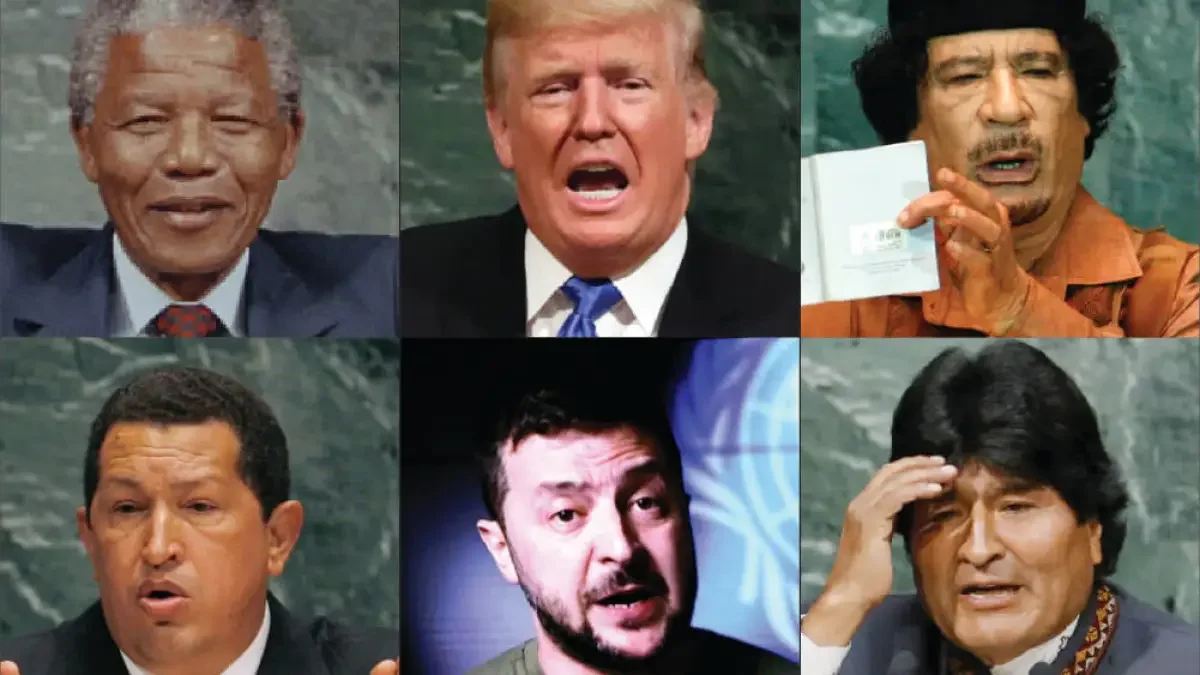
The 81st UN General Assembly has commenced in New York, featuring high-level debates under the theme 'Restoring trust, managing transformation.' While the current session focuses on climate, conflict, and development, media outlets are revisiting iconic historical moments from the podium, including Fidel Castro’s marathon speech and Muammar Gaddafi’s tearing of the UN Charter. Current geopolitical tensions, including the Iran-US war and US skepticism toward multilateralism, frame the backdrop for this year’s proceedings.
Key points
- The 81st session began on September 22, 2026, with approximately 130 heads of state expected to speak during the high-level week.
- The overarching theme for this year’s assembly is 'Restoring trust, managing transformation: a United Nations that delivers for all.'
- Historical retrospectives highlight dramatic past moments, such as Hugo Chavez calling George W. Bush 'the devil' in 2006 and Gaddafi tearing the UN Charter in 2009.
- Current tensions include the ongoing Iran-US war, the fifth year of the Russia-Ukraine conflict, and US criticism of UN refugee and climate policies.
- A suspicious suitcase was found near UN headquarters, causing a bomb scare during the assembly period.
Background
Previous coverage noted that the 2026 assembly is taking place amid significant global turmoil, including shifting alliances and the Iran-US war entering its seventh month. The US granted visas to Iranian leaders for the assembly despite ongoing hostilities. Additionally, the race to succeed Secretary-General Antonio Guterres is underway, and Mahmoud Abbas is addressing the assembly via prerecorded video due to visa denials.
How outlets are covering it
Al Jazeera frames the event through a nostalgic lens, offering a quiz on famous quotes to engage readers with the history of the podium. WION provides a comprehensive list of 'viral' moments, emphasizing theatrical protests and confrontations, such as Netanyahu’s cartoon bomb and Trump’s 'escalatorgate' incident from the previous year. Boise State Public Radio, via NPR, offers a critical analysis of the UN’s declining relevance, noting that the US administration’s 'America First' stance and anti-multilateralism agenda are undermining the organization’s ability to address global crises like refugee flows and climate change. The outlets agree on the dramatic nature of the event but differ in focus: Al Jazeera and WION highlight historical spectacle, while NPR emphasizes the current political friction and the UN’s struggle to maintain diplomatic efficacy.
Why it matters
The General Assembly serves as a critical barometer for global diplomatic health. The current session highlights the tension between traditional multilateralism and unilateralist policies, particularly from the US. The ability of the UN to address pressing issues like the Iran-US war and climate change is being tested by the willingness of major powers to engage with the institution.
What to watch
The high-level debate will continue through September 26, with a resumption on September 28. Key figures, including Donald Trump, Volodymyr Zelenskyy, and Iran’s Masoud Pezeshkian, are expected to hold sideline talks to address deadlocks. The race to succeed Antonio Guterres as Secretary-General will also be a focal point of the week.
- UN General Assembly quiz: Who said these 10 famous quotes? Al Jazeera
- From Gaddafi tearing up UN Charter to Trump’s ‘escalatorgate’: Most unforgettable UNGA moments WION
- United Nations Messenger-Inquirer
- High stakes drama on display over the years at the UN General Assembly NPR
- The high stakes drama a reporter has seen covering the UN General Assembly Boise State Public Radio
Want the full story? Read the original reporting
Read on Al Jazeera