
Bulgaria and Greece Exchange Czar Samuel’s Remains and WWI Artifacts in Historic Accord
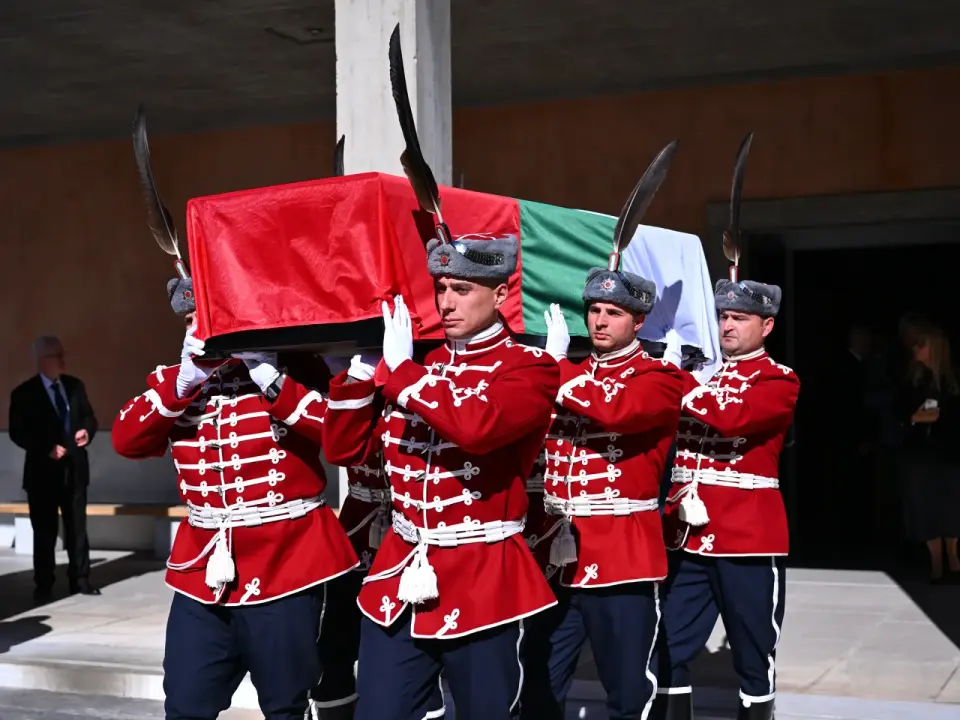
Bulgaria and Greece finalized a decades-long cultural agreement, exchanging the remains of medieval ruler Czar Samuel for 48 religious artifacts looted during World War I. The ceremony in Thessaloniki marked a diplomatic breakthrough, with Greek leaders using the deal to bolster their campaign for the return of the Parthenon Marbles from the UK.
Key points
- Czar Samuel’s remains, discovered in Greece in 1965, were flown to Sofia on a military aircraft escorted by fighter jets.
- Greece received 48 sacred objects, including icons and vessels, stolen by Bulgarian troops from northern Greek monasteries in 1917.
- The exchange concluded negotiations that began in the 1970s between then-leaders Karamanlis and Zhivkov.
- Greek PM Mitsotakis linked the deal to the Parthenon Marbles dispute, arguing cultural heritage cannot be treated as war spoils.
- The artifacts will be displayed in Thessaloniki until November 5 before being returned to their original monasteries.
Background
This exchange resolves a long-standing cultural dispute between the two nations. While recent global news has focused on other repatriation issues, such as the British Museum theft investigation, this deal highlights a broader shift in how European nations handle historical artifacts. The agreement builds on a memorandum of understanding signed recently by culture ministers Lina Mendoni and Evtim Miloshev.
How outlets are covering it
Al Jazeera emphasizes the emotional and nationalistic aspect of the return, noting crowds and a 21-gun salute in Sofia. The Guardian focuses on the diplomatic precedent, highlighting Mitsotakis’s direct link to the Parthenon Marbles campaign. eKathimerini provides specific details on the artifacts' origins, noting they came from the Monastery of Panagia Eikosifoinissa and the Diocese of Serres. All sources agree on the significance of the 50-year negotiation process.
Why it matters
The agreement demonstrates a new era of cultural diplomacy in Europe, where historical grievances are resolved through exchange rather than conflict. It sets a potential precedent for other repatriation disputes, including the long-running case of the Parthenon Marbles, by establishing that cultural integrity supersedes wartime acquisition.
What to watch
The 48 Greek artifacts will be formally handed over to their respective monasteries and dioceses after their display in Thessaloniki ends on November 5. Greece will continue its diplomatic push for the return of the Parthenon Marbles, citing this agreement as proof of changing global attitudes toward cultural heritage.
- Remains of Bulgaria’s Czar Samuel return ‘home’ after 1,000 years Al Jazeera
- Remains of medieval king Czar Samuel arrive in Bulgaria after decades of talks with Greece AP News
- Greece returns priceless relics – and suggests UK should follow suit with Parthenon marbles The Guardian
- Following decades of negotiations, Greece returns remains of Czar Samuel to Bulgaria DW.com
- Greece and Bulgaria exchange historic religious artifacts in landmark cultural agreement eKathimerini.com
Want the full story? Read the original reporting
Read on Al Jazeera