
Burnham Accelerates UK Air Defense Deliveries Amid US-Russia Ceasefire Dispute
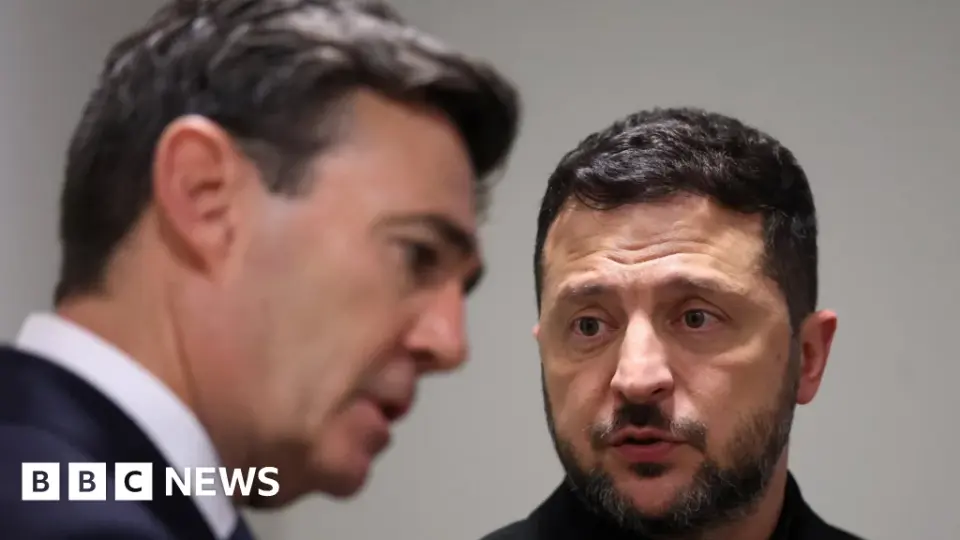
UK Prime Minister Andy Burnham will host Ukrainian President Volodymyr Zelensky at Downing Street on Wednesday to announce accelerated delivery of air defense missiles and new sanctions against Russia. This diplomatic push occurs as US President Donald Trump declares a unilateral energy ceasefire with Russia, a move Zelensky rejects as unverified. While London seeks to pressure Moscow through the IMF, Washington is threatening to withhold intelligence and weapons if Ukraine continues striking Russian refineries, creating a sharp transatlantic rift.
Key points
- Burnham will meet Zelensky in London to announce faster delivery of Lightweight Multirole Missiles, with over 5,000 units worth £1.6bn already committed for the next four years.
- The UK government plans to implement a full maritime services ban on Russian liquefied natural gas (LNG) exports and urge allies to increase pressure on Moscow.
- US President Trump declared an immediate energy ceasefire on Sunday, but Zelensky stated he was unaware of the agreement, and Russian strikes on Ukrainian power plants continued shortly after the announcement.
- Chancellor John Healey will use International Monetary Fund meetings to call for a ban on Russian LNG and support for Kyiv, while Foreign Secretary Ed Miliband described recent UK-US relations as 'very difficult.'
- US envoys Steve Witkoff and Jared Kushner have paused a planned trip to Moscow, and Washington has warned that continued Ukrainian strikes on Russian refineries could lead to a halt in US intelligence sharing and NATO weapon sales.
Background
This meeting is Zelensky's second visit to the UK since Burnham became prime minister in late July. Their previous encounter took place at a naval base in Portsmouth. The current diplomatic tension follows the UN General Assembly in September, where Burnham and Trump interacted, and Zelensky sought air defense support. Recent UK political debates have also touched on Russian interference in the 2016 Brexit referendum, though Burnham maintains the result was legitimate.
How outlets are covering it
The BBC emphasizes the UK's proactive stance, highlighting Burnham's commitment to supporting Ukraine 'for as long as it takes' and the concrete steps being taken to accelerate missile deliveries and impose sanctions. In contrast, The Atlantic frames the situation as a 'Trump October Surprise,' noting that the US president's unilateral ceasefire declaration ignored the reality of ongoing Russian attacks and his inability to manage the Iran conflict. Axios provides a more granular view of the US-Ukraine friction, detailing how Washington views Ukrainian strikes on Russian refineries as harmful to US consumers, and how this has led to threats of withholding intelligence and weapons. While the UK focuses on military aid and sanctions, the US perspective centers on energy prices and domestic political concerns, creating a divergence in transatlantic strategy.
Why it matters
The divergence between UK and US approaches to the war in Ukraine highlights a growing transatlantic rift. The UK's commitment to sustained military support and sanctions contrasts with the US's focus on immediate energy price relief and conditional aid. This disagreement could impact the effectiveness of Western support for Ukraine and the broader geopolitical landscape, particularly as the US midterm elections approach. The ability of the UK to maintain its support despite US pressure will be a key indicator of the resilience of the Western alliance in the face of Russian aggression.
What to watch
The upcoming meeting between Burnham and Zelensky will likely set the tone for UK support in the coming months. The outcome of the IMF meetings and the potential implementation of the LNG ban will be closely watched. Additionally, the status of the US-Russia energy ceasefire and whether Ukraine will continue its strikes on Russian refineries will determine the future of US-Ukraine relations. The UK's ability to maintain its support despite US pressure will also be a key factor in the broader geopolitical landscape.
- Zelensky and Burnham to meet in Downing Street BBC
- Trump’s October Surprise The Atlantic
- Zelenskiy visits Britain as Burnham pledges fresh support for Ukraine Reuters
- Trump bears down on Zelensky as Russia keeps up attacks on Ukraine Axios
- 'Time for Ukraine to get new president,' says Trump after Zelensky condemns diesel deal BBC
Want the full story? Read the original reporting
Read on BBC