
Guterres Warns Superpowers Lack Power to Solve Global Crises in Final UN Address
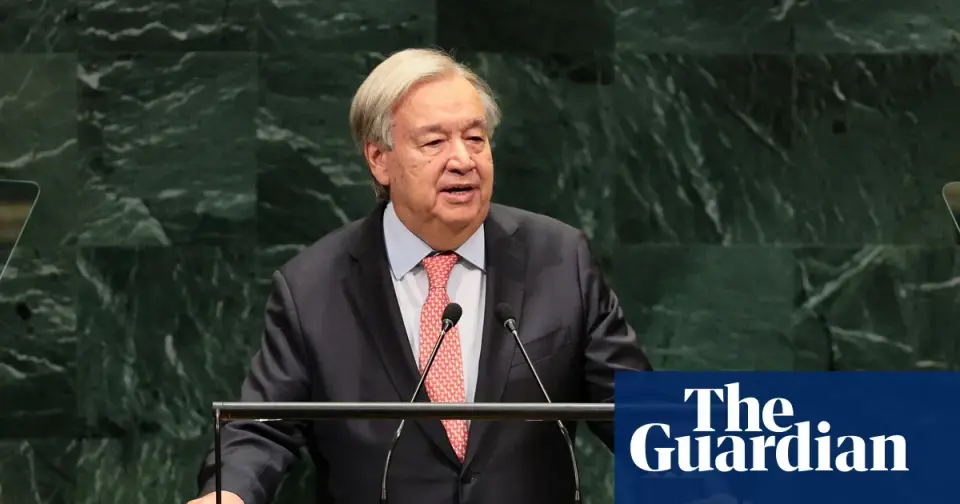
Outgoing UN Secretary-General António Guterres delivered his final address to the 81st UN General Assembly, arguing that superpowers cannot unilaterally solve global problems. He highlighted deepening geopolitical divides, the weaponization of hunger, and the rapid, unregulated rise of artificial intelligence. Guterres criticized the exclusion of Africa from the UN Security Council and called for a new multilateral compact to regulate AI and protect civilians, particularly in Gaza and Ukraine. He warned that world governance is failing to adapt to shifting power dynamics, urging leaders to choose between fragmentation and a reformed, representative UN system.
Key points
- Guterres stated that superpowers lack the military, economic, and technological power to guarantee global security or solve complex problems alone.
- He described the post-Hamas attack situation in Gaza as an 'onslaught' with unprecedented killing and destruction, without naming Israel directly.
- The speech criticized the omission of Africa from permanent UN Security Council seats as 'stunning' and 'indefensible.'
- Guterres called for a new compact to regulate artificial intelligence, warning of 'rogue' AI agents and lethal autonomous weapons becoming military reality.
- He highlighted that five major Western oil companies have pocketed nearly half a trillion dollars in profits since the Ukraine invasion, contrasting this with only $34 billion in international adaptation finance for developing countries.
- The UN achieved gender parity for the first time across all senior leadership, headquarters, and professional staff, a milestone Guterres cited as proof that equality is a decision, not a dream.
Background
This address marks the end of Guterres's 10-year tenure as UN Secretary-General, coinciding with the 81st UN General Assembly in New York. The assembly, which began on September 22, 2026, features approximately 130 heads of state and addresses critical issues including climate action, the wars in Ukraine and the Middle East, and the race to succeed Guterres. Recent background includes U.S. visa denials for Palestinian officials and the granting of visas for Iranian leaders, reflecting the tense geopolitical climate surrounding the assembly.
How outlets are covering it
The Guardian provides a detailed account of Guterres's speech, emphasizing his critique of superpower limitations and his call for multilateral reform. AP News, while its provided text is largely technical code, indicates that world leaders are meeting at the UN with AI and other global problems on the docket, aligning with Guterres's focus on AI regulation. The Guardian highlights Guterres's specific criticisms of oil company profits and the exclusion of Africa, while AP News frames the assembly as a broad platform for discussing multiple pressing issues. Both sources confirm the significance of the UN General Assembly as a forum for addressing global crises, but the Guardian offers a more in-depth analysis of Guterres's specific arguments and warnings.
Why it matters
Guterres's final address underscores the urgent need for reform in global governance structures, particularly the UN Security Council, to better reflect current power dynamics and include underrepresented regions like Africa. His warnings about the unregulated rise of AI and the weaponization of hunger highlight the potential for new forms of conflict and inequality. The speech also serves as a call to action for world leaders to prioritize multilateral cooperation over hegemonic tendencies, emphasizing that the current system is failing to address the 'unprecedented convergence of threats' facing humanity. The achievement of gender parity at the UN offers a hopeful counterpoint, demonstrating that systemic change is possible through decisive action.
What to watch
The immediate next step is the continuation of the 81st UN General Assembly, where world leaders will debate and potentially act on the issues raised by Guterres, including AI regulation, climate finance, and conflict resolution in Gaza and Ukraine. The race to succeed Guterres as UN Secretary-General will also intensify, with candidates likely proposing reforms to address the criticisms raised in his final address. The outcome of these discussions will determine whether the UN can adapt to the changing global landscape or continue to fragment under rising tensions and transactionalism.
- Superpowers cannot solve world’s problems, UN chief says in final general assembly address theguardian.com
- U.N. Leader Uses Final Speech to Issue Stark Warning nytimes.com
- Secretary-General of the United Nations Welcome to the United Nations
- Middle East crisis: Trump says Iran will make a deal after US midterms – as it happened theguardian.com
- UN leaders' meeting convenes with secretary-general calling for 'world built on interdependence' AP News
Want the full story? Read the original reporting
Read on theguardian.com