
UK Deploys Typhoons to Saudi Arabia as Houthi Strikes Expose Regional Defense Gaps
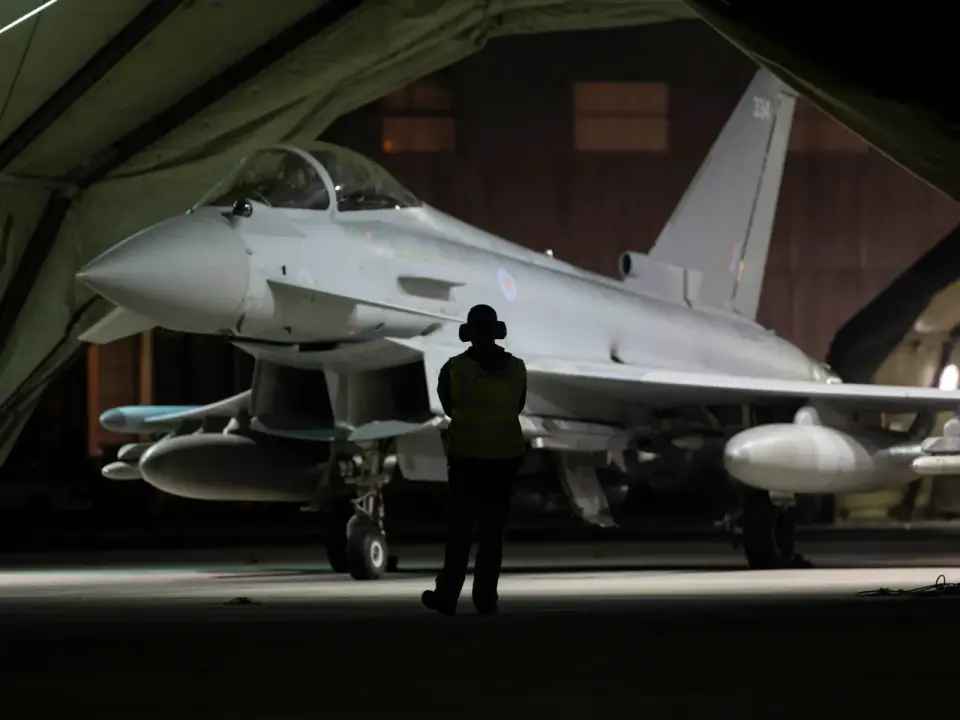
The United Kingdom has deployed Royal Air Force Typhoon jets to Saudi Arabia to defend against Houthi missile and drone attacks, marking a significant escalation in a century-old military partnership. While the UK emphasizes a strictly defensive role, analysts note that these measures do not address the root cause of the threat in Yemen. The deployment follows a deadly strike on Riyadh’s main airport and highlights Saudi Arabia’s vulnerability despite its massive defense budget, prompting calls for broader international support including from Egypt and Israel.
Key points
- The UK Ministry of Defence confirmed the deployment of Typhoon fighters, an A400M transport aircraft, and advisers to Saudi Arabia, explicitly stating they will not conduct offensive strikes against the Houthis.
- The move responds to a surge in Houthi attacks, including a strike on King Khalid International Airport in Riyadh that killed at least 13 people and wounded over 300, as well as attacks on oil facilities.
- The UK-Saudi military relationship dates back to the 1915 Treaty of Darin, with major arms deals like the 1985 Al-Yamamah agreement and the 2007 purchase of 72 Typhoons solidifying the bond.
- Saudi Arabia, which spent $83.2 billion on defense last year, faces challenges from low-flying drones and missiles that bypass its advanced radar and interceptor systems.
- Egypt and Israel have also offered support, though Israel’s involvement is politically sensitive for Saudi Arabia, and the US is weighing direct intervention while facing global interceptor shortages.
Background
This development follows a period of heightened regional tension, including a September 2026 drone attack on Saudi Arabia’s East-West oil pipeline and the recent ratification process of the Mecca Joint Defence Agreement involving Turkey, Saudi Arabia, and Pakistan. The UK’s deployment also follows a 2025 US-led bombing campaign in Yemen, known as Operation Rough Rider, which ended after an Oman-brokered agreement.
How outlets are covering it
Al Jazeera frames the deployment as the latest chapter in a deep historical and commercial bond between London and Riyadh, highlighting the continuity of the relationship since World War I. In contrast, Fox News emphasizes the strategic vulnerability exposed by the Houthi attacks, arguing that despite Saudi Arabia’s sophisticated military, it struggles against low-cost, high-volume threats. Fox News also highlights the diplomatic complexities of potential Israeli involvement and the US decision to potentially strike Houthi targets directly, whereas Al Jazeera focuses on the defensive nature of the UK’s contribution and the historical context of arms deals.
Why it matters
The deployment underscores the shifting dynamics of Middle Eastern security, where traditional allies are increasingly called upon to defend against asymmetric threats. It highlights the limitations of high-end defense systems against drone swarms and the growing reliance on international coalitions to maintain stability in the Gulf region.
What to watch
Analysts expect the UK’s defensive role to continue, potentially freeing up Saudi assets for offensive counter-operations. The US is likely to make a decision on direct intervention, while Egypt and Turkey may further formalize their support. The effectiveness of these measures will depend on whether they can deter further Houthi attacks or if they will lead to a broader regional conflict.
- WW1 to Houthis: British jets for Saudi Arabia build on long military bond Al Jazeera
- UK to Send Fighter Jets to Help Defend Saudi Arabia From Houthi Attacks The New York Times
- Britain says it will carry out defensive air missions over Saudi Arabia Reuters
- How Saudi Arabia's defense vulnerabilities could become Trump's problem amid Houthi onslaught Fox News
- News Wrap: Britain sending air support to Saudi Arabia amid Houthi attacks PBS
Want the full story? Read the original reporting
Read on Al Jazeera