
Tung Chee-hwa’s legacy: Hong Kong’s fragile balance with Beijing
TL;DR Summary
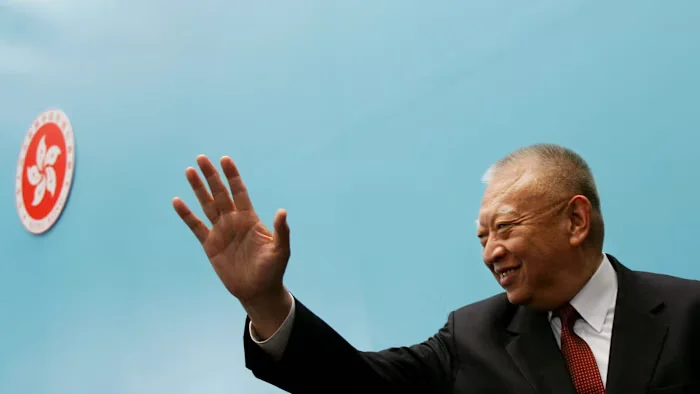
Tung Chee-hwa, Hong Kong’s first chief executive after the 1997 handover, died at 89. Handpicked by pro-Beijing elites, he aimed to implement Deng Xiaoping’s one country, two systems but faced a turbulent tenure marked by the 1997 financial crisis, the SARS outbreak, and the controversial Article 23 bill that sparked massive protests in 2003. His governance boosted projects like Disneyland and housing targets but was criticized for crony capitalism and weakening Hong Kong’s role as a financial hub, contributing to a deepening divide with Beijing and a long-term shift of the city’s economy toward the mainland.
Topics:world#article-23#hong-kong-economy#hong-kong-politics#obituary#one-country-two-systems#tung-chee-hwa
- Tung Chee-hwa, Hong Kong’s first chief executive, 1937-2026 Financial Times
- Tung Chee-hwa, Who Led Hong Kong After Its Return to China, Dies at 89 The New York Times
- Tung Chee-hwa, Hong Kong's first leader under Chinese rule, dies at 89 Reuters
- Hong Kong’s first chief executive, Tung Chee-hwa, dies aged 89 South China Morning Post
- Tung Chee-hwa, Hong Kong’s first post-colonial leader, dies at age 89 AP News
Reading Insights
Total Reads
1
Unique Readers
4
Time Saved
6 min
vs 7 min read
Condensed
92%
1,272 → 96 words
Want the full story? Read the original article
Read on Financial Times