
Thailand’s High Gun Ownership Rate Under Scrutiny After Deadly School Shooting
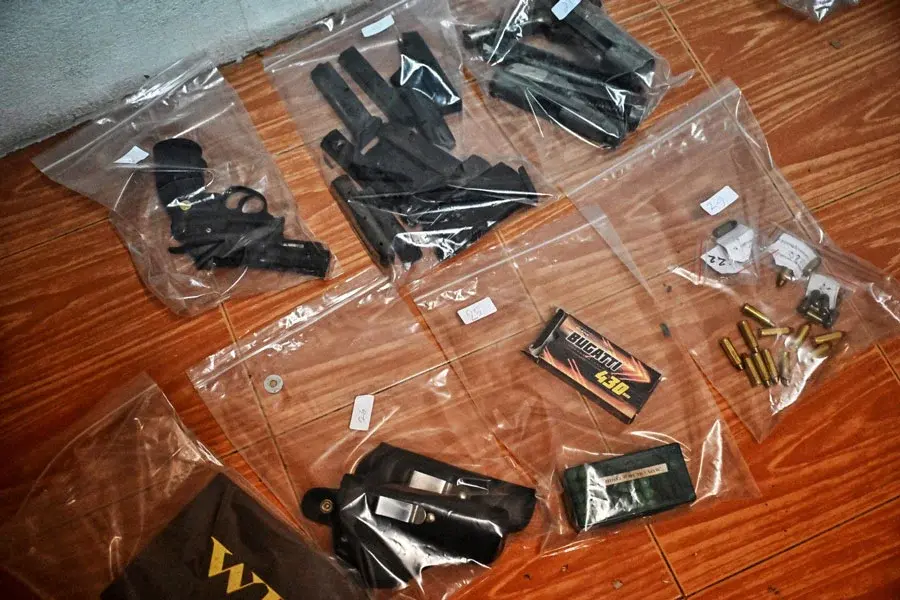
Thailand’s estimated civilian firearm ownership rate of 15.1 per 100 people is the highest in ASEAN, according to 2017 data. This statistic has gained renewed attention following a deadly school shooting in August 2026, which killed nine people. The incident has prompted Prime Minister Anutin Charnvirakul to pledge stricter firearm controls and new school safety protocols.
Key points
- Thailand has an estimated 10.342 million civilian firearms, the highest rate in ASEAN at 15.1 per 100 people, based on 2017 Small Arms Survey data.
- A 14-year-old student killed his grandparents and six others at Debsirin Nonthaburi School on August 7, 2026, before taking his own life, bringing the total death toll to nine.
- Police stated the shooter had learned to use firearms via social media and had previously had a BB gun confiscated by a teacher.
- Prime Minister Anutin Charnvirakul promised tighter firearm controls, while the Ministry of Education announced new safety protocols including mental health screenings and anti-bullying measures.
- The shooter’s father publicly apologized to the family of a 12-year-old victim, who died days after the attack.
Background
Thailand has experienced several high-profile shootings in recent years, including incidents at a childcare center in 2022, a Bangkok shopping center in 2023, and a food market in 2025. The August 2026 attack is the deadliest mass shooting in the country since 2022. The 2017 Small Arms Survey data, which is still cited by World Population Review, indicates that 6.22 million of Thailand’s firearms were registered and 4.12 million were unregistered.
How outlets are covering it
Asia News Network emphasizes Thailand’s status as the top gun-owning nation in ASEAN, highlighting the 2017 statistics to frame the policy debate. The Guardian focuses on the human toll, detailing the grief of victims' families and the shooter’s father’s public apology. CNN and BBC report on the investigation, noting that police found evidence of violent content on the shooter’s computer and that he had previously brought a BB gun to school. While all sources agree on the death toll and the shooter’s age, they differ in emphasis: Asia News Network focuses on the macro-level gun ownership data, while The Guardian, CNN, and BBC focus on the specific circumstances of the attack and the government’s immediate response.
Why it matters
The shooting has reignited national debate over firearm access, licensing, and school safety in Thailand, a country with the highest estimated civilian gun ownership in Southeast Asia. The government’s pledge to tighten controls and implement new school safety protocols could have significant implications for public safety and policy in the region.
What to watch
The Ministry of Education plans to develop new safety protocols within three months, including mental health screenings, emergency response drills, and anti-bullying initiatives. The government is also expected to introduce stricter firearm control measures, though specific details have not yet been announced.
- Thailand tops ASEAN in estimated civilian gun ownership Asia News Network
- At a temple in Thailand, parents mourn a 12-year-old mass shooting victim, and a father pleads for forgiveness The Guardian
- Accused Thai school shooter had watched violent content online, police say CNN
- 'Mom, don't call me': Inside Thailand's deadly school shooting Reuters
- Thai school shooting: Teen learnt how to use guns via social media BBC
Want the full story? Read the original reporting
Read on Asia News Network