
Surge in UK terror arrests linked to Palestine Action ban
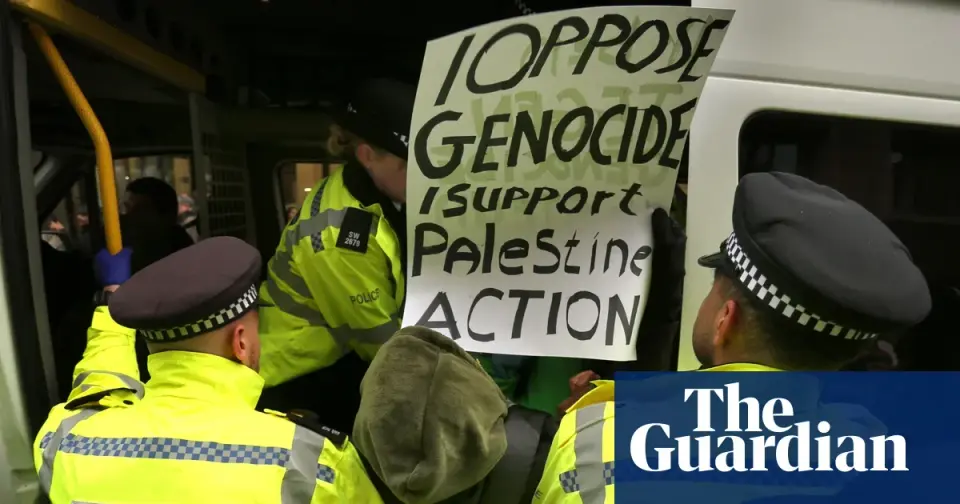
Home Office data reveals that 3,021 of the 6,539 terrorism arrests in Great Britain since 2001 occurred in the year ending March 2026. This surge coincides with the proscription of Palestine Action in July 2025, leading to mass arrests of protesters. Critics argue the broad definition of terrorism is undermining public trust, while the government maintains that supporting proscribed groups is illegal. A Supreme Court hearing on the ban is scheduled for November 4.
Key points
- Home Office data shows 3,021 terror-related arrests in the year ending March 2026, accounting for nearly half of all such arrests since 2001.
- The spike follows the July 2025 proscription of Palestine Action, the first direct action group banned under the Terrorism Act.
- Arrests increased by 1,434% year-on-year, with a 3,761% rise in arrests of women and girls and a 2,306% rise in those aged 30 and over.
- Defend Our Juries claims over 3,600 people have been arrested for supporting Palestine Action, with 2,500 charged under section 13 of the Terrorism Act.
- A legal challenge to the proscription will be heard by the UK Supreme Court on November 4, 2026.
Background
This development follows earlier debates on the scope of counter-terrorism laws in the UK. While previous archive entries focused on unrelated security incidents, such as the Leipzig drone incident or Nigerian rescue operations, the current situation highlights a domestic shift in how anti-terror legislation is applied to political protest. The proscription of Palestine Action marks a significant change in policy, moving beyond traditional violent extremist groups to target direct action organizations, a move that has sparked unprecedented legal and public scrutiny.
How outlets are covering it
The Guardian and Middle East Eye both report the same Home Office statistics but frame the implications differently. The Guardian emphasizes the legal and civil rights angle, citing Liberty’s Ruth Ehrlich, who argues the wide definition of terrorism is unfit for purpose and erodes public trust. Middle East Eye focuses more on the geopolitical dimension, quoting Defend Our Juries to suggest the ban protects UK arms companies and the relationship with Israel rather than public safety. Both outlets note the dramatic percentage increases in arrests across demographic groups, but the Guardian highlights the upcoming Supreme Court hearing as a key next step, while Middle East Eye underscores the criticism that the IDF should be proscribed if the goal were to target violence against civilians.
Why it matters
The data suggests a fundamental shift in the application of UK counter-terrorism laws, potentially redefining political protest as terrorism. This could have long-term implications for civil liberties, public trust in security services, and the legal precedent set by the Supreme Court. The scale of arrests, particularly among older and female demographics, challenges the traditional narrative of terrorism as being driven by young male extremists, raising questions about the proportionality and effectiveness of current security measures.
What to watch
The UK Supreme Court will hear the legal challenge to the Palestine Action proscription on November 4, 2026. The outcome could determine whether the ban remains in force or is overturned, potentially affecting the legal status of similar groups and the interpretation of the Terrorism Act. Continued arrests and legal proceedings under sections 12 and 13 of the Act are expected as the government maintains that supporting proscribed organizations is illegal.
- Almost half of terrorism arrests in Great Britain since 9/11 have been in past year The Guardian
- Almost half of terrorism arrests in UK since 9/11 have come after Palestine Action ban Middle East Eye
- Half of UK terror arrests since 9/11 have come in the past year The Herald
- Almost half of terrorism arrests in Britain since 9/11 have been in past year amid Palestine Action proscription Morning Star | The People’s Daily
Want the full story? Read the original reporting
Read on The Guardian