
Alberta’s historic secession vote faces likely defeat, but separatists vow to persist
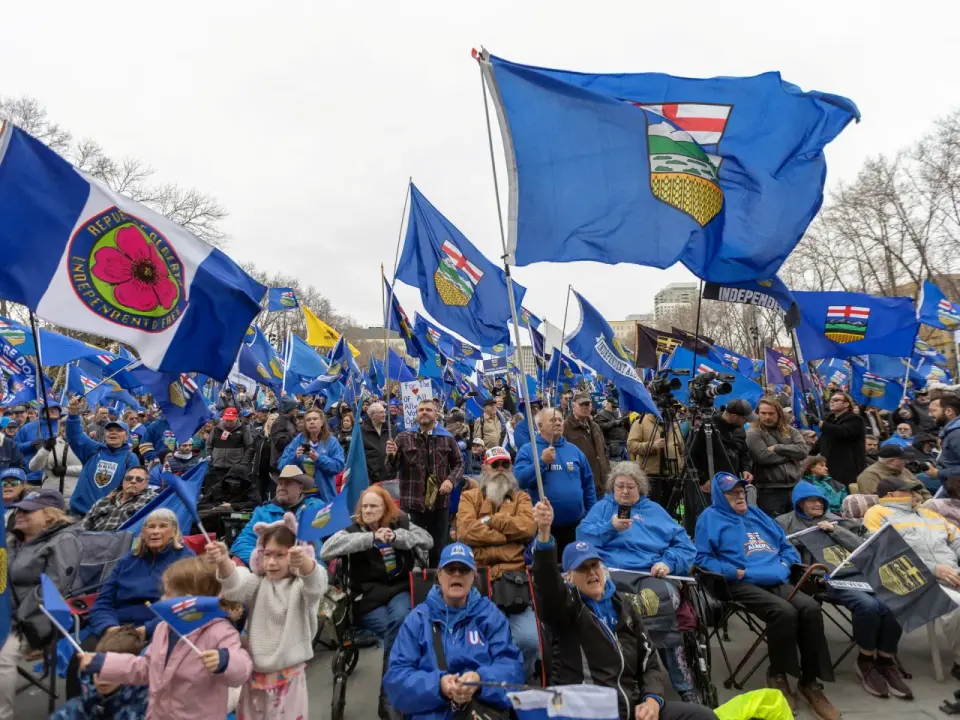
Albertans vote Monday on whether to initiate legal steps toward independence from Canada. Polls indicate a decisive victory for remaining in the federation, with 66% favoring unity. However, separatist leaders insist the movement will endure, arguing that even a loss validates their grievances and forces federal concessions. The vote includes nine other questions on provincial powers, which some strategists view as a way to send a message to Ottawa without demanding immediate secession.
Key points
- The referendum asks Albertans to choose between remaining in Canada or beginning the legal process for a future binding vote on separation; it does not trigger immediate independence.
- Polling from Angus Reid Institute shows 66% of Albertans support staying in Canada, while 34% back the process for a future separation vote.
- Among those supporting the separation process, 60% say they are voting to 'send a message' to Ottawa rather than to actually leave, according to Financial Times reporting.
- Prime Minister Mark Carney warned against the 'send a message' strategy, calling it a dangerous bluff that could lead to years of division.
- Alberta Premier Danielle Smith, who opposed secession, called the referendum to resolve internal party divisions within her United Conservative Party.
- Separatist leader Cory Morgan stated that even if the vote fails, the movement will continue, citing the long-term success of similar campaigns in the UK.
Background
This vote follows decades of 'Western alienation' grievances, rooted in the 1980s National Energy Program and intensified by Justin Trudeau’s climate policies. Recent developments include the Parti Québécois winning the Quebec election in October 2026, promising its own independence referendum, and Carney’s efforts to court Alberta through new pipeline projects and infrastructure investments to counter US trade tensions.
How outlets are covering it
Al Jazeera emphasizes the ideological resilience of separatists like Cory Morgan, who view the vote as a long-term strategy similar to the UK’s Brexit path. The Financial Times highlights the economic and cultural dimensions, noting that while 66% favor unity, a significant portion of voters are motivated by 'strategic separatism' to pressure Ottawa. It also notes that business leaders and Indigenous groups overwhelmingly oppose separation, viewing it as an economic distraction. Global News focuses on the polling data, confirming the low likelihood of a separation victory but noting the deep polarization in public discourse. All sources agree that the vote is more about signaling frustration than a genuine desire to leave, but they differ on whether this will strengthen or weaken the movement long-term.
Why it matters
The outcome will test the limits of Canadian federalism and Carney’s ability to unify the country amid US trade pressures. A strong 'remain' vote could settle the debate for years, but a significant 'process' vote could embolden separatists and force Ottawa to make further concessions on fiscal and energy policies. The vote also reflects broader tensions between western provinces and the federal government, with implications for national stability and economic policy.
What to watch
Results are expected shortly after polls close. If the 'remain' option wins decisively, separatists may pivot to other issues like immigration or provincial powers. If the 'process' option gains significant support, it could trigger further political pressure on Ottawa. Carney has promised to address the results and continue his efforts to improve relations with Alberta, including the new pipeline project.
- Alberta independence referendum: Will separatists survive a loss? Al Jazeera
- Alberta separatists say they’ll keep fighting after independence vote AP News
- ‘The Switzerland of North America’: Albertans vote on leaving Canada Financial Times
- Alberta separation referendum ‘not very likely’ new poll shows Global News
- Alberta Support for Canada Rises Ahead of Separation Referendum Bloomberg.com
Want the full story? Read the original reporting
Read on Al Jazeera