
Piddington declares 'independence' in symbolic vote against asylum housing
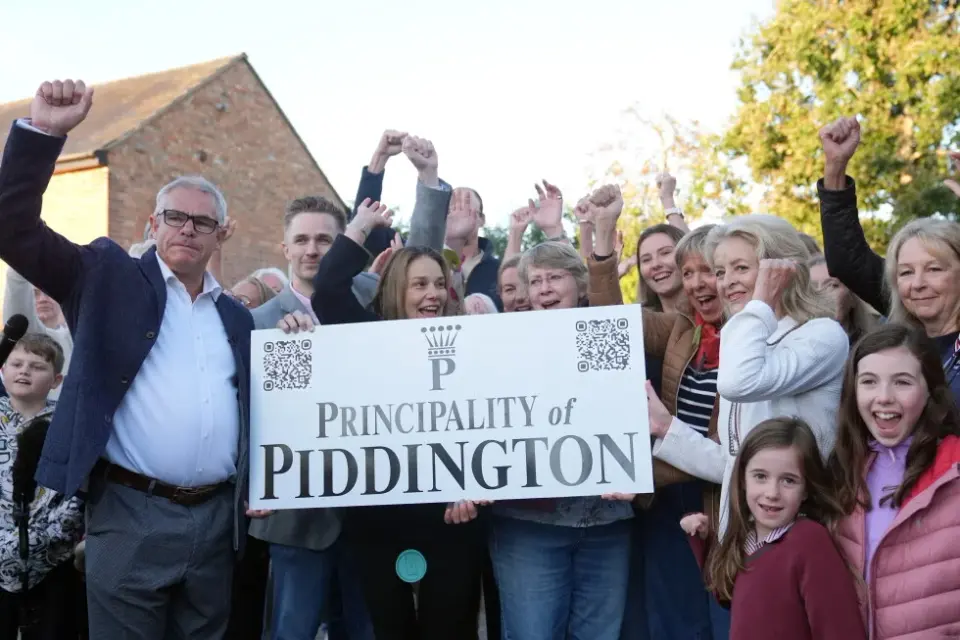
Residents of the English village of Piddington voted 285 to 26 to secede from the United Kingdom in a non-binding referendum. The symbolic act was a protest against government plans to house up to 1,256 male asylum seekers at a nearby former Ministry of Defense base in Bicester. While the vote has no legal effect, it highlights deep local opposition to the site and broader tensions over asylum accommodation in the UK.
Key points
- The non-binding referendum in Piddington, Oxfordshire, resulted in 285 votes for independence and 26 against, with one spoiled ballot.
- The vote was triggered by plans to convert the Bicester military base, located about half a mile from the village, into housing for up to 1,256 male asylum seekers.
- Prime Minister Andy Burnham acknowledged the 'strength of feeling' but insisted the government is processing claims faster to reduce time in state accommodation.
- The Refugee Council criticized the use of military barracks for asylum seekers, arguing it exacerbates insecurity and undermines social cohesion.
- Over 41,000 people crossed the English Channel in 2025, but numbers are down by more than 40% compared to the same period last year.
Background
This event follows a period of heightened anti-immigrant sentiment in the UK, including riots in 2024 and recent clashes at ports like Dover and Portsmouth. It occurs amid broader European debates on migration, such as the EU's plan for external return hubs and the Ceuta border crisis in Spain. The UK government has previously faced criticism for concentrating asylum accommodation in poorer neighborhoods, a pattern highlighted by recent disturbances in Thetford, Norfolk.
How outlets are covering it
AP News and NBC News framed the vote as a symbolic protest against government policy, noting the lack of legal consequence but highlighting the 'people power' narrative. The Guardian emphasized the logistical concerns raised by local officials, such as the lack of pedestrian access to the site, and quoted Culture Secretary Lisa Nandy, who argued that the burden of asylum accommodation should not fall disproportionately on poorer communities. While all sources reported the high turnout and the specific vote count, they differed in emphasis: some focused on the potential for xenophobia, while others highlighted the government's efforts to speed up asylum processing and close hotels to save over £1bn.
Why it matters
The Piddington vote serves as a flashpoint for the UK's ongoing struggle to balance asylum obligations with local community resistance. It underscores the political risk for the Labour government as it attempts to manage a backlog of asylum claims while facing backlash from communities that feel excluded from decision-making. The incident also reflects a wider trend in Europe where local opposition to migrant housing is becoming a significant political issue, potentially influencing future policy and public discourse on immigration.
What to watch
The government is expected to review the Bicester site and potentially seek alternative locations, as suggested by Oxfordshire county council leader Tim Bearder. The Labour government will continue to push for faster asylum processing to reduce the number of people in temporary accommodation. Public debate will likely intensify over the fairness of asylum accommodation distribution, with pressure on the government to engage more with local communities and address concerns about security and social cohesion.
- English village votes to leave the UK over migrant housing plan AP News
- English village votes to leave the U.K. over migrant housing plan NBC News
- UK village backs independence bid amid row over migrant camp Yahoo
- This English Village Is Threatening to Quit the U.K. Over Planned Asylum Camp WSJ
- English village votes to leave UK in protest over migrant housing plan The Guardian
Want the full story? Read the original reporting
Read on AP News