
Conservatives rally behind Badenoch’s inheritance tax plan amid fragile unity
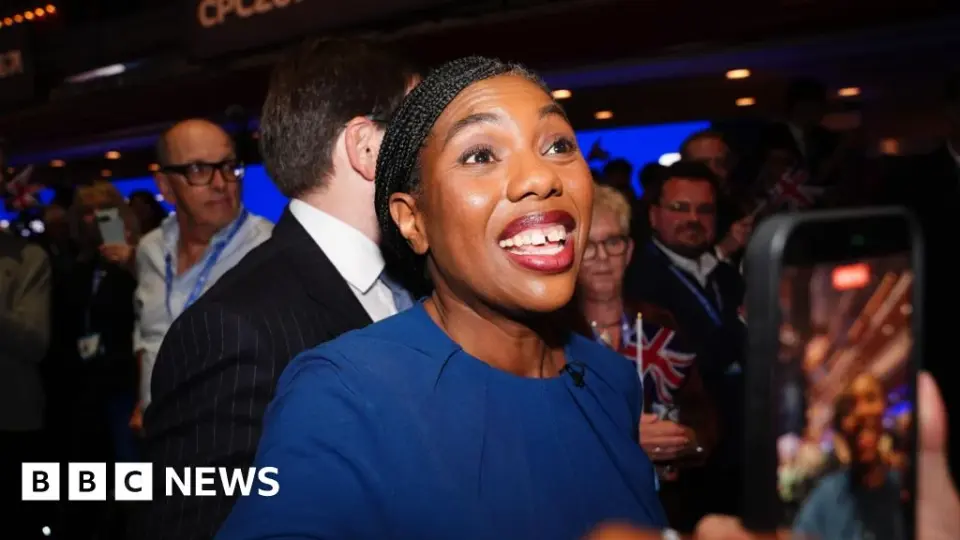
Kemi Badenoch delivered a lengthy speech at the Conservative Party conference in Birmingham, unveiling a plan to abolish inheritance tax on family homes. The move aims to reposition the party as a credible alternative to Labour and Reform UK, though critics argue it primarily benefits the wealthy. While the party appears united internally, public support remains low, and the policy’s funding relies on significant welfare cuts.
Key points
- Badenoch announced the scrapping of inheritance tax on family homes, a policy estimated to cost £6bn annually.
- The Conservatives claim to have identified £71bn in spending cuts, including £36bn from welfare and £13.7bn from sickness and disability benefits.
- Badenoch rejected any coalition with Reform UK, emphasizing a 'no-nonsense' approach to governance.
- The party remains united around Badenoch, with no visible dissent from figures like Robert Jenrick or Suella Braverman.
- Polls show the Conservatives trailing in third place, with public support still significantly lower than during the previous election cycle.
Background
This follows recent Conservative efforts to pivot toward middle-class voters and reject coalitions with Reform UK. Earlier in October, Badenoch had already signaled a shift toward traditional conservatism, promising to scrap 'mansion tax' and positioning the party as fiscally responsible. The party has also faced criticism for unfunded proposals, such as a plan to build 50,000 new prison beds, which critics dismissed as unrealistic. These moves reflect a broader strategy to regain public trust after a period of significant electoral losses.
How outlets are covering it
BBC reports that the party is united behind Badenoch, with no murmurings of dissent, contrasting sharply with the previous year. However, The Guardian criticizes the speech as overly long and lacking in substance, arguing that the party’s unity is fragile and driven by a 'Kult of Kemi' rather than genuine policy appeal. While BBC notes that Badenoch’s personal approval ratings have risen, The Guardian highlights that the party’s public support remains low, with critics arguing that the inheritance tax plan primarily benefits the wealthy. Both sources agree that the Conservatives are attempting to exploit gaps in the political market, but differ on whether this strategy will resonate with voters.
Why it matters
The inheritance tax plan and Badenoch’s rejection of a coalition with Reform UK signal a strategic shift for the Conservatives, aiming to regain public trust and position themselves as a credible alternative to Labour. However, the policy’s reliance on welfare cuts and its perceived benefit to the wealthy may alienate middle-class voters, complicating the party’s efforts to close the polling gap. The internal unity of the party, while a positive sign for Badenoch, may not translate into broader public support, as the Conservatives remain deeply unpopular in the polls.
What to watch
The Conservatives will likely continue to promote the inheritance tax plan and welfare cuts as part of their broader strategy to regain public trust. Badenoch is expected to focus on positioning the party as a credible alternative to Labour and Reform UK, while also addressing public concerns about the cost of living. The party may face further scrutiny over the feasibility of its spending cuts and the potential impact on public services. In the coming months, the Conservatives will need to demonstrate that their policies can resonate with a broader audience, particularly middle-class voters, to close the polling gap and position themselves as a viable alternative to Labour.
- Tories united behind Badenoch - but party still needs to win over voters BBC
- All hail the Kult of Kemi – captain, coach and owner of the Conservatives | John Crace The Guardian
- The Fight for Britain’s Right: Are the Conservatives Ready for a Reboot? The New York Times
- Kemi Badenoch says Tories would scrap inheritance tax on family homes BBC
- UK Politics Returns to Old Divide of Tax Cuts Versus Big State Bloomberg.com
Want the full story? Read the original reporting
Read on BBC