Samsung's controlling family completed a 12 trillion won inheritance tax payment—the largest in South Korea's history—in six installments over five years, tied to the estate of late chairman Lee Kun-hee; the family is worth more than $45bn.
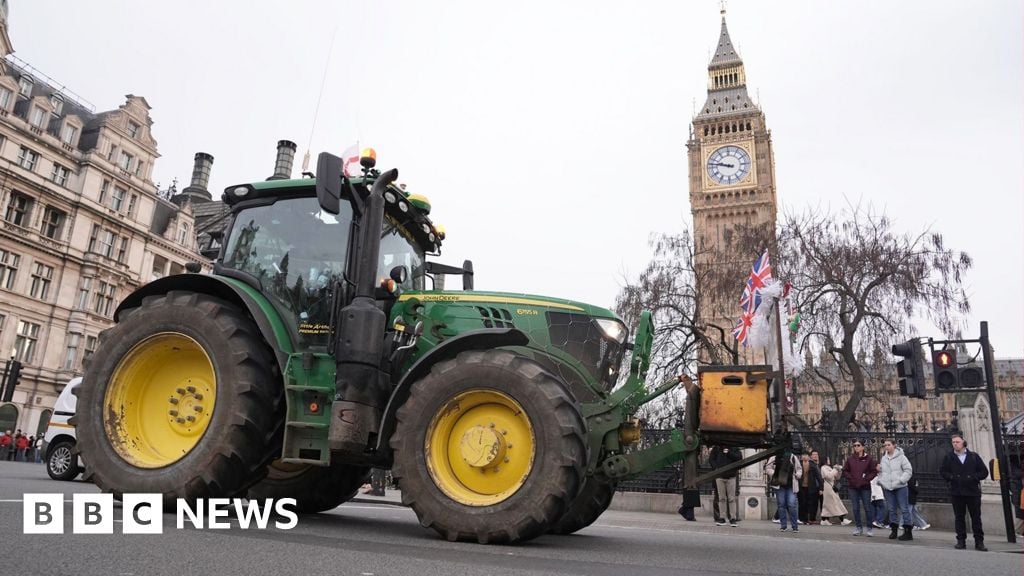
The UK government has announced that there will be no further changes to the farm inheritance tax proposals, following protests and a significant increase in the tax threshold to £2.5 million, aiming to support smaller farms while maintaining environmental scheme reforms. The government also pledged stability for environmental payments like the Sustainable Farming Incentive, with plans to simplify and expand the scheme, emphasizing the importance of environmental and economic sustainability in farming.
The UK government has reversed its plan to impose a 20% inheritance tax on farms, partly due to protests, political pressure from rural Labour MPs, and concerns over public perception, especially after Labour's recent election victory. The change, costing £130m, highlights the government's reactive approach to controversial policies and ongoing political calculations.
The UK government has significantly relaxed its plans to tax inherited farmland, raising the threshold from £1m to £2.5m after protests from farmers and political pressure, aiming to protect family farms while still targeting larger estates and wealthy investors.
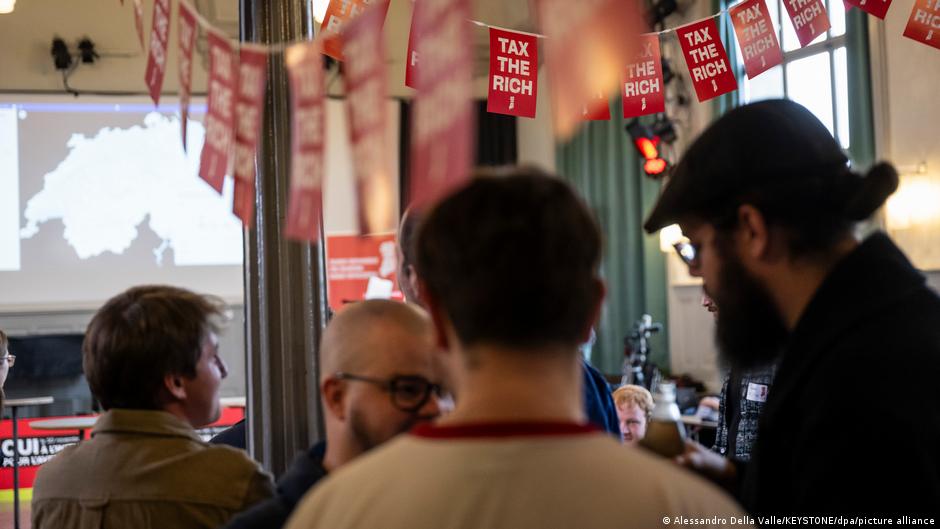
Swiss voters rejected a proposed 50% inheritance tax on multimillionaires aimed at funding climate change initiatives, with over 78% voting against it, and also rejected a civic service proposal for all young people, reflecting skepticism towards new social and economic measures. The government opposed both initiatives due to concerns over costs and economic impact.
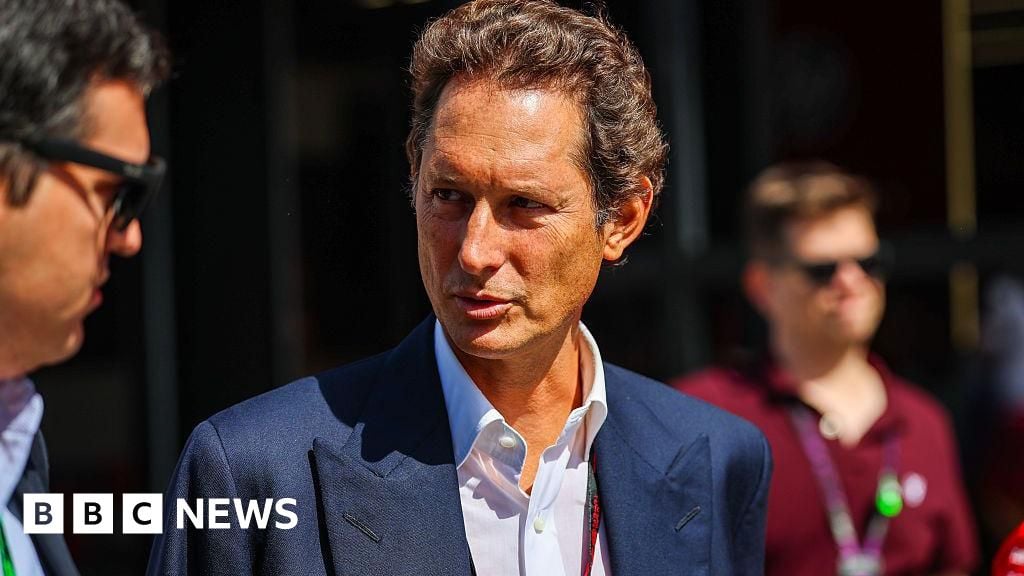
John Elkann, chair of Ferrari and Stellantis, agreed to do community service and pay €183m to settle a tax dispute in Italy related to his grandmother's estate, without admitting liability, as part of a broader family inheritance legal saga.
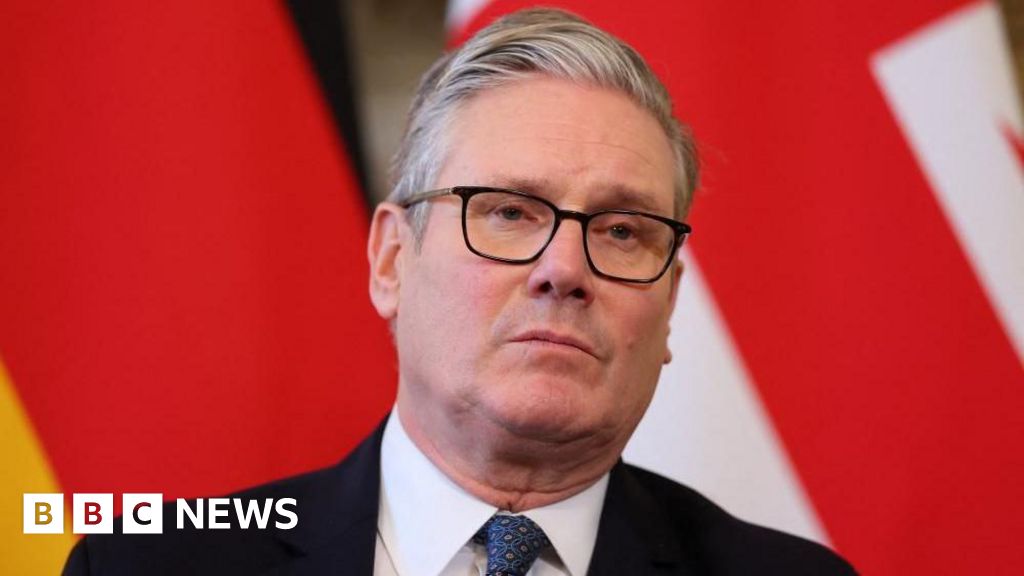
Farmers' leaders in the UK are urging Prime Minister Keir Starmer to reconsider changes to agricultural inheritance tax, which will impose a 20% tax on inherited agricultural assets over £1 million starting April 2026. The National Farmers' Union argues that the changes could force farmers to sell land to pay taxes, as many are asset-rich but cash-poor. Despite protests and calls for consultation, the government insists the changes will affect only a small number of estates, while emphasizing recent investments in farming and environmental schemes.
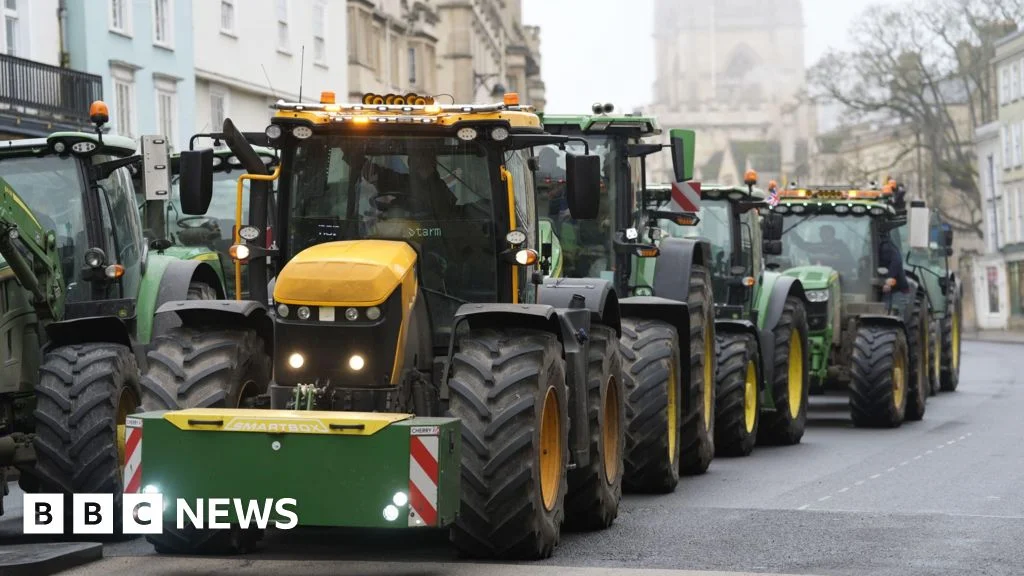
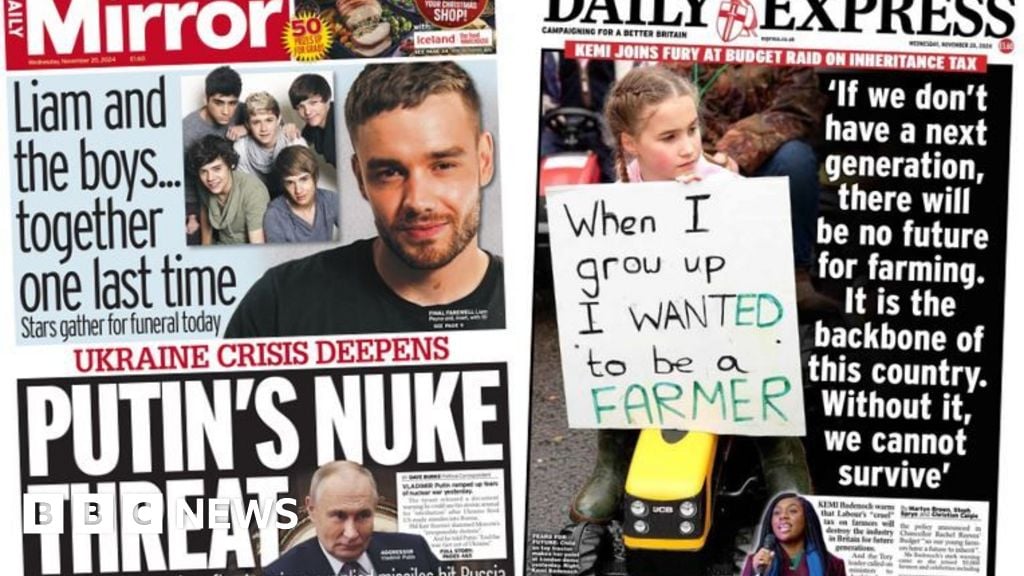
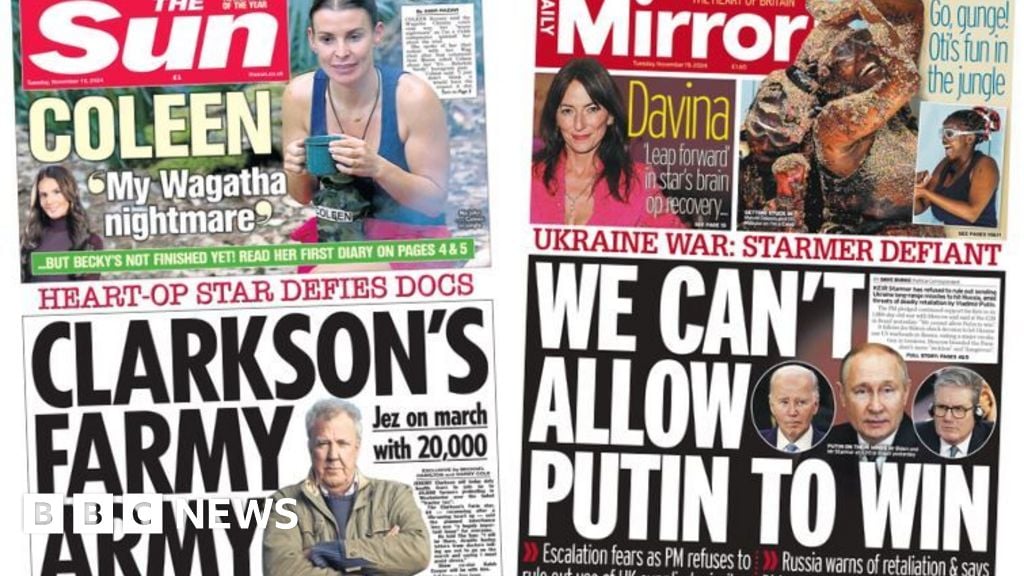
Newspaper headlines highlight escalating tensions as Vladimir Putin lowers the threshold for nuclear weapon use in response to Ukraine's use of US-supplied long-range rockets, raising fears of nuclear conflict. Concurrently, UK farmers protest against proposed inheritance tax changes, with high-profile figures like Jeremy Clarkson joining the demonstration, warning of further actions. Additionally, the rising cost of UK postage is compared to cheaper international alternatives, sparking debate over Royal Mail's pricing.
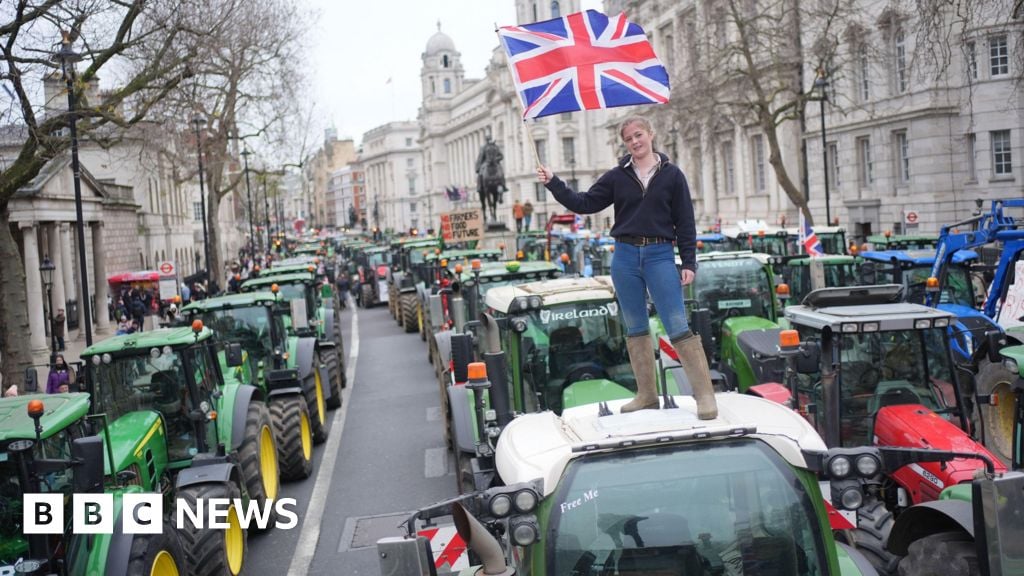
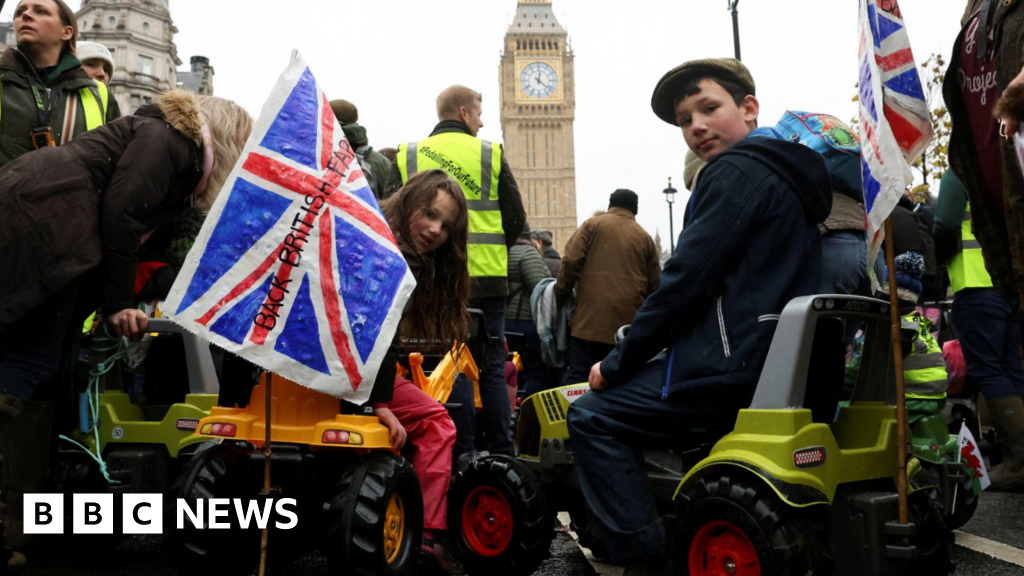
Farmers are protesting against proposed changes to inheritance tax, which they argue threaten their ability to pass farms to the next generation, a deeply rooted cultural expectation. The government contends that the current tax exemptions are unfair and unsustainable, as they allow wealthy individuals to avoid taxes by purchasing farmland. While the government plans to implement a 20% tax on affected farms, farmers argue that their wealth is tied to land value rather than income, and they are determined to continue their campaign against the changes.
Jeremy Clarkson criticized the BBC during a farmer protest in Westminster against the UK government's proposed inheritance tax on farms. Interviewed by BBC's Victoria Derbyshire, Clarkson accused the broadcaster of being a government mouthpiece and dismissed her questions as "classic BBC." The protest was filmed for Clarkson's Amazon Prime series, "Clarkson's Farm." Clarkson's tensions with the BBC date back to his 2015 departure from "Top Gear."
The production crew of 'Clarkson's Farm' is set to film a UK farmer protest in London, where Jeremy Clarkson and his co-stars are joining thousands of farmers opposing the Labour government's proposed inheritance tax on farms. This protest, dubbed the "tractor tax," has sparked concerns about the potential sale of farms, although the government claims the impact will be minimal. Clarkson, who has been actively involved in the farming community through his Amazon Prime series, emphasizes the importance of this issue.
The UK government faces criticism over plans to impose inheritance tax on farms, with Labour peer Baroness Mallalieu accusing the party of being out of touch with rural communities. Meanwhile, Jeremy Clarkson plans to join a farmer protest against the so-called 'tractor tax.' In international news, Sir Keir Starmer comments on the US decision to allow Ukraine to use long-range missiles, while the UK considers siding with the EU over the US in a potential trade war with China. British Airways experiences significant flight disruptions due to an IT glitch, and Chinese tech firms in Silicon Valley are recruiting US talent for AI development.
Welsh farmers, including Jacob Anthony, are protesting in London against new inheritance tax rules that could force them to sell parts of their farms. The UK Treasury plans to impose a 20% tax on farms valued over £1 million, payable over 10 years, starting April 2026. Farmers argue this threatens their livelihoods and rural communities, despite government claims that the changes target only the wealthiest landowners. The protest highlights broader tensions between the farming community and the government over agricultural policies.
Death can trigger estate and inheritance taxes, which are not the same. The federal government has an estate tax, while some states have both estate and inheritance taxes. Thresholds for these taxes are high, but they may change in the future. Inheritance tax rates vary by state and depend on the relationship with the deceased. Ways to avoid these taxes include gifting assets before death, moving to a state without these taxes, and setting up an irrevocable trust. If unable to avoid the inheritance tax, consider buying life insurance to cover the tax bill.
Wealthy families should consider making changes to their estate plans to reduce their tax exposure before the federal estate-tax exemption reverts to pre-2018 levels in 2026. Currently, the exemption limit is $12.92 million for individuals and $25.84 million for married couples, but it is set to halve to less than $7 million for individuals and about $13 million for married couples. Benefactors can start by gifting cash or other valuable items annually to heirs, taking advantage of the annual gift-tax exclusion limit of $17,000 per recipient from individuals and $34,000 from married couples. Other strategies include creating and funding 529 college savings plans, establishing spousal lifetime access trusts, creating qualified terminable interest property trusts, and transferring life insurance policies out of the estate. It is advisable to consult with estate planners, financial advisors, or tax professionals to navigate these changes effectively.