
Eisenkot’s Post-Netanyahu Vision: Security, Coalition Redlines, and Personal Grief
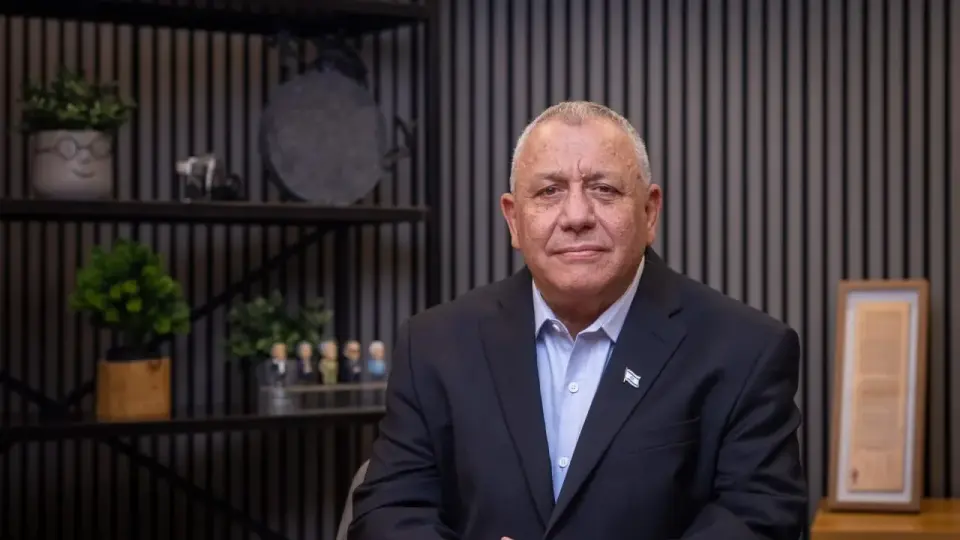
Former IDF chief Gadi Eisenkot has emerged as the leading opposition candidate for the October 2026 Israeli elections, positioning his Yashar party as the primary vehicle to oust Benjamin Netanyahu. In a recent interview, Eisenkot outlined a platform focused on 'change and repair,' emphasizing a return to normalcy, strict coalition redlines excluding Arab parties, and a reversal of current West Bank security policies. He attributes the October 7 failures to systemic negligence rather than betrayal and cites the loss of his son and two nephews as his primary motivation. While polls show a tight race, Eisenkot faces the challenge of forming a majority without Arab partners, a hurdle he claims can be overcome by expanding the Zionist opposition bloc.
Key points
- Eisenkot leads Netanyahu in head-to-head polling (41% vs. 38%) and is the top candidate to replace him, though the Zionist opposition bloc currently lacks the 61 seats needed for a majority without Arab parties.
- He rejects a rotation government, insisting the leader of the largest party must serve as prime minister for the full four-year term, a stance he has communicated to rivals Naftali Bennett and Avigdor Liberman.
- Eisenkot rules out coalition partnerships with Arab-led parties (Ra’am and Joint List), citing their failure to recognize Hamas as a terrorist organization, and dismisses Ofer Winter’s party as contradictory for supporting Netanyahu.
- He plans to reverse Netanyahu’s security appointments, returning the Civil Administration and police coordination in the West Bank to military command, and will establish a state commission of inquiry to investigate the October 7 failures.
- Eisenkot advocates for a universal service law requiring all citizens, including haredim and Arabs, to serve, while also increasing benefits for reservists and revoking incentives for draft evaders.
Background
Eisenkot’s rise follows a period of political fragmentation, having previously served in Netanyahu’s emergency government and later breaking with Benny Gantz to found Yashar in September 2025. His campaign is framed against the backdrop of the 2023 Hamas attacks and the subsequent war, where he served as an observer in the war cabinet. Recent archive coverage highlights ongoing tensions regarding his security detail and Israel’s diplomatic isolation, issues Eisenkot addresses by promising to restore international standing and end the 'forever wars' doctrine.
How outlets are covering it
The Jerusalem Post presents Eisenkot as a stabilizing, 'reserved' figure offering a 'deep sense of commitment' to repair the country, contrasting him with the 'outspoken' Netanyahu and the declining popularity of Benny Gantz. The secondary source from Yahoo highlights a Channel 13 poll showing Netanyahu’s bloc leading with 54 seats, a figure that underscores the mathematical difficulty Eisenkot faces in forming a government without Arab parties, a challenge Eisenkot dismisses by predicting a larger majority in the actual election. While the Jerusalem Post focuses on his personal grief and policy specifics, the broader context suggests a polarized electorate where the 'Zionist opposition' remains fragmented despite Eisenkot’s efforts to unify it.
Why it matters
The outcome of the October 2026 election will determine whether Israel continues its current trajectory under Netanyahu or pivots toward the 'change and repair' agenda proposed by Eisenkot. His success or failure hinges on the ability to build a coalition without Arab parties, a feat that would require a significant shift in the political landscape. If Eisenkot wins, it signals a potential end to the 'forever wars' doctrine and a return to traditional security norms, while a Netanyahu victory would cement the current status quo, including the expansion of settlements and the exclusion of Arab parties from governance.
What to watch
The next critical step is the October 2026 election, where Eisenkot must secure enough seats to form a government without Arab parties. If he wins, he will immediately move to reverse West Bank security policies, establish a state commission of inquiry for October 7, and implement a universal service law. If he loses, the opposition bloc may remain fragmented, potentially leading to further political instability or a continuation of Netanyahu’s rule. The formation of a coalition will depend on the willingness of Bennett, Liberman, and Golan to accept Eisenkot as the prime minister, a condition he has already set.
- 'I want to bring change and repair': Eisenkot lays out vision for Israel in first English interview The Jerusalem Post
- Israel’s Election Can’t Fix What Netanyahu Broke The Nation
- Trump shares Channel 13 election poll showing Netanyahu's bloc leading with 54 seats Yahoo
- How Israeli voters could reshape the Democrats The Times
- Poll: Anti-Netanyahu bloc pulls ahead but neither side close to majority The Times of Israel
Want the full story? Read the original reporting
Read on The Jerusalem Post