
EU Budget Talks Stall as Merz and Le Pen Pressure Mounts
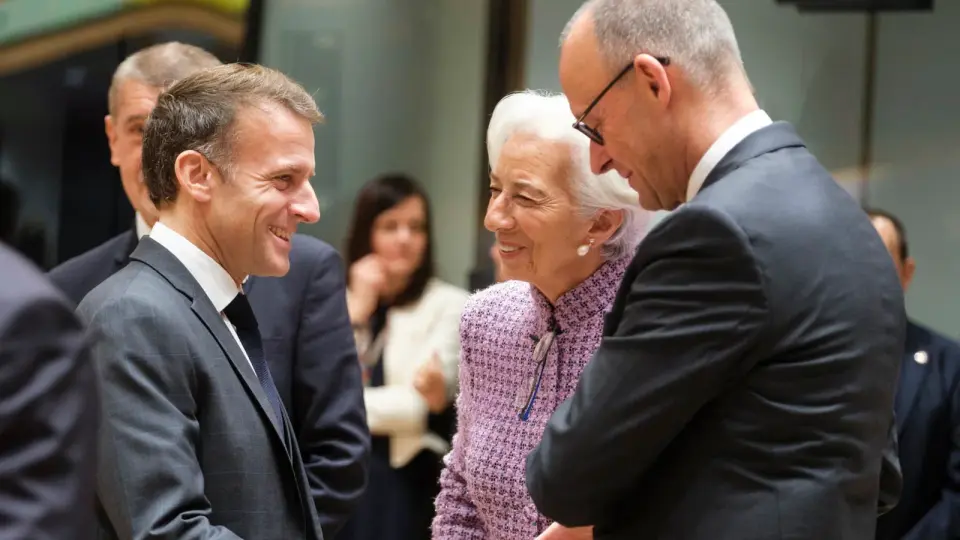
EU leaders failed to agree on the 2028-2034 budget during a 12-hour summit, with Germany demanding full participation in a €45bn Ukraine loan while net beneficiaries resist. A proposed digital tax faces US opposition, and France’s 2027 election looms as a deadline.
Key points
- EU leaders ended a 12-hour summit on Nov 27 without agreeing on the 2028-2034 budget, planning to resume talks in mid-December.
- German Chancellor Friedrich Merz insists all 27 member states must contribute to a €45bn Ukraine loan, threatening to veto the budget if net beneficiaries opt out.
- The revised budget proposal is 1.58 trillion euros, a 10% cut from the original 2 trillion, but frugal states demand deeper reductions while others oppose cuts.
- US President Donald Trump’s administration warned against an EU-wide digital services tax, complicating efforts to find new revenue sources for the budget.
- France’s 2027 presidential election, with far-right leader Marine Le Pen favoring EU exit, creates urgency for a deal before year-end.
Background
The EU’s Multiannual Financial Framework (MFF) requires unanimous approval from all 27 member states and a majority vote in the European Parliament. Previous negotiations in October 2026 saw Italian PM Giorgia Meloni warn a deal was 'light years away,' and Romania ended a five-month political deadlock with a fragile government in October. France has faced mass protests since mid-2026 over education funding and cost-of-living issues, exacerbating political instability.
How outlets are covering it
CNBC emphasizes the deadlock over the budget’s size and the pressure from France’s 2027 election, noting Macron’s limited time to negotiate. The Guardian highlights the clash over Ukraine aid, with Merz threatening to veto the budget unless all 27 states contribute to the €45bn loan, while net beneficiaries like Slovakia and Hungary resist. POLITICO focuses on the US opposition to a digital tax, with Washington warning against a levy that could target US tech giants, complicating EU efforts to find new revenue sources. The three outlets agree on the budget’s 1.58 trillion euro proposal but differ on the primary obstacle: CNBC and The Guardian stress the Ukraine loan and budget size, while POLITICO centers on the digital tax and US-EU tensions.
Why it matters
Failure to agree on the EU’s 2028-2034 budget by year-end risks deepening political deadlock, especially with 2027 elections in France, Spain, Poland, and Italy. A stalled budget could undermine EU cohesion, defense spending, and support for Ukraine, while a digital tax could trigger US retaliation, harming EU-US trade relations.
What to watch
EU leaders plan to resume budget talks in mid-December 2026, with a year-end deadline to avoid complications from 2027 elections. The German government will examine the digital tax proposal 'with an open mind,' but unanimous approval is unlikely due to opposition from Ireland, Sweden, and others. France’s 2027 presidential election in April 2027 will further pressure leaders to reach a deal before Macron’s term ends.
- EU leaders fail to break $1.7 trillion budget deadlock as political pressure mounts CNBC
- France and Germany want deal by year-end to 'Le Pen-proof' next EU budget and Ukraine funding Reuters
- EU leaders wrestle over Ukraine aid as potential Le Pen victory sparks fear The Guardian
- EU budget summit ends abruptly in Brussels DW.com
- US warns EU leaders against Big Tech tax POLITICO.eu
Want the full story? Read the original reporting
Read on CNBC