
European Riots Expose Deepening Identity Crisis and Immigration Backlash
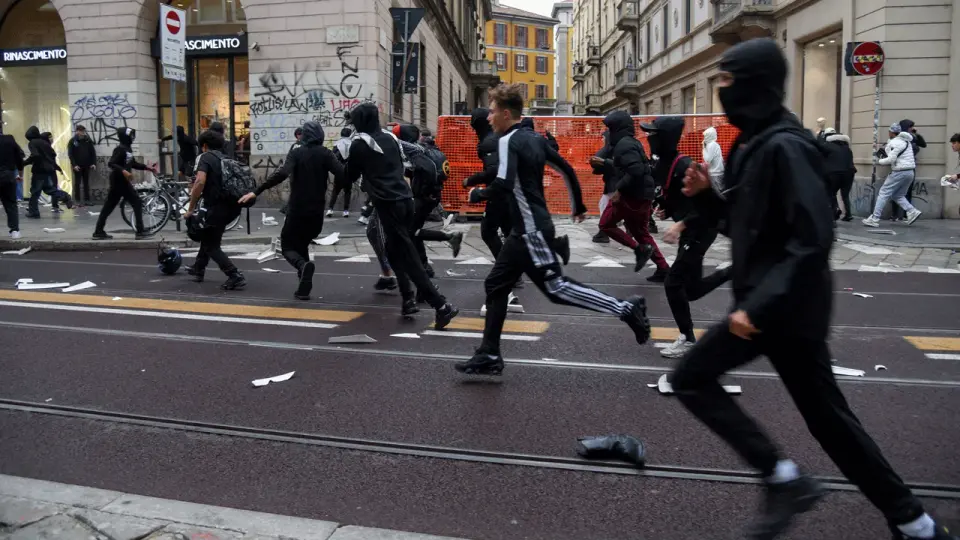
Violent unrest has spread across France, Italy, and other European nations, escalating from student protests over school funding into widespread arson and looting. While authorities struggle to contain the chaos, the unrest highlights a deepening societal fracture over immigration, integration, and national identity. Critics argue that decades of multicultural policies and a lack of clear civic expectations have created a vacuum, leading to social fragmentation and a rise in right-wing political movements. Conversely, analysts note that the violence is not uniformly linked to specific ethnic groups and that many grievances stem from economic neglect rather than cultural conflict alone.
Key points
- Riots in France have spread to Italy, Belgium, and Albania, involving arson of historic buildings and clashes with police.
- The unrest began as student protests against poor school conditions and funding but escalated into broader social violence.
- Critics argue that Europe's secularization and lack of a shared cultural identity have weakened social cohesion, making integration difficult.
- Right-wing parties, such as Germany's AfD, are gaining support by advocating for stricter border controls and denaturalization of criminals.
- Some analysts argue that the violence is not solely driven by immigration but by economic neglect and a failure of the state to address local grievances.
Background
This unrest follows a period of rising political polarization in Europe, where right-wing populist parties have gained significant ground by capitalizing on economic stagnation and identity-based grievances. Previous coverage noted that these parties are displacing traditional conservatives, driven by a sense of cultural displacement and economic anxiety. The current riots represent a physical manifestation of these underlying tensions, as the state struggles to maintain order and define its national identity in the face of rapid demographic and cultural changes.
How outlets are covering it
The Daily Signal, through Victor Davis Hanson, frames the riots as a direct consequence of unchecked immigration and a failure of Western values, arguing that Europe's tolerance has led to social collapse and that the unrest is a warning to the United States. Fat Tail Daily echoes this view, suggesting that the West's policy of unconditional tolerance has backfired, leading to a loss of cultural cohesion and a rise in crime. In contrast, Eurasia Review offers a more nuanced perspective, acknowledging that while identity anxieties are real, the violence is not uniformly linked to specific ethnic groups and that many grievances stem from economic neglect and a failure of the state to address local issues. The article also notes that the cultural-clash narrative may be overstated, as irregular arrivals are falling and many Europeans' identity anxieties predate recent migration trends.
Why it matters
The European riots highlight the fragility of social cohesion in the face of rapid demographic and cultural changes. They underscore the risks of a lack of clear civic expectations and the potential for social unrest when the state fails to address local grievances. The unrest also reflects a broader trend of political polarization in Europe, as right-wing parties gain support by capitalizing on identity-based grievances. The situation serves as a cautionary tale for other Western nations, highlighting the need for a balanced approach to immigration and integration that addresses both cultural and economic concerns.
What to watch
The European governments are likely to face increased pressure to address the root causes of the unrest, including immigration policy, integration, and social cohesion. The rise of right-wing parties may lead to a shift in political discourse, with a greater emphasis on national identity and border control. However, the long-term impact of the riots on European society and politics remains uncertain, as the underlying tensions are complex and multifaceted. The situation will likely continue to evolve, with the potential for further unrest if the state fails to address the root causes of the violence.
- Victor Davis Hanson: Europe’s Immigration Crisis Is a Warning to America The Daily Signal
- Don’t blame Europe's riots on immigration Prospect Magazine
- Victor Davis Hanson: Why Western Civilization Is Fighting Back The Daily Signal
- The West confronts the reality of unconditional tolerance Fat Tail Daily
- The Question Europe Buried Alive: The War Over Who We Are – OpEd Eurasia Review
Want the full story? Read the original reporting
Read on The Daily Signal