
French Student Uprising Escalates Amid Police Brutality and Political Polarization
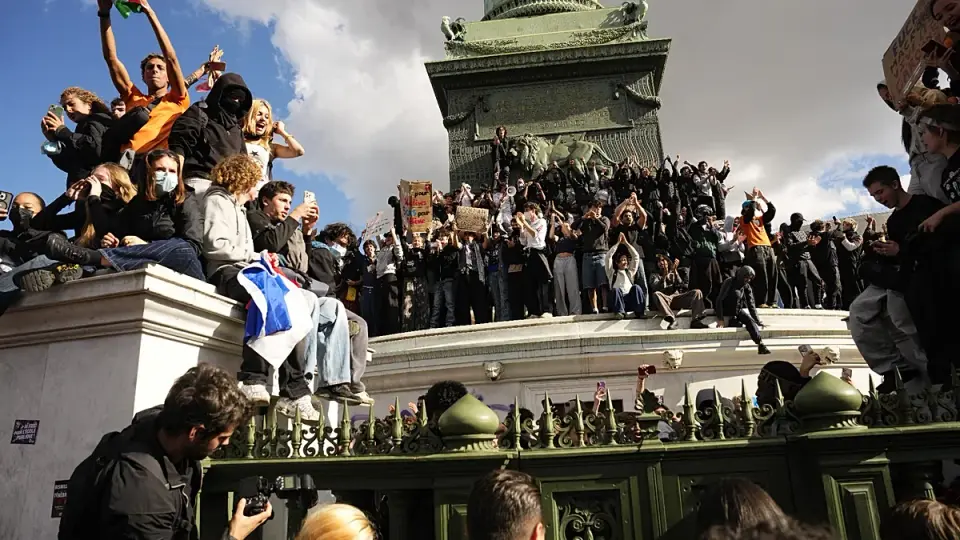
A nationwide student movement in France, sparked by poor school conditions in Paris suburbs, has grown into a major social crisis. With nearly 7,000 arrests, severe police injuries to minors, and a government struggling to fund concessions, the unrest threatens to converge with broader economic grievances ahead of the 2027 presidential election.
Key points
- Protests began in mid-September at Lycée Saint-Exupéry in Créteil, spreading to over 640 high schools and 30 universities within weeks.
- The French Ministry of Justice reported 6,877 arrests, 86% involving minors, with 761 police officers injured; 24 internal probes are underway for alleged brutality.
- Education Minister Édouard Geffray announced the deployment of 3,000 substitute teachers, a measure unions criticize as insufficient and potentially mismatched to school needs.
- A separate demonstration against cost-of-living and fuel prices is scheduled for October 17, raising fears of a convergence with the 2018 yellow vest movement.
- Polls show Marine Le Pen leading the 2027 presidential race, while Jean-Luc Mélenchon’s support has risen due to the protests, despite accusations from the government that his party is instrumentalizing the movement.
Background
The unrest occurs against a backdrop of France’s high public deficit (5.4% of GDP) and a fragmented political landscape. Previous coverage noted the National Rally’s growing Senate presence and earlier government concessions, such as suspending stun grenades after severe injuries to students. The current movement is distinct from past protests, originating in diverse, working-class suburbs before expanding to elite institutions, reflecting a broader 'polycrisis' of inequality and fiscal strain.
How outlets are covering it
Euronews and The New Yorker emphasize the movement’s organic nature and the severity of police repression, citing specific injuries like a 15-year-old losing a hand. They highlight the potential for the protests to evolve into a broader social movement, similar to May 1968, especially if they merge with the October 17 cost-of-living demonstrations. Salon.com, however, focuses on the international reaction, particularly the US right-wing’s framing of the protests as a result of immigration and 'Islam,' a narrative Trump and Fox News have promoted despite evidence that the movement is primarily about domestic education funding. While Euronews notes the government’s attempt to blame Mélenchon for exploiting the youth, The New Yorker and Salon argue that students are largely distinguishing between genuine support and political manipulation, with 62% of the public viewing the protests as justified.
Why it matters
The protests expose deep structural failures in France’s education system and fiscal policy, potentially reshaping the 2027 presidential race. The scale of police repression and the risk of convergence with other social movements could destabilize the government and influence voter sentiment, particularly as the country faces a high deficit and a polarized political landscape.
What to watch
A major demonstration is scheduled for October 13, followed by a cost-of-living protest on October 17. The government’s ability to address student demands without further escalating tensions will be critical. Analysts warn that the upcoming school half-term could disrupt momentum, but the movement’s expansion to elite schools and its viral social media presence suggest it may persist. The 2027 presidential election, with Le Pen likely in the second round, will be heavily influenced by how the government handles this crisis.
- Could student protests ignite a wider movement in France? Euronews.com
- French mayor caught in viral video clash says student protesters 'could be my children' Reuters
- French students are in the streets. Donald Trump and Fox News are freaking out Salon.com
- The School Near Paris That Shows Why French Students Are Protesting The New York Times
- The French Student Protesters’ Demands Are Extremely Clear The New Yorker
Want the full story? Read the original reporting
Read on Euronews.com