Student protests in France paused briefly, but market pressure intensified as bond yields hit multi-decade highs. Prime Minister Sébastien Lecornu faces a critical budget negotiation next week to address a deficit exceeding 5.1% of GDP, while investors warn of a potential sovereign debt crisis.
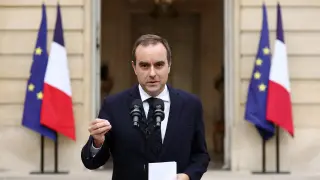
France has suspended the use of stun grenades in student protests after a 15-year-old boy lost his hand in Lens. Interior Minister Laurent Nuñez ordered the pause pending an investigation into the incident, which occurred during nationwide demonstrations over poor school conditions. While the government defends police actions as necessary responses to violence, critics and student unions argue the force used against minors was disproportionate. The unrest, which began in September, has led to over 6,000 arrests, hundreds of school closures, and significant injuries to both students and police officers. Prime Minister Sébastien Lecornu promised proposals for educational reform by late October, but protesters demand immediate action and better resources for schools.
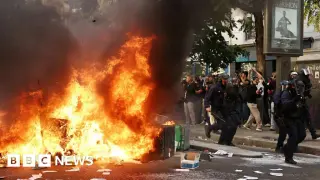
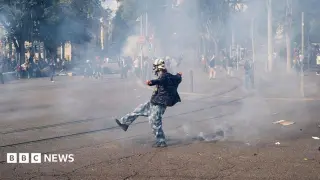
France has suspended the use of stun grenades in student protests after a 15-year-old boy lost his hand in Lens. Interior Minister Laurent Nuñez ordered the pause pending an investigation. The move follows weeks of violent demonstrations over school conditions, resulting in over 6,100 arrests and 715 police injuries. While rights groups condemn excessive force, police unions argue non-lethal tools are necessary for safety. The unrest has escalated into a broader political confrontation, with experts citing involvement from far-left and pro-Palestinian groups.
French government bond yields have surged over 1.5 percentage points since the start of the Iran conflict, with the OAT-Bund spread peaking at 1.6 points. The IMF has warned France to reduce its deficit below 5% to restore market confidence, while the European Central Bank faces pressure to intervene. Political instability, including violent student protests and a looming April presidential election, has exacerbated investor fears of a sovereign debt crisis that could destabilize the Eurozone.
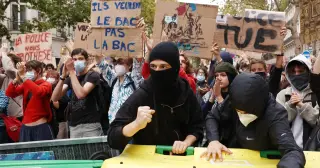
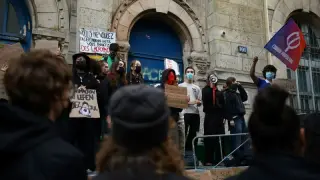
France faces its largest student protests in decades, with 250,000 demonstrators demanding better school funding and resources. The unrest, sparked by a September strike in a Paris suburb, has led to hundreds of school closures, over 6,000 arrests, and severe injuries, including a student losing a hand. The government's response has been criticized as insufficient, with police using tear gas and batons, drawing condemnation from human rights groups. The crisis has intensified political tensions ahead of the 2027 presidential election and compounded concerns about France's fiscal outlook, with bond yields reaching their highest level since 2002.
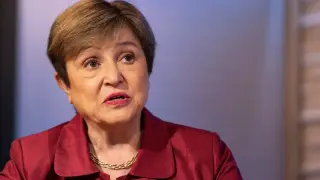
IMF chief Kristalina Georgieva warned France to reduce its deficit below 5% to restore bond market confidence, while ECB chief Christine Lagarde cited past crises as evidence that fiscal discipline can restore stability. French 10-year bond yields have risen over 100 basis points this year, exceeding Italian levels, amid violent student protests and a fragmented parliament blocking €43bn in proposed spending cuts. Georgieva noted Europe’s stronger financial tools compared to the 2011 crisis but stressed that rising inflation and debt require clear signals of fiscal containment. French officials acknowledge the deficit could exceed 6% without action, with borrowing costs already spiking by €15bn annually.
UBS CEO Sergio Ermotti has warned that France requires 'hard measures' to address its spiraling debt crisis, arguing that incremental changes are insufficient. French 10-year bond yields have surged to 4.77%, exceeding those of Italy and Greece, as investors flee to German Bunds. The situation is exacerbated by political uncertainty ahead of the 2027 presidential election and fears of a sovereign debt contagion across the eurozone.
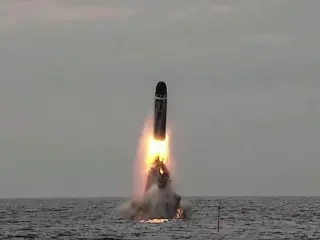
France conducted the first live-fire test of its upgraded M51.3 strategic ballistic missile from the submarine Le Vigilant on October 6, 2026. President Emmanuel Macron observed the launch from a warship, describing it as a critical step for strategic credibility. The missile, which entered service in October 2025, was fired without a nuclear warhead and impacted in the North Atlantic. This test validates the submarine's return to full operational status after a major overhaul and coincides with heightened tensions regarding Russian nuclear threats.
President Donald Trump blamed mass student protests in France on 'out of control mass migration' and Islam, but the demonstrations are actually driven by grievances over poor school conditions, including staff shortages and overcrowded classrooms.
French President Emmanuel Macron faces intense backlash after declaring that the American model of free speech is 'the opposite of free speech' and must be bounded by public order. These remarks, made in Madrid on Sept. 29, coincide with violent nationwide student protests in France over school funding. Critics argue Macron’s stance contradicts the chaos in his own country, where riots have led to over 5,000 arrests and the burning of 24 schools. Macron also urged the EU to enforce online censorship laws more aggressively, a move criticized by free speech advocates as state-controlled suppression of dissent.
France faces a dual crisis: massive student protests over underfunded schools and a sovereign debt emergency. Bond yields have surged, with 10-year notes reaching 4.77%, exceeding those of Italy and Greece. UBS CEO Sergio Ermotti warns that 'hard measures' are needed to restore fiscal credibility, comparing the situation to the 2011 eurozone crisis. The political paralysis ahead of the 2027 presidential election complicates fiscal reforms, while investors shift funds to German Bunds, widening the OAT-Bund spread to over 140 basis points.
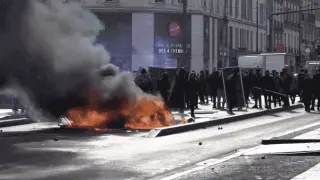
France faces its largest student protests in decades, with 250,000 demonstrators demanding better school funding. Police used tear gas in Paris, Marseille, and Strasbourg, leading to 488 arrests and severe injuries, including a 15-year-old losing a hand. The government faces criticism for its response, while student unions vow to continue protesting until demands are met.
France successfully test-fired its new M51.3 nuclear-capable ballistic missile from the submarine Le Vigilant on October 6, 2026. President Emmanuel Macron observed the launch from a warship, calling it a vital step for strategic credibility. The missile, which entered service in October 2025, was launched without a warhead and impacted in the North Atlantic. The test coincides with heightened tensions over Ukraine and Russia's nuclear threats.
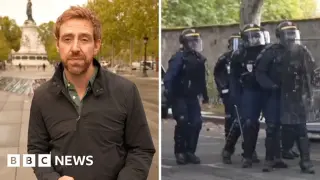
Over 250,000 people demonstrated across France on October 6, demanding better school funding and infrastructure. Police used tear gas in Paris, Marseille, and Strasbourg, while an officer was charged for injuring a student last week. President Macron is expected to meet with ministers to address the escalating crisis.
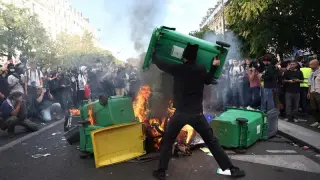
France is experiencing its largest student protests in decades, triggered by long-standing grievances over underfunded schools, overcrowded classrooms, and teacher shortages. What began as a local strike in a Paris suburb in late September has escalated into a national crisis, with hundreds of schools closing and over 6,000 people arrested. On Tuesday, an estimated 250,000 to 450,000 demonstrators marched nationwide, clashing with police who used tear gas and water cannons. The unrest has injured hundreds, including a student who lost a hand, and has intensified political tensions ahead of the 2027 presidential election. While the government promises reforms, critics accuse it of repression and ignoring student demands for basic educational conditions.