
UK Youth Parliament Faces Closure as Government Withholds Future Funding
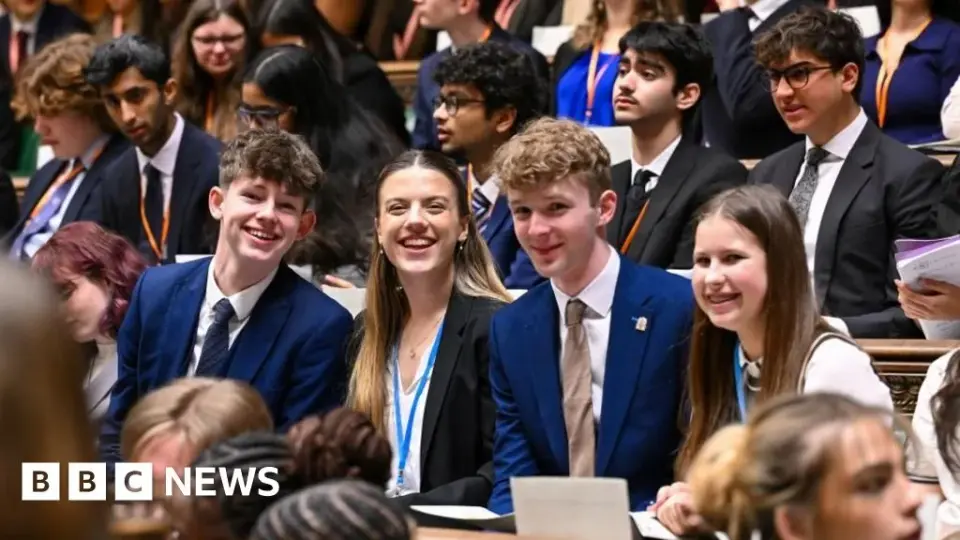
The UK Youth Parliament is likely to close within months after the government decided not to commit to further funding. The Department for Culture, Media and Sport (DCMS) praised the organization's legacy but declined to extend grants beyond March 2027. While the body received £453,000 in recent taxpayer support, a prior review noted low public awareness and exclusion of some schools. Supporters argue it is vital for youth engagement, especially as a bill to lower the voting age to 16 progresses, while critics argue it lacks value for money. The government is currently designing a new scheme focused on under-represented groups, with announcements expected this autumn.
Key points
- The UK Youth Parliament, launched in 2000, is at risk of closure due to lack of government funding commitment.
- The Department for Culture, Media and Sport (DCMS) will not provide further grants, though no final decision has been made yet.
- The organization received £453,000 in taxpayer funding last year, with £2.4m spent on youth initiatives between 2017 and 2024.
- A 2025 government review found that only a quarter of young people are aware of the parliament, and some schools felt excluded.
- Supporters, including Labour MP Peter Swallow, argue cutting funding is short-sighted, especially with a bill to lower the voting age to 16 in progress.
- Critics, such as Conservative MP Jack Rankin, argue the parliament should not receive public money or sit in the House of Commons chamber.
Background
The UK Youth Parliament has operated since 2000, allowing young people aged 11 to 18 to elect members and debate in the House of Commons. It is run by the National Youth Agency, having previously been under the British Youth Council, which closed in 2024 due to financial issues. The organization has been credited with influencing policy, such as campaigns for lowering the voting age to 16, a bill currently moving through Parliament. Notable figures, including Labour minister Keir Mather, have cited their involvement in the Youth Parliament as a starting point for their political careers.
Why it matters
The potential closure of the UK Youth Parliament signals a shift in government support for youth engagement in democratic processes. As public trust in politics declines, the removal of a direct channel for young people to scrutinize government and develop leadership skills could exacerbate disengagement. The decision also highlights tensions between preserving established youth programs and the government's push for new, potentially more inclusive schemes. With a bill to lower the voting age to 16 in progress, the loss of this platform may impact the pipeline of young political participation and advocacy.
What to watch
The government is expected to announce details of a new youth democracy scheme this autumn, with a focus on under-represented groups. No final decision on funding for the UK Youth Parliament has been made, but insiders suggest it will close without government support. The bill to lower the voting age to 16 will continue its passage through Parliament, potentially influencing future youth engagement initiatives.
Want the full story? Read the original reporting
Read on BBC