
German investigators identify Russian GRU agent and Belarusian operative in Leipzig drone probe
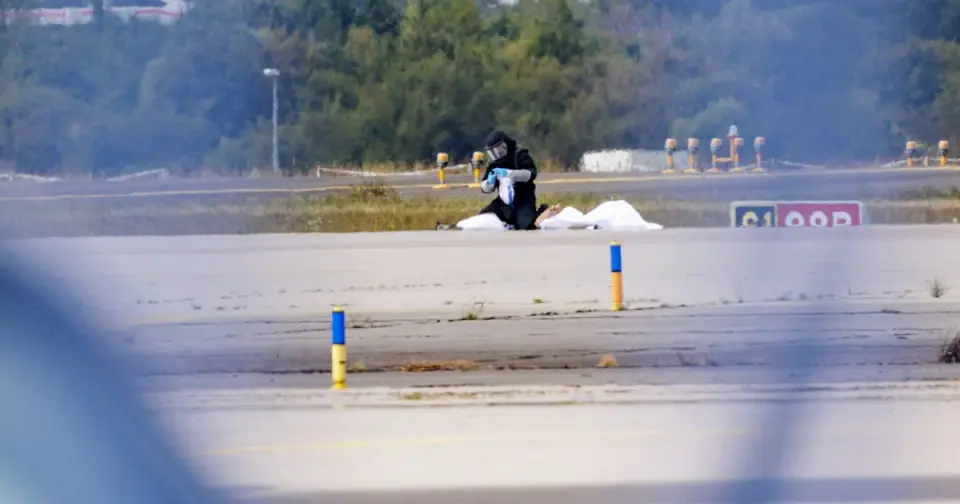
German security agencies have identified a Russian national linked to the GRU and a Belarusian citizen as the primary suspects in the August 4 drone attack on Leipzig-Halle airport. The Russian suspect, Oleg Le., allegedly planned the logistics, while the Belarusian suspect, Andrei Ka., is believed to have executed the attack. The drone, carrying 1.8 kilograms of Semtex, failed to detonate due to a broken detonator. German officials have attributed the incident to Russia, leading to diplomatic countermeasures, while Moscow denies involvement.
Key points
- German authorities identified Oleg Le., a Russian national linked to the GRU, and Andrei Ka., a Belarusian citizen, as the main suspects in the August 4 attack.
- The attack targeted a Ukrainian Antonov aircraft; the drone carried 1.8kg of Semtex but failed to detonate because the detonator broke off.
- Investigators found debris from two additional drones and a control antenna near the airport, with DNA traces linking the Belarusian suspect to prior crimes in Finland and Lithuania.
- German Foreign Minister Johann Wadephul and Interior Minister Alexander Dobrindt held Russia responsible for the attack on September 1, prompting diplomatic countermeasures.
- The Russian suspect entered Germany via Turkey and later departed for Serbia, while the Belarusian suspect entered the Schengen area via Latvia on July 28.
Background
This development follows earlier reports in August 2026 that a third drone and explosives were found near Leipzig-Halle airport, suggesting a larger planned attack. German Chancellor Friedrich Merz had previously promised to publish findings and announced countermeasures against Russia, including closing a Russian consulate in Bonn. The current investigation builds on those initial discoveries, now providing specific suspect identities and logistical details.
How outlets are covering it
POLITICO and WELT emphasize the high degree of probability in identifying the suspects and the specific roles of the GRU-linked Russian national in logistics and the Belarusian operative as a 'disposable agent.' They highlight the failure to surveil the Russian suspect upon entry due to resource constraints. EURONEWS corroborates the suspect identities and the diplomatic fallout, noting that Moscow rejects the accusations as lacking sufficient evidence of direct state involvement. Both sources agree on the technical details of the failed detonation and the cross-border links to sabotage cases in Poland, Finland, and Lithuania, but differ slightly in emphasis: POLITICO focuses on the investigative files and agency coordination, while EURONEWS highlights the political repercussions and the 'hybrid attack' narrative.
Why it matters
The identification of specific suspects linked to Russian military intelligence signals a potential escalation in the conflict between Germany and Russia. It validates German claims of a coordinated campaign to undermine European support for Ukraine and may lead to further sanctions or security policy adjustments within the EU. The cross-border links to other sabotage cases suggest a broader network of operations targeting European infrastructure.
What to watch
German authorities aim to further substantiate the evidence and identify any higher-level masterminds behind the operation. Diplomatic tensions may escalate as Germany and the EU consider additional measures against Russia, while Moscow continues to deny involvement. Investigations into the Belarusian suspect's prior criminal record and links to other European sabotage cases will likely continue.
- Suspected Russian spy behind drone attack in Leipzig politico.eu
- Russian GRU spies behind failed Leipzig attack: reports DW.com
- Germany Identifies Russian Agent Behind Drone Attack, WamS Says Bloomberg.com
- Drone attack on Leipzig: clues apparently point to Russian intelligence service euronews.com
- Russia closes German consulate in St Petersburg after drone spat Reuters
Want the full story? Read the original reporting
Read on politico.eu