
India's 'Cockroach' Movement Escalates as Protests Demand Election Chief's Resignation
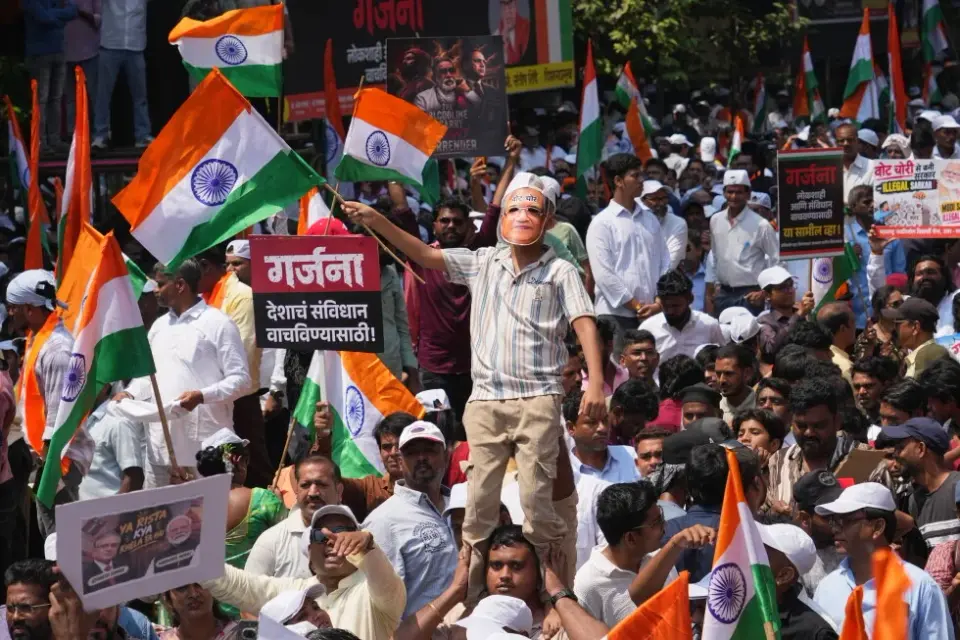
The Gen Z-led Cockroach Janta Party (CJP) is organizing nationwide protests demanding the resignation of Chief Election Commissioner Gyanesh Kumar. The movement opposes the Special Intensive Revision (SIR) of voter rolls, which critics accuse of disenfranchising eligible voters to favor the ruling party. While the Election Commission defends the process as removing duplicates, internal dissent among commissioners and heavy police crackdowns have intensified the crisis.
Key points
- CJP and opposition parties demand Kumar's resignation and an inquiry into his conduct.
- Protests are spreading across India, with a major rally planned for October 10 in Delhi.
- The SIR has removed 130 million names from voter lists, with some regions seeing up to 30% reductions.
- Two election commissioners formally objected to SIR decisions, but the EC claims all decisions were unanimous.
- Police have detained hundreds of protesters and served notices to CJP activists, raising concerns about suppression.
Background
This dispute follows a series of earlier protests in early October 2026, where the CJP first gained prominence by forcing an education minister to resign. The current crisis stems from the SIR, a voter roll revision that began last year. Previous coverage noted heavy police crackdowns in Delhi and Mumbai, with hundreds detained and opposition leaders arrested. The Election Commission had previously reaffirmed that all SIR decisions were unanimous, despite reports of internal dissent.
How outlets are covering it
AP News highlights the internal dissent within the Election Commission, noting that two commissioners formally objected to SIR decisions, which the EC dismissed as 'differing views.' BBC emphasizes the CJP's grassroots mobilization, with thousands of young protesters in Mumbai and heavy police presence in Delhi. The Times of India focuses on the CJP's claims of police intimidation, including notices served to activists and warnings of potential arrests. While all sources agree on the core demand for Kumar's resignation, they differ in emphasis: AP focuses on institutional conflict, BBC on youth mobilization, and TOI on state suppression tactics.
Why it matters
The SIR could reshape India's electoral landscape ahead of state elections in 2027. If the voter roll revisions are perceived as biased, it could undermine public trust in the democratic process. The CJP's growing influence signals a shift in how youth engage with political issues, potentially influencing future electoral outcomes and policy debates.
What to watch
The CJP plans a major rally in Delhi on October 10, with opposition parties also organizing protests. The Election Commission has not responded to calls for Kumar's resignation. If the protests continue, there may be further confrontations with police, and the dispute could escalate to legal challenges or political interventions.
- Why people across India are taking to the streets again AP News
- What to know about nationwide protests in India over voter list changes NPR
- Protests intensify in India over demands for election chief to quit Reuters
- Gyanesh Kumar: CJP, or Cockroach Janta Party, calls for protests against election chief BBC
- Abhijeet Dipke claims CJP activists receiving police notices threatening October 10 protest 'could turn violent' The Times of India
Want the full story? Read the original reporting
Read on AP News