
Indonesia's Vice President Resigns After Courts Invalidate Academic Credentials
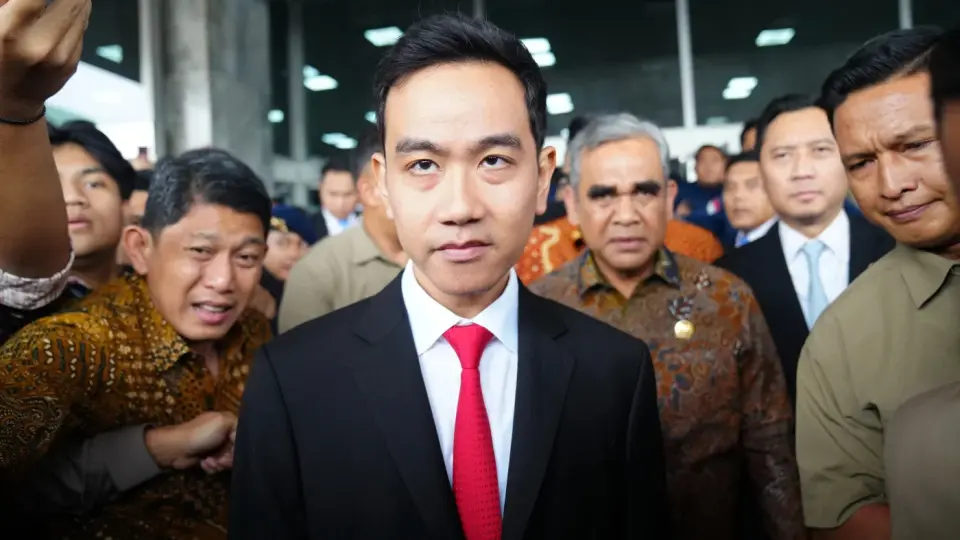
Indonesian Vice President Gibran Rakabuming Raka resigned on November 12, 2026, following court rulings that his educational documents did not meet legal requirements. President Prabowo Subianto accepted the resignation, praising Raka's service, while former President Joko Widodo, Raka's father, expressed support for the current government. The move ends Raka's term early, leaving the vice presidency vacant until a replacement is elected within 60 days.
Key points
- Gibran Rakabuming Raka, 39, submitted his resignation to the People's Consultative Assembly on November 12, 2026, becoming the first vice president to resign before completing a term since 1998.
- The resignation followed rulings by the Constitutional and Supreme Courts that Raka's overseas education documents did not satisfy the requirement for an equivalent to an Indonesian high school diploma.
- President Prabowo Subianto accepted the resignation 'with a heavy heart,' praising Raka for visiting 35 provinces and inspecting 303 government projects during his two-year tenure.
- A petition from 120 lawmakers across eight parties had initiated an impeachment process, but Raka's resignation preempted the formal parliamentary vote.
- Under the constitution, the vice presidency will remain vacant until the People's Consultative Assembly elects a replacement from two candidates nominated by the president within 60 days.
Background
Raka was elected in 2024 as the youngest vice president, benefiting from a 2023 Constitutional Court ruling that allowed regional leaders to run for office at age 39, bypassing the standard age 40 requirement. His appointment was seen as a bridge between outgoing President Joko Widodo and incoming President Prabowo Subianto. Recent tensions have also involved allegations of police wiretapping targeting the president, though the credential dispute is distinct from those investigations.
How outlets are covering it
NPR emphasizes the procedural and constitutional aspects, noting the 60-day timeline for filling the vacancy and the preemption of the impeachment process. The New York Times frames the resignation as a symbolic fracture in the political alliance between Prabowo and Joko Widodo, suggesting Prabowo is distancing himself from the former president's influence. Both sources agree on the core facts but differ in emphasis: NPR focuses on the legal mechanics and Raka's service record, while The Times highlights the broader political rift and dynastic implications.
Why it matters
The resignation introduces political uncertainty in Southeast Asia's largest economy and tests the resilience of the current administration. It highlights ongoing debates over dynastic privilege and political accountability in Indonesian democracy, as the country navigates the transition from Widodo's era to Prabowo's leadership.
What to watch
Parliamentary leaders will convene to begin the process of selecting a replacement. The president must nominate two candidates within 60 days, after which the People's Consultative Assembly will vote to fill the vacancy. The political dynamics between the Prabowo administration and the Widodo camp will likely remain a focal point in the coming months.
- Indonesia's VP resigns as his eligibility and academic credentials are questioned NPR
- Indonesia’s Vice President Resigns as a Political Alliance Unravels The New York Times
- Indonesia VP hands resignation to parliament as Jokowi backs Prabowo Reuters
- The wiretapping scandal that threatens ‘open warfare’ among Indonesia’s political elite Financial Times
- 120 Indonesian lawmakers seek vice president's impeachment after education credentials questioned AP News
Want the full story? Read the original reporting
Read on NPR