
Macron and Merz face domestic traps in EU budget standoff
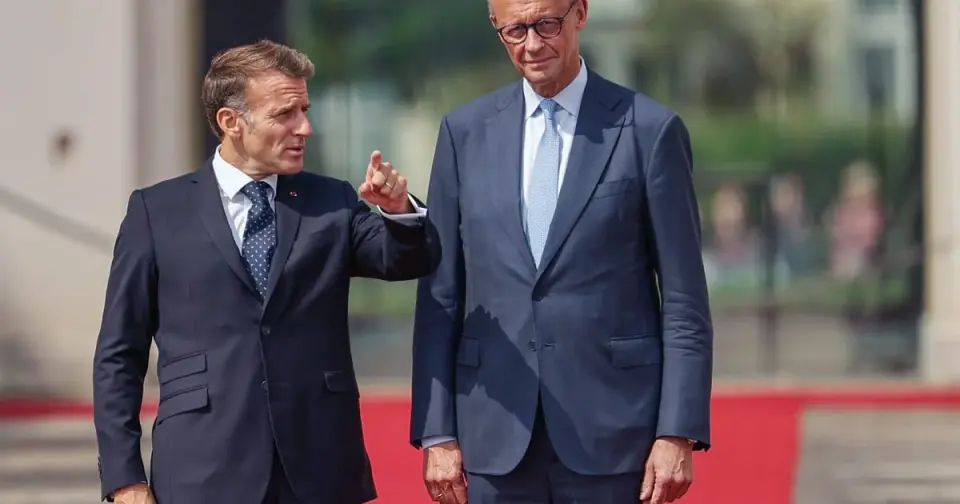
The EU's next seven-year budget, valued at approximately €2 trillion, remains deadlocked as French President Emmanuel Macron and German Chancellor Friedrich Merz struggle to find common ground. Both leaders face severe domestic political constraints that limit their ability to compromise. Macron fears concessions will be weaponized by rivals ahead of the 2027 presidential election, while Merz is wary of appearing to increase taxpayer contributions to Brussels following recent electoral losses to the far-right. Despite these obstacles, diplomats suggest a Franco-German breakthrough is essential for resolving the broader impasse, with some officials noting that the two nations' positions may be closer than public statements suggest.
Key points
- The EU multiannual financial framework (MFF) is stuck in a months-long deadlock, with a Germany-led group pushing for smaller budgets and France resisting reductions.
- Macron and Merz are seen as holding the keys to breaking the impasse, but both are politically constrained by upcoming elections and domestic pressures.
- Macron fears that accepting cuts demanded by Berlin could be used against him by far-right and far-left rivals in the 2027 presidential campaign.
- Merz is cautious about increasing the overall budget due to recent state election defeats to the Alternative for Germany party.
- France is pushing for new 'own resources' such as online gambling levies, while Germany is skeptical these will generate sufficient funds.
- German industrial lobbies, including the BDI, have urged the government to defend a more ambitious EU budget, potentially pressuring Merz to compromise.
Background
This budget negotiation follows a period of heightened Franco-German cooperation on trade policy, where both leaders jointly urged the European Commission to adopt faster trade defense mechanisms against China in October 2026. However, their ability to cooperate on other major issues, such as car emission targets, has been limited, suggesting that the budget deadlock may persist despite broader strategic alignment.
How outlets are covering it
POLITICO emphasizes the political weakness of both leaders, noting that Macron's upcoming departure from office and Merz's domestic struggles make them unlikely to yield ground. The outlet highlights the risk that any deal could be exploited by political opponents in France and Germany. In contrast, the Yahoo source, while largely obscured by technical code, suggests a focus on the urgency of reaching a deal before an uncertain election year, implying that the political constraints may be temporary and that a resolution is still possible. The two outlets differ in their assessment of the likelihood of a breakthrough, with POLITICO being more skeptical and Yahoo potentially more optimistic about a timely resolution.
Why it matters
The EU's multiannual financial framework is critical for funding key areas such as defense, agriculture, research, and border security. A prolonged deadlock could delay the implementation of these policies, weakening the EU's competitiveness and security posture. The inability of the bloc's two largest economies to agree on a budget also signals broader fragmentation within the EU, potentially undermining its ability to respond to external challenges, including those from China and the United States.
What to watch
EU leaders are expected to continue negotiations during a two-day summit in Brussels, with Macron and Merz potentially holding bilateral talks to hash out positions. The outcome of these discussions will be crucial in determining whether a breakthrough is possible. Additionally, pressure from German industrial lobbies and other member states may influence Merz's stance, while Macron's calculations regarding the 2027 presidential election will shape his approach. The next few weeks will be pivotal in determining whether the EU can reach a compromise or if the deadlock will persist.
- Macron and Merz hold keys to an EU budget deal — but may be too weak to use them POLITICO.eu
- EU's Irish presidency wants 8% cut to proposed 2028-2034 budget plan Reuters
- Top EU lawmaker urges budget deal before uncertain election year Yahoo
- The Irish ‘box’: the worst possible compromise for the EU budget Bruegel
- Can Brussels Budget Like a Superpower? Foreign Policy
Want the full story? Read the original reporting
Read on POLITICO.eu