
Kekova Shipwreck Dated to 2700 BCE Rewrites Mediterranean Trade History
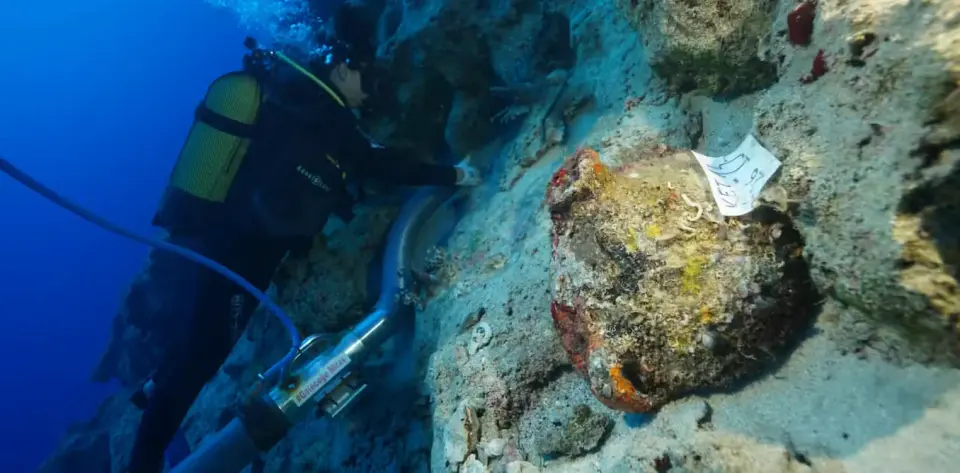
A shipwreck off Turkey’s Kekova coast, discovered in 2024, is tentatively dated to 2700–2400 BCE, making it the world’s oldest known vessel. Led by Hakan Öniz, the excavation recovered ceramic amphorae and anchors, predating the previous record-holder in Greece by 300 years. The find offers critical insights into Early Bronze Age trade networks, though peer-reviewed confirmation is pending.
Key points
- The wreck was found in shallow waters off Kekova Island, west of Antalya, Turkey, in 2024 by Associate Professor Hakan Öniz of Akdeniz University.
- The wooden hull has decayed, but divers recovered ceramic amphorae, stone anchors, and other artifacts embedded in the rocky seabed.
- Preliminary dating places the wreck between 2700 and 2400 BCE, approximately 4,500 years ago, surpassing the previous oldest wreck off Dokos, Greece, which dates to roughly 4,200 years ago.
- The cargo included large ovoid jars with raised clay belts, some containing visible organic residues possibly from olive oil, wine, or tree resin.
- Clay analysis suggests the pottery originated in the Central Jordan Valley, indicating extensive trade routes across the eastern Mediterranean.
- The discovery coincides with the construction of the Great Pyramid of Giza and the Egyptian trade era at Byblos, Lebanon.
Background
This discovery follows earlier archive reports from October 14, 2026, which confirmed the Kekova find as the world’s oldest shipwreck, predating the Greek wreck by 300 years. The archive noted the recovery of 30 amphorae and stone anchors, with organic residues still present. The current briefing expands on these initial reports by detailing the specific dating range (2700–2400 BCE), the involvement of Australian archaeologist Karin Sowada, and the broader implications for Early Bronze Age maritime networks. The archive also mentioned the previous record-holder in Greece, which is now confirmed as the second-oldest known shipwreck.
How outlets are covering it
The Conversation emphasizes the tentative nature of the dating, noting that the precise timeline is still under consideration and that a peer-reviewed paper is pending. It highlights the potential to transform understanding of ancient Mediterranean connections. CNN focuses on the depth of the wreck (100 feet) and the specific features of the amphorae, including one with marks suggesting cheese or butter production, implying sailors may have carried goats. ABC News highlights the role of Karin Sowada, a Sydney-based expert, in analyzing the ceramics and the use of water baths to preserve the artifacts. It also notes the ship’s estimated length of 30 feet. All sources agree on the wreck’s location off Kekova and its significance as the world’s oldest, but they differ in emphasis: The Conversation on the broader historical impact, CNN on specific artifact details, and ABC on the international collaboration and conservation methods.
Why it matters
This discovery rewrites the timeline of ancient maritime trade, pushing the origins of extensive Mediterranean trade networks back to the Early Bronze Age. It provides physical evidence of trade routes connecting the Levant, Egypt, and the Aegean, challenging previous assumptions about the scale and reach of ancient commerce. The find also offers insights into the daily lives of mariners, including the types of goods transported and the methods used to preserve them. As the oldest known shipwreck, it serves as a 'time capsule' that could reshape our understanding of early human connectivity and economic exchange in the ancient world.
What to watch
Researchers are conducting further scientific analyses on the organic residues and clay composition to refine the dating and determine the exact origin of the pottery. A peer-reviewed paper outlining the findings is expected to be published in the coming months. Additional dives may be conducted to recover more artifacts and confirm the ship’s route and purpose. The Turkish culture and tourism ministry may also consider the site for future archaeological or tourism purposes, given its historical significance.
- World’s oldest shipwreck discovered off coast of Turkey The Conversation
- World’s oldest shipwreck found off coast of Turkey CNN
- Uncovered, world’s oldest shipwreck that may have been sailing to Troy The Times
- Ancient ceramics retrieved from 'world's oldest known' shipwreck ABC News & Headlines – Australian Broadcasting Corporation
- Shipwreck believed to be the world's oldest discovered off the coast of Turkey ABC News - Breaking News, Latest News and Videos
Want the full story? Read the original reporting
Read on The Conversation