
Mexico Senate Passes Controversial 'Anti-Meme' Law Amid Free Speech Fears
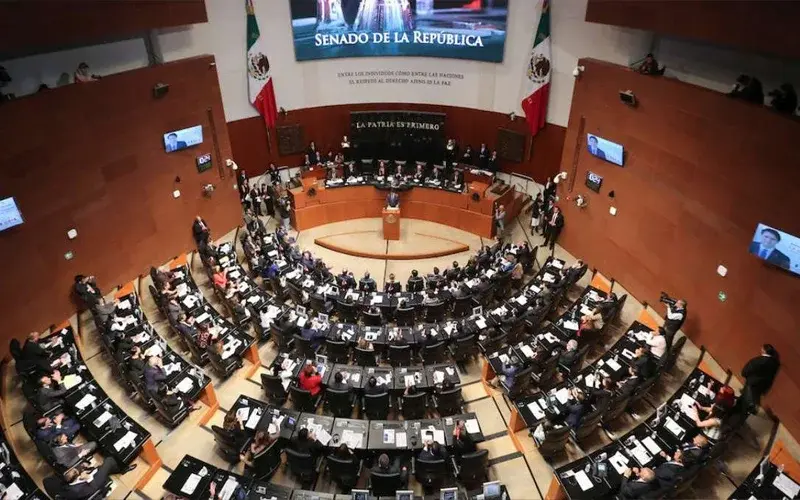
Mexico’s Senate approved a new law, widely dubbed the 'Anti-Meme Law,' with a 72-34 vote led by the Morena coalition. The legislation, centered on Article 403 Bis, criminalizes the unauthorized use of government logos, domains, and AI-replicated identities, carrying penalties of up to five years in prison. While the ruling party frames it as a measure against digital fraud, opposition parties and digital rights advocates condemn it as a vague tool to suppress political satire and dissent. Internet service providers now face heavy fines for failing to remove flagged content, raising concerns about private censorship. Opposition leaders plan to challenge the law’s constitutionality, while critics warn that the threat of prosecution will chill public expression regardless of judicial outcomes.
Key points
- The Mexican Senate passed the bill 72-34, with the Morena-led coalition supporting the measure.
- Article 403 Bis prohibits unauthorized use of institutional graphic identities, official domains, and government logos.
- Penalties for violations range from one to five years in prison and fines of 1,000 to 10,000 Units of Measure and Update.
- The law includes provisions against using AI to replicate faces, voices, or trademarked material without permission.
- Internet service providers face fines up to 4 million pesos if they fail to promptly remove flagged content.
- Opposition parties, including the National Action Party and Institutional Revolutionary Party, argue the law’s language on 'deception' is dangerously vague.
Background
This development follows recent domestic debates in Mexico regarding digital governance and free expression. While unrelated to the U.S. geographic renaming controversies involving New Mexico and Lake Ontario covered in earlier archive entries, the current situation reflects broader regional tensions over state control of public discourse and digital platforms. The new law introduces significant obligations for tech companies operating in Mexico, potentially influencing how content moderation is handled across the region.
Why it matters
The passage of this law marks a critical shift in Mexico’s approach to digital content, potentially setting a precedent for how political satire and public criticism are treated under criminal law. The ambiguity in defining 'deception' creates legal uncertainty that could deter citizens from engaging in political discourse online. Furthermore, the financial liabilities imposed on internet service providers may lead to preemptive content removal, effectively creating a system of private censorship. This could have long-term implications for democratic participation and the protection of free speech in Mexico, as the balance between combating fraud and preserving expression remains unresolved.
What to watch
Opposition parties are preparing legal challenges to the law’s constitutionality, seeking intervention from higher courts to review its ambiguous language. Digital rights organizations are launching campaigns to educate the public about their rights and potential liabilities under the new framework. The coming weeks will determine how federal authorities interpret the rules and whether the anticipated wave of digital censorship materializes or if the law remains strictly focused on financial fraud. The outcome of these early interpretations will be crucial in shaping the law’s practical impact on free speech and digital expression in Mexico.
Want the full story? Read the original reporting
Read on Yucatán Magazine